Und dann auf "Zum Home-Bildschirm [+]".

Stöbern
genialokal zum Startbildschirm hinzufügen
Installieren Sie die genialokal App auf Ihrem Startbildschirm für einen schnellen Zugriff und eine komfortable Nutzung.
Installieren Sie die genialokal App auf Ihrem Startbildschirm für einen schnellen Zugriff und eine komfortable Nutzung.

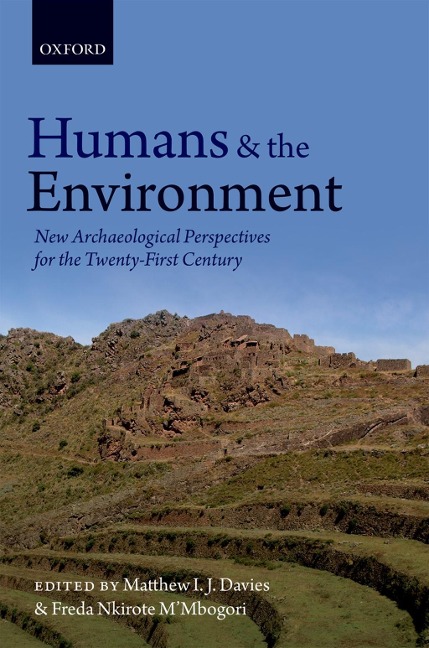
The environment has always been a central concept for archaeologists and, although it has been conceived in many ways, its role in archaeological explanation has fluctuated from a mere backdrop to human action, to a primary factor in the understanding of society and social change. Archaeology also has a unique position as its base of interest places it temporally between geological and ethnographic timescales, spatially between global and local dimensions, and epistemologically between empirical studies of environmental change and more heuristic studies of cultural practice.
Drawing on data from across the globe at a variety of temporal and spatial scales, this volume resituates the way in which archaeologists use and apply the concept of the environment. Each chapter critically explores the potential for archaeological data and practice to contribute to modern environmental issues, including problems of climate change and environmental degradation. Overall the volume covers four basic themes: archaeological approaches to the way in which both scientists and locals conceive of the relationship between humans and their environment, applied environmental archaeology, the archaeology of disaster, and new interdisciplinary directions.The volume will be of interest to students and established archaeologists, as well as practitioners from a range of applied disciplines.
Matthew Davies is currently Fellow in East African Archaeology at the British Institute in Eastern Africa, and the McDonald Institute for Archaeological Research, University of Cambridge. He directs archaeological and ethnographic research projects in Kenya, Uganda, and the Southern Sudan. His primary interests lie in long-term human relations, especially environmental decision making and related socio-cultural institutions.
Freda Nkirote M'Mbogori is a senior archaeologist based at the National Museums of Kenya, Nairobi, with extensive fieldwork experience in the region. Her principal interests lie in the relationship between material culture, economy/environment and identity, and how received concepts played into colonial and present day economic/environmental policies in Eastern Africa.
- Preface - Acknowledgements - List of figures - List of tables - Contributors - Section 1: Archaeology and Environment - 1: Matthew Davies: Environment in North American and European archaeology - 2: Olena Symyntna: Environment in Soviet and post-Soviet Archaeology - Section 2: Environment as Artefact - 3: William Balée: Indigeneity of Past Landscape Transformations of the Tropics - 4: Matthew Davies: Forced Moves or just Good Moves? Rethinking environmental decision making among East African intensive cultivators - 5: Dánae Fiore, Angélica Tivoli, Atilio Francisco Zangrando: Is the Environment Good to Eat or Good to Paint? Faunal consumption and avoidance among hunter-gatherer-fishers in the Beagle Channel Region (Tierra del Fuego, South America) - 6: Alexandre Chevalier: From Ecological Constraints To Cultural Identities: Pre-Columbian attitudes toward food - 7: Fiona Dyason: Burning the Bush: the development of Australia s Southwest Botanical Province - Section 3: Environmental narratives and applied archaeology - 8: Christian Isendahl, Walter Sánchez, Sergio Calla, Marco Irahola, Dagner Salvatierra and Marcelo Ticona: Archaeology's Potential to Contribute to Pools of Agronomic Knowledge: a case of applied agro-achaeology in the Bolivian Yungas - 9: Ann Kendall: Applied Archaeology in the Andes: the contribution of pre-Hispanic agricultural terracing to environmental and rural development strategies - 10: Daryl Stump: The role of Agricultural and Environmental History in East African Developmental Discourse - 11: Kristin Armstrong Oma: Past and Present Farming: changes in terms of engagement - Section 4: Environment, disaster, and memory - 12: Karen Holmberg: An Inheritance of Loss: Archaeology's imagination of disaster - 13: Katherine Leckie: Nature, Identity, and Disaster: prehistoric lake dwelling in Central Europe. - 14: Peter Rudiak-Gould: Memories and Expectations of Environmental Disaster: some lessons from the Marshall Islands - 15: David G. Anderson, Kirk A. Maasch, and Daniel H. Sandweiss: Climate Change and Cultural Dynamics: lessons from the past for the future - Section 5: New Directions - 16: James Fairhead: Archaeology and Environmental Anthropology: collaborations in historical and political ecology - 17: Carole L. Crumley: The Archaeology of Global Environment Change - 18: Chris Gosden: Humanised Environments - Bibliography - Index