Und dann auf "Zum Home-Bildschirm [+]".

Stöbern
genialokal zum Startbildschirm hinzufügen
Installieren Sie die genialokal App auf Ihrem Startbildschirm für einen schnellen Zugriff und eine komfortable Nutzung.
Installieren Sie die genialokal App auf Ihrem Startbildschirm für einen schnellen Zugriff und eine komfortable Nutzung.
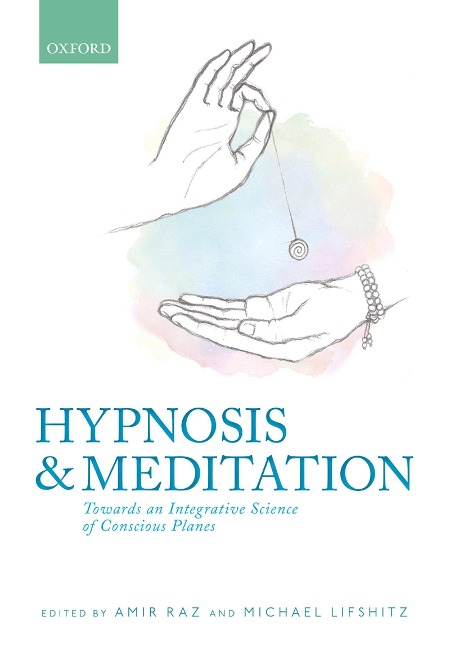
Research over the past decade has helped to demystify hypnosis and meditation, bringing these practices into the scientific and clinical mainstream. Yet, while hypnosis and meditation overlap on many levels, few scientific accounts have explored their complementary rapprochement. Despite cultural and historical differences, hypnosis and meditation share common phenomenology, cognitive processes, and potential therapeutic merits.
This book provides a synthesis of knowledge concerning the bridging of hypnosis and meditation. The authors adopt a trans-disciplinary approach considering cultural, historical, and philosophical perspectives to elucidate contemporary questions in cognitive, neurobiological, and clinical science. The book explores the relationship between hypnosis and meditation in five progressive sections:
Part 1 investigates historical, cultural, and philosophical issues to contextualize the scientific study of contemplative practices. Part 2 presents a range of views concerning the similarities and differences between hypnosis and meditation. Part 3 explores the psychological and cognitive mechanisms at work. Part 4 integrates recent brain imaging findings to unravel the neural underpinnings. Finally, part 5 examines how juxtaposing hypnosis and meditation can enhance clinical applications.
Hypnosis and Meditation is a valuable resource to both specialists as well as interested lay readers, and paves the road to a more unified science of how attention influences states of brain, body, and consciousness.
Professor Raz earned his Ph.D. in Brain Science from the Interdisciplinary Center for Computational Neuroscience at the Hebrew University of Jerusalem under the supervision of the late Professor Shlomo Bentin. He then went on to a post-doctoral fellowship with Professor Michael Posner at the Weill Medical College of Cornell University, where he took on a faculty position thereafter. He then joined the faculty at Columbia University in the City of New York and later became the Canada Research Chair at McGill University in Montreal, Canada.
Michael is a doctoral student investigating the science of contemplative experience in the Raz Lab at McGill University. His research centers on comparing approaches to the transformation of consciousness - ranging from meditation to hypnosis, placebos, and psychedelics. Working from the vantage of neurophenomenology, Michael aims to synthesize knowledge of various contemplative practices to advance the science of attention, consciousness, and meta-cognition. Michael's work is supported through a Vanier Graduate Scholarship from the Natural Sciences and Engineering Research Council of Canada (NSERC) and a Mind & Life Institute Francisco J. Varela Research Award. He completed a master's degree in the Integrated Program of Neuroscience at the Raz Lab, and an undergraduate degree with honors in psychology and minors in philosophy and world religions - both at McGill University.
- Foreword - Foreword - Section I - Introduction - 1.: Michael Lifshitz: Contemplative experience in context: Hypnosis, meditation, and the transformation of consciousness - Section II - Philosophical, historical, and cultural perspectives - 2.: Anne Harrington: Thinking about trance over a century: The making of a set of impasses - 3.: Thupten Jinpa: Visualization as mental cultivation: Expanding our understanding of meditation - 4.: Quinton Deeley: Tranforming experience through Chod: Insights from hypnosis research - 5.: Samuel Veissière: Varieties of tulpa experiences: The hypnotic nature of human sociality, personhood, and interphenomenality - Section III - Similarities and differences - 6.: Jelena Markovic and Evan Thompson: Hypnosis and meditation: A neurophenomenological comparison - 7.: Zoltan Dienes, Peter Lush, Rebecca Semmens-Wheeler, Jim Parkinson, Ryan Scott, and Peter Naish: Hypnosis as self-deception; Meditation as self-insight - 8.: Lynn C. Waelde, Jason M. Thompson, and David Spiegel: Hypnosis and mindfulness: Experiential and neurophysiological relationships - 9.: Charles Tart: Meditation: Some kind of (self)-hypnosis? A deeper look - 10.: Vince Polito and Michael H. Connors: Towards a science of internal experience: Conceptual and methodological issues in hypnosis and meditation research - Section IV - Cognitive mechanisms - 11.: Kieran Fox, Yoona Kang, Michael Lifshitz, and Kalina Christoff: Increasing cognitive-emotional flexibility with meditation and hypnosis: The cognitive neuroscience of de-automatization - 12.: Benjamin Mooneyham and Jonathan W. Schooler: Mind-wandering and meta-awareness in hypnosis and meditation: Relating executive function across states of consciousness - 13.: John Vervaeke and Leonardo Ferraro: Reformulating the mindfulness construct: The cognitive processes at work in mindfulness, hypnosis and mystical states - 14.: Ulrich Ott: Absorption in hypnotic trance and meditation - Section V - Neural underpinnings - 15.: Etzel Cardeña: Towards comprehensive neurophenomenological research in hypnosis and meditation - 16.: Yi-Yuan Tang and Michael I. Posner: Influencing conflict in the human brain by changing brain states - 17.: Graham Jamieson: A unified theory of hypnosis and meditation states: The interoceptive predictive coding approach - 18.: William J. McGeown: Hypnosis, hypnotic suggestibility and meditation: An integrative review of the associated brain regions and networks - Section VI - Clinical applications - 19.: Michael Yapko: Suggesting mindfulness: Reflections on the uneasy relationship between mindfulness and hypnosis - 20.: Norman Farb: Self-transformation through hypnosis and mindfulness meditation: What exactly is being transformed? - 21.: Fadel Zeidan and Joshua Grant: Meditative and hypnotic analgesia: Different directions, same road? - 22.: Tony Toneatto and Erin Courtice: Hypnosis and mindfulness meditation: A psychoanalytic perspective - 23.: Steven J. Lynn, Joseph P. Green, Victor Elinoff, Jessica Baltman, and Reed Maxwell: When worlds combine: Synthesizing hypnosis, mindfulness, and acceptance-based approaches to psychotherapy and smoking cessation - Section VII - Conclusion - 24.: Amir Raz: Hypnosis and meditation as vehicles to elucidate human consciousness - Afterword
Dieses eBook wird im PDF-Format geliefert und ist mit einem Adobe Kopierschutz (DRM) versehen. Sie können dieses eBook mit allen Geräten lesen, die das PDF-Format und den Adobe Kopierschutz (DRM) unterstützen.
Zum Beispiel mit den folgenden Geräten:
• tolino Reader
Laden Sie das eBook direkt über den Reader-Shop auf dem tolino herunter oder übertragen Sie das eBook auf Ihren tolino mit einer kostenlosen Software wie beispielsweise Adobe Digital Editions.
• Sony Reader & andere eBook Reader
Laden Sie das eBook direkt über den Reader-Shop herunter oder übertragen Sie das eBook mit der kostenlosen Software Sony READER FOR PC/Mac oder Adobe Digital Editions auf ein Standard-Lesegeräte mit epub- und Adobe DRM-Unterstützung.
• Tablets & Smartphones
Möchten Sie dieses eBook auf Ihrem Smartphone oder Tablet lesen, finden Sie hier unsere kostenlose Lese-App für iPhone/iPad und Android Smartphone/Tablets.
• PC & Mac
Lesen Sie das eBook direkt nach dem Herunterladen mit einer kostenlosen Lesesoftware, beispielsweise Adobe Digital Editions, Sony READER FOR PC/Mac oder direkt über Ihre eBook-Bibliothek in Ihrem Konto unter „Meine eBooks“ - „online lesen“.
Schalten Sie das eBook mit Ihrer persönlichen Adobe ID auf bis zu sechs Geräten gleichzeitig frei.
Bitte beachten Sie, dass die Kindle-Geräte das Format nicht unterstützen und dieses eBook somit nicht auf Kindle-Geräten lesbar ist.