Und dann auf "Zum Home-Bildschirm [+]".

Stöbern
genialokal zum Startbildschirm hinzufügen
Installieren Sie die genialokal App auf Ihrem Startbildschirm für einen schnellen Zugriff und eine komfortable Nutzung.
Installieren Sie die genialokal App auf Ihrem Startbildschirm für einen schnellen Zugriff und eine komfortable Nutzung.
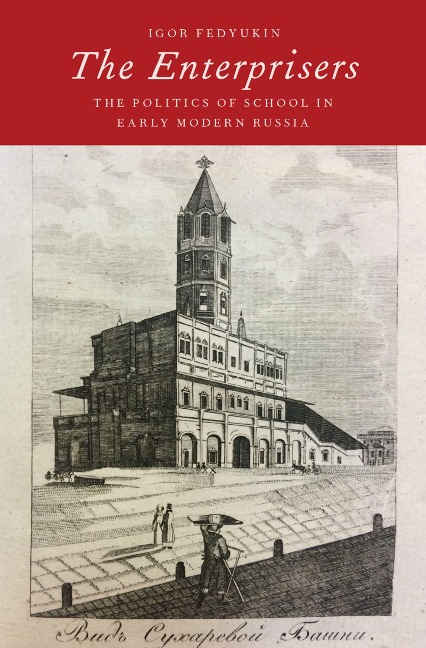
The Enterprisers traces the emergence of the "modern" school in Russia during the reigns of Peter I and his immediate successors, up to the accession of Catherine II. Creation of the new, secular, technically-oriented schools based on the imported Western European blueprints is traditionally presented as the key element in Peter I's transformation of Russia. The tsar, it is assumed, needed schools to train officers and engineers for his new army and the navy, and so he personally designed these new institutions and forced them upon his unwilling subjects. In this sense, school also stands in as a metaphor for modern institutions in Russia in general, which are likewise seen as created from the top down, by the forceful state, in response to its military and technological needs. Yet, in reality, Peter I himself never wrote much about education, and while he championed "learning" in a broad sense, he had remarkably little to say about the ways schools and schooling should be organized. Nor were his general and admirals, including foreigners in Russian service, keen on promoting formal schooling: for them, practical apprenticeship still remained the preferred method of training. Rather, as Fedyukin argues in this book, the trajectories of institutional change were determined by the efforts of "administrative entrepreneurs"-or projecteurs, as they were also called-who built new schools as they sought to achieve diverse career goals, promoted their own pet ideas, advanced their claims for expertise, and competed for status and resources. By drawing on a wealth of unpublished archival sources, Fedyukin explores the "micropolitics" behind the key episodes of educational innovation in the first half of the eighteenth century and offers an entirely new way of thinking about "Petrine revolution" and about the early modern state in Russia.
Igor Fedyukin is Associate Professor and the founding director of the Center for Imperial Russian History at the National Research University Higher School of Economics in Moscow. He has been a visiting fellow at the Woodrow Wilson International Center for Scholars (Washington, DC) and Maison des Sciences de l'Homme (Paris). In 2012-2013 he served as a vice-minister of Education and Science of the Russian Federation.
Acknowledgments
Introduction Chapter 1: Monks, Masters, and Missionaries: From "Teachership" to Schools in Late Muscovy Chapter 2: The Navigation School and the "Profit-Maker" Chapter 3: The Naval Academy and the "Imposter Baron Without Any Diploma" Chapter 4: The Naval Schools and Peter I's Grand Reglaments, 1710s-1730s Chapter 5: The Noble Cadet Corps and the Pietist Field Marshal, 1730s Chapter 6: The Fops, the Courtiers, the Favorites, and other Reformers of the Service Schools, 1740s- 1760s Conclusion
Notes Bibliography Index
Dieses eBook wird im PDF-Format geliefert und ist mit einem Adobe Kopierschutz (DRM) versehen. Sie können dieses eBook mit allen Geräten lesen, die das PDF-Format und den Adobe Kopierschutz (DRM) unterstützen.
Zum Beispiel mit den folgenden Geräten:
• tolino Reader
Laden Sie das eBook direkt über den Reader-Shop auf dem tolino herunter oder übertragen Sie das eBook auf Ihren tolino mit einer kostenlosen Software wie beispielsweise Adobe Digital Editions.
• Sony Reader & andere eBook Reader
Laden Sie das eBook direkt über den Reader-Shop herunter oder übertragen Sie das eBook mit der kostenlosen Software Sony READER FOR PC/Mac oder Adobe Digital Editions auf ein Standard-Lesegeräte mit epub- und Adobe DRM-Unterstützung.
• Tablets & Smartphones
Möchten Sie dieses eBook auf Ihrem Smartphone oder Tablet lesen, finden Sie hier unsere kostenlose Lese-App für iPhone/iPad und Android Smartphone/Tablets.
• PC & Mac
Lesen Sie das eBook direkt nach dem Herunterladen mit einer kostenlosen Lesesoftware, beispielsweise Adobe Digital Editions, Sony READER FOR PC/Mac oder direkt über Ihre eBook-Bibliothek in Ihrem Konto unter „Meine eBooks“ - „online lesen“.
Schalten Sie das eBook mit Ihrer persönlichen Adobe ID auf bis zu sechs Geräten gleichzeitig frei.
Bitte beachten Sie, dass die Kindle-Geräte das Format nicht unterstützen und dieses eBook somit nicht auf Kindle-Geräten lesbar ist.