Und dann auf "Zum Home-Bildschirm [+]".

Stöbern
genialokal zum Startbildschirm hinzufügen
Installieren Sie die genialokal App auf Ihrem Startbildschirm für einen schnellen Zugriff und eine komfortable Nutzung.
Installieren Sie die genialokal App auf Ihrem Startbildschirm für einen schnellen Zugriff und eine komfortable Nutzung.
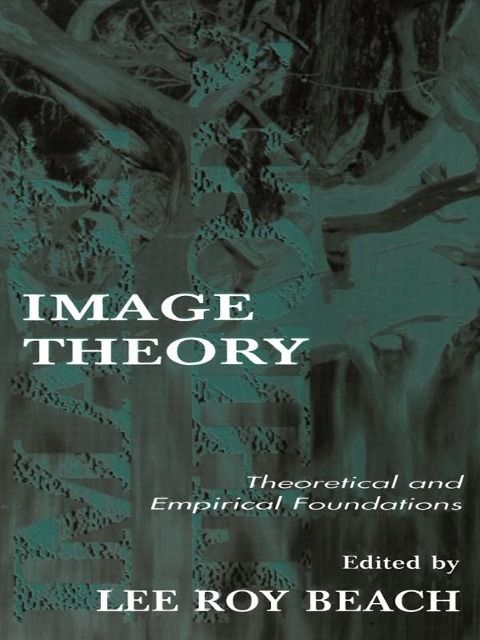
Decision making plays a major role in virtually every theory of organizational behavior. However, decision theory has not provided organizational theorists with useful descriptions of how decisions are made, either by individuals or by individuals in organizations. The earliest offering came from economics in the form of the "normative" rational view of decision making. The underlying presumption was that decision makers are all striving to maximize return or minimize loss, that decisions are based upon unlimited information, and that they have the capacity to use the information efficiently. They know the options open to them and the consequences of pursuing one or another of those options. The optimal course of action is revealed by applying the appropriate analysis and choosing the most profitable option. The key concepts are rationality, analysis, orderliness, and maximization, and even a moment's thought demonstrates the gap between these concepts and real-life experience. From the viewpoint of organizational theory, the primary problem with the normative view of decision making, and by analogy with much behavioral decision research, is its reliance on the "gamble metaphor." That is, decisions are characterized as gambles in an effort to capture the inherent risk. This metaphor has the advantage of simplicity, but it is a flawed simplicity. This book is about a different kind of behavioral theory -- image theory. It is a psychological theory of decision making that abandons the gamble metaphor and the normative logic that the metaphor supports. Instead it sees decision making as guided by the beliefs and values that the decision maker, or a community of decision makers, holds to be relevant to the decision at hand. These beliefs and values dictate the goals of the decision. The point is to craft a course of action that will achieve these goals without interfering with the pursuit of other goals. The book begins with an overview of image theory that outlines the basic concepts of the theory and a little of its history. The next two parts correspond to the theory's two decision mechanisms, the compatibility test and the profitability test. The final section contains extensions and developments of the theory as well as cognate ideas that have their basis in the theory. This book's purpose is to provide -- in one place -- the theoretical and empirical work that has been done up to now and to suggest directions for future work.
Lee Roy Beach
Contents: A.P. Brief, J.P. Walsh, Series Foreword. Preface. Part I:An Introduction to Image Theory.L.R. Beach, T.R. Mitchell, The Basics of Image Theory. Part II:The Compatibility Test: Screening and Progress Decisions.L.R. Beach, E. Strom, A Toadstool Among the Mushrooms: Screening Decisions and Image Theory's Compatibility Test. L.R. Beach, C.P. Puto, S.E. Heckler, G. Naylor, T.A. Marble, Differential Versus Unit Weighting of Violations, Framing, and the Role of Probability in Image Theory's Compatibility Test. L. Benson, III, L.R. Beach, The Effects of Time Constraints on the Pre-Choice Screening of Decision Options. E.H. van Zee, T.F. Paluchowski, L.R. Beach, The Effects of Screening and Task Partitioning Upon Evaluations of Decision Options. R.E. Potter, L.R. Beach, Imperfect Information in Pre-Choice Screening of Options. R.E. Potter, L.R. Beach, Decision Making When the Acceptable Options Become Unavailable. K.J. Dunegan, Image Theory: Testing the Role of Image Compatibility in Progress Decisions. K.J. Dunegan, D. Duchon, D. Ashmos, Image Compatibility and the Use of Problem Space Information in Resource Allocation Decisions: Testing a Moderating Effects Model. D.H. Schepers, L.R. Beach, An Image Theory View of Worker Motivation. Part III:The Profitability Test: Choice. Introduction. L.R. Beach, T.R. Mitchell, A Contingency Model of the Selection of Decision Strategies. J.J.J. Christensen-Szalanski, Problem Solving Strategies: A Selection Mechanism, Some Implications, and Some Data. D.W. McAllister, T.R. Mitchell, L.R. Beach, The Contingency Model for the Selection of Decision Strategies: An Empirical Test of the Effects of Significance, Accountability, and Reversibility. Part IV:New Developments and New Directions. Introduction. K.A. Nelson, C.P. Puto, Using Image Theory to Examine Value-Laden Decisions: The Case of the Socially Responsible Consumer. K.A. Weatherly, L.R. Beach, Organizational Culture and Decision Making. C.K. Stevens, Image Theory and Career-Related Decisions: Finding and Selecting Occupations and Jobs. S.W. Gilliland, L. Benson, III, Differentiating Between Judgment and Choice: Using Image Theory's Compatibility Test. L.R. Beach, H. Jungermann, Image Theory and the Nature of Plans. T. Connolly, L.R. Beach, The Theory of Image Theory: An Examination of the Central Conceptual Structure. Part V:Conclusion.L.R. Beach, Looking to the Future. Author Index. Subject Index.
Dieses eBook wird im PDF-Format geliefert und ist mit einem Adobe Kopierschutz (DRM) versehen. Sie können dieses eBook mit allen Geräten lesen, die das PDF-Format und den Adobe Kopierschutz (DRM) unterstützen.
Zum Beispiel mit den folgenden Geräten:
• tolino Reader
Laden Sie das eBook direkt über den Reader-Shop auf dem tolino herunter oder übertragen Sie das eBook auf Ihren tolino mit einer kostenlosen Software wie beispielsweise Adobe Digital Editions.
• Sony Reader & andere eBook Reader
Laden Sie das eBook direkt über den Reader-Shop herunter oder übertragen Sie das eBook mit der kostenlosen Software Sony READER FOR PC/Mac oder Adobe Digital Editions auf ein Standard-Lesegeräte mit epub- und Adobe DRM-Unterstützung.
• Tablets & Smartphones
Möchten Sie dieses eBook auf Ihrem Smartphone oder Tablet lesen, finden Sie hier unsere kostenlose Lese-App für iPhone/iPad und Android Smartphone/Tablets.
• PC & Mac
Lesen Sie das eBook direkt nach dem Herunterladen mit einer kostenlosen Lesesoftware, beispielsweise Adobe Digital Editions, Sony READER FOR PC/Mac oder direkt über Ihre eBook-Bibliothek in Ihrem Konto unter „Meine eBooks“ - „online lesen“.
Schalten Sie das eBook mit Ihrer persönlichen Adobe ID auf bis zu sechs Geräten gleichzeitig frei.
Bitte beachten Sie, dass die Kindle-Geräte das Format nicht unterstützen und dieses eBook somit nicht auf Kindle-Geräten lesbar ist.