Und dann auf "Zum Home-Bildschirm [+]".

Stöbern
genialokal zum Startbildschirm hinzufügen
Installieren Sie die genialokal App auf Ihrem Startbildschirm für einen schnellen Zugriff und eine komfortable Nutzung.
Installieren Sie die genialokal App auf Ihrem Startbildschirm für einen schnellen Zugriff und eine komfortable Nutzung.

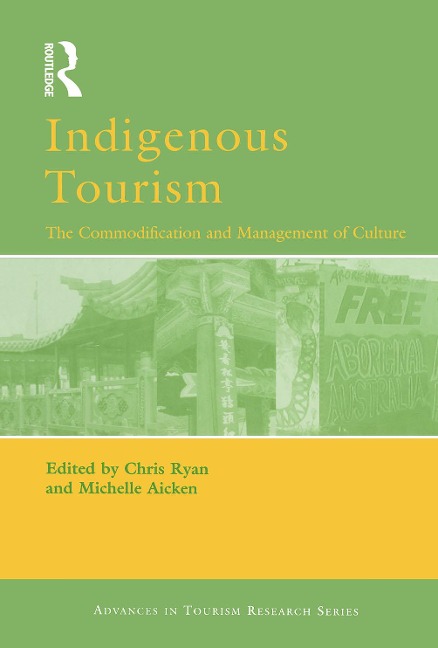
In a world characterized by an encroaching homogeneity induced by the growth of multi-national corporations and globalization, the causes of difference accrue new levels of importance. This is as true of tourism as in many other spheres of life - and one cause of differentiation for tourism promotion is the culture of Indigenous Peoples. This offers opportunities for cultural renaissance, income generation and enhanced political empowerment, but equally there are possible costs of creating commodities out of aspects of life that previously possessed spiritual meaning. This book examines these issues from many different perspectives; from those of product design and enhancement; of the aspirations of various minority groupings; and the patterns of displacements that occur - displacements that are not simply spatial but also social and cultural. How can these changes be managed? Case studies and analysis is offered, derived from many parts of the globe including North America, Asia and Australasia. The contributors themselves have, in many instances, worked closely with groups and organizations of Indigenous Peoples and attempt to give voice to their concerns. The book is divided into various themes, each with a separate introduction and commentary. The themes are Visitor Experiences, Who manages Indigenous Cultural Tourism Product, Events and Artifacts, Conceptualisation and Aspiration. In a short final section the silences are noted - each silence representing a potential challenge for future research to build upon the notions and lessons reported in the book. The book is edited by Professor Chris Ryan from New Zealand, and Michelle Aicken of Horwath Asia Pacific.
Chris Ryan, Michelle Aicken
Chapter 1 Introduction: Tourist-Host Nexus - Research Considerations, Chris Ryan; Visitor Experiences of Indigenous Tourism; Chapter 2 Visitor Experiences of Indigenous Tourism - Introduction, Chris Ryan, Birgit Trauer; Chapter 3 A Phenomenological Investigation of Tourists' Experience of Australian Indigenous Culture, Gloria Ingram; Chapter 4 Understanding the Nature of the Marae Experience: Views from Hosts and Visitors at the Nga Hau E Wha National Marae, Christchurch, New Zealand, Alison J. Mcintosh, Henare Johnson; Chapter 5 Balanda Tourists and Aboriginal People, Chris Ryan, Jeremy Huyton; Who Manages Indigenous Cultural Tourism Product - Aspiration and Legitimization; Chapter 6 Who Manages Indigenous Cultural Tourism Product - Aspiration and Legitimization, Chris Ryan; Chapter 7 An Evaluation of Sustainable American Indian Tourism, Victoria L. Gerberich; Chapter 8 Community-Based Tourism and the Marginalized Communities in Botswana: The Case of the Basarwa in the Okavango Delta, Joseph E. Mbaiwa; Chapter 9 Limits to Indigenous Ecotourism: An Exploratory Analysis from the Tl'azt'en Territories, Northern British Columbia, Sanjay K. Nepal; Chapter 10 Public Sector Initiatives for Aboriginal Small Business Development in Tourism, Jeremy Buultjens, Iain Waller, Sasha Graham, Dean Carson; Events and Artifacts; Chapter 11 Events and Artifacts, Chris Ryan; Chapter 12 ? Research in Flores was conducted under the auspices of the Indonesian Council of Sciences, with the sponsorship of the University Nusa Cendana in Kupang. Some of it was funded by National University of Singapore grant # Rl11-000-022-112/007.1 thank all the above institutions for their support and assistance. Many thanks also to my research assistants, Joseph Jelahut, Ardie Agus, and Marsel Djeer, and special thanks to my good friends in Labuan Bajo, Agus and Jul Jehadut, whose companionship and discussions were most useful in the formulation of this chapter. All conclusions and statements in this chapter, however, are my own., Maribeth Erb; Chapter 13 Dongba Art in Lijiang, China: Indigenous Culture, Local Community and Tourism, Takayoshi Yamamura; Chapter 14 What and Where is the Indigenous at an Indigenous Festival? - Observations from the Winter Festival in Jokkmokk, Sweden, Dieter K. Müller, Robert Pettersson; Conceptualization and Aspiration; Chapter 15 Conceptualization and Aspiration, Chris Ryan, Birgit Trauer; Chapter 16 Reconciliation Tourism: Challenging the Constraints of Economic Rationalism, Freya Higgins-Desbiolles; Chapter 17 To Experience the "Real" Australia - A Liminal Authentic Cultural Experience, Johan R. Edelheim; Chapter 18 Conceptualising "Otherness" as a Management Framework for Tourism Enterprise, Jenny Cave; Chapter 19 Concluding Words, Chris Ryan, Michelle Aicken;