Und dann auf "Zum Home-Bildschirm [+]".

Stöbern
genialokal zum Startbildschirm hinzufügen
Installieren Sie die genialokal App auf Ihrem Startbildschirm für einen schnellen Zugriff und eine komfortable Nutzung.
Installieren Sie die genialokal App auf Ihrem Startbildschirm für einen schnellen Zugriff und eine komfortable Nutzung.
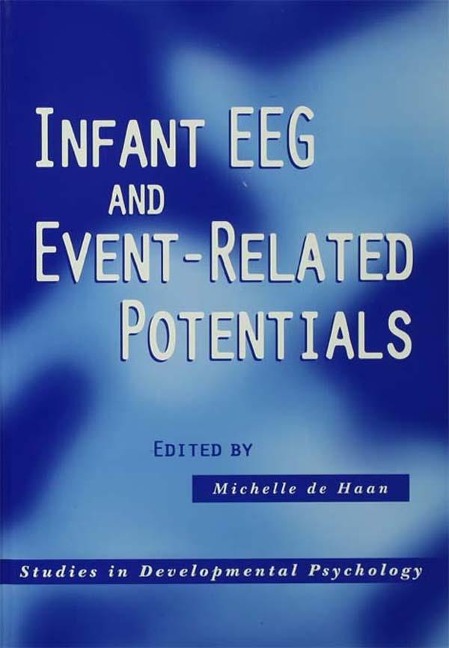
Infancy is a time of rapid growth, when brain plasticity is at a maximum. Event-related potentials (ERPs) are one of the few methods that can easily and safely be used to study this process, and have led to exciting discoveries about human brain functioning and the neural basis of cognition. Over recent years, there has been a massive rise in the level of interest in ERPs and this book considers the advantages which they offer to researchers and clinicians. In particular, it looks at the benefits of this form of neuroimaging as a non-invasive tool for detecting impairments in brain and cognitive development very early in life. The potential use of ERPs for clinical settings is also explored in detail. The contributions are all from eminent researchers in the field and represent the latest thought on the topic. Infant EEG and Event-Related Potentials explains the basics of event-related potentials for those less familiar with the procedures and terminology, as well as offering a valuable handbook of the latest theories and empirical findings for those working in the field. This will be a valuable source for those interested in developmental psychology and neuropsychology, and for clinicians interested in application of ERPs.
Michelle de Haan is a Senior Lecturer at the University College London Institute of Child Health and Honorary Neuropsychologist at Great Ormond Street Hospital for Children NHS Trust. She obtained her PhD in child psychology and neuroscience from the University of Minnesota in 1996. Her current research focuses on understanding the roles of brain development and life experience in normal and atypical development of memory and of perception of social information.
M. de Haan, Introduction to 'Infant EEG and Event-related Potentials'. T. deBoer, L.S. Scott, C.A. Nelson, Methods for Acquiring and Analysing Infant Event-Related Potentials. D.L. McCulloch, Visual Evoked Potential in Infants. M. de Haan, M. Johnson, H. Halit, Development of Face-Sensitive Event-Related Potentials During Infancy. M. de Haan, Visual Attention and Recognition Memory in Infancy. M. Cheour, Development of Mismatch Negativity (MMN) in Infancy. D.L. Molfese, V.J. Molfese, N.L. Pratt, The Use of Event-Related Evoked Potentials to Predict Developmental Outcomes. R. de Regnier, Auditory Recognition Memory in Infancy. P.J. Marshall, N.A. Fox, Infant EEG and ERP in Relation to Social and Emotional Development. T.A. Stroganova, E.V. Orekhova, EEG and Infant States. G. Csibra, M.H. Johnson, Investigating Event-Related Oscillations in Infancy. M. de Haan, Future Directions in Infant Electrophysiology. J. Cownie, Glossary of Terms.
Dieses eBook wird im PDF-Format geliefert und ist mit einem Adobe Kopierschutz (DRM) versehen. Sie können dieses eBook mit allen Geräten lesen, die das PDF-Format und den Adobe Kopierschutz (DRM) unterstützen.
Zum Beispiel mit den folgenden Geräten:
• tolino Reader
Laden Sie das eBook direkt über den Reader-Shop auf dem tolino herunter oder übertragen Sie das eBook auf Ihren tolino mit einer kostenlosen Software wie beispielsweise Adobe Digital Editions.
• Sony Reader & andere eBook Reader
Laden Sie das eBook direkt über den Reader-Shop herunter oder übertragen Sie das eBook mit der kostenlosen Software Sony READER FOR PC/Mac oder Adobe Digital Editions auf ein Standard-Lesegeräte mit epub- und Adobe DRM-Unterstützung.
• Tablets & Smartphones
Möchten Sie dieses eBook auf Ihrem Smartphone oder Tablet lesen, finden Sie hier unsere kostenlose Lese-App für iPhone/iPad und Android Smartphone/Tablets.
• PC & Mac
Lesen Sie das eBook direkt nach dem Herunterladen mit einer kostenlosen Lesesoftware, beispielsweise Adobe Digital Editions, Sony READER FOR PC/Mac oder direkt über Ihre eBook-Bibliothek in Ihrem Konto unter „Meine eBooks“ - „online lesen“.
Schalten Sie das eBook mit Ihrer persönlichen Adobe ID auf bis zu sechs Geräten gleichzeitig frei.
Bitte beachten Sie, dass die Kindle-Geräte das Format nicht unterstützen und dieses eBook somit nicht auf Kindle-Geräten lesbar ist.