Und dann auf "Zum Home-Bildschirm [+]".

Stöbern
genialokal zum Startbildschirm hinzufügen
Installieren Sie die genialokal App auf Ihrem Startbildschirm für einen schnellen Zugriff und eine komfortable Nutzung.
Installieren Sie die genialokal App auf Ihrem Startbildschirm für einen schnellen Zugriff und eine komfortable Nutzung.
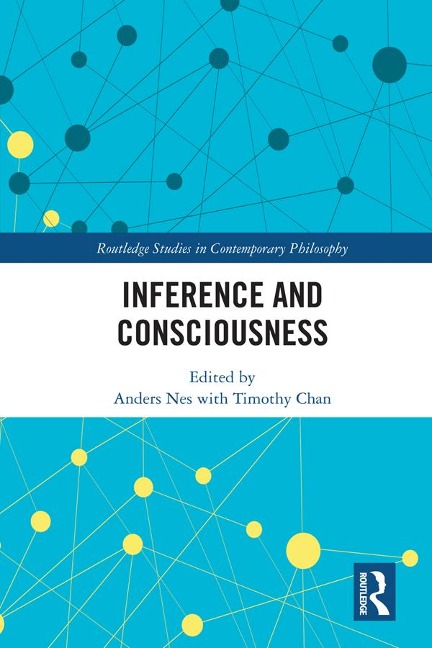
Inference has long been a central concern in epistemology, as an essential means by which we extend our knowledge and test our beliefs. Inference is also a key notion in influential psychological accounts of mental capacities, ranging from problem-solving to perception. Consciousness, on the other hand, has arguably been the defining interest of philosophy of mind over recent decades. Comparatively little attention, however, has been devoted to the significance of consciousness for the proper understanding of the nature and role of inference. It is commonly suggested that inference may be either conscious or unconscious. Yet how unified are these various supposed instances of inference? Does either enjoy explanatory priority in relation to the other? In what way, or ways, can an inference be conscious, or fail to be conscious, and how does this matter? This book brings together original essays from established scholars and emerging theorists that showcase how several current debates in epistemology, philosophy of psychology and philosophy of mind can benefit from more reflections on these and related questions about the significance of consciousness for inference.
Anders Nes is Associate Professor of Philosophy at the Norwegian University of Science and Technology. He has written on cognitive phenomenology, inference, and perception in various journals and edited collections. He has previously been a Researcher at the CSMN, University of Oslo, and a Career Development Fellow at Oxford University. Timothy Chan was Researcher at the CSMN, University of Oslo. He had been a lecturer at the University of East Anglia and taught at several other universities. He edited The Aim of Belief (2013) and published research articles in journals including Canadian Journal of Philosophy, Philosophical Studies, and Synthese.
Introduction: Inference and Consciousness Anders Nes Part I. Unconscious Inference in Cognitive Science and Psychiatry - Unconscious Inference Theories of Cognitive Achievement Kirk Ludwig and Wade Munroe - A Realist Perspective on Bayesian Cognitive Science Michael Rescorla - The Role of Unconscious Inference in Models of Delusion Formation Federico Bongiorno and Lisa Bortolotti Part II. Inference in Speech Comprehension - Seeing and hearing meanings - A Non-Inferential Approach to Speech Comprehension Berit Brogaard - Metacognition and Inferential Accounts of Communication Nicholas Allott Part III. Inference, Structure, and Generality - Non-Inferential Transitions: Imagery and Association Jake Quilty-Dunn and Eric Mandelbaum - Knowledge of Logical Generality and the Possibility of Deductive Reasoning Corine Besson Part IV. Conscious Non-Demonstrative Inference - Fore- and Background in Conscious Non-Demonstrative Inference Anders Nes - Morphological Content and Chromatic Illumination in Belief-Fixation David Henderson, Terry Horgan, and Matjaz Potrc Part V. Inference and Perceptual and Introspective Knowledge - Experience and Epistemic Structure: Can Cognitive Penetration Result in Epistemic Downgrade? Elijah Chudnoff - The Transparency of Inference Ram Neta
Dieses eBook wird im PDF-Format geliefert und ist mit einem Adobe Kopierschutz (DRM) versehen. Sie können dieses eBook mit allen Geräten lesen, die das PDF-Format und den Adobe Kopierschutz (DRM) unterstützen.
Zum Beispiel mit den folgenden Geräten:
• tolino Reader
Laden Sie das eBook direkt über den Reader-Shop auf dem tolino herunter oder übertragen Sie das eBook auf Ihren tolino mit einer kostenlosen Software wie beispielsweise Adobe Digital Editions.
• Sony Reader & andere eBook Reader
Laden Sie das eBook direkt über den Reader-Shop herunter oder übertragen Sie das eBook mit der kostenlosen Software Sony READER FOR PC/Mac oder Adobe Digital Editions auf ein Standard-Lesegeräte mit epub- und Adobe DRM-Unterstützung.
• Tablets & Smartphones
Möchten Sie dieses eBook auf Ihrem Smartphone oder Tablet lesen, finden Sie hier unsere kostenlose Lese-App für iPhone/iPad und Android Smartphone/Tablets.
• PC & Mac
Lesen Sie das eBook direkt nach dem Herunterladen mit einer kostenlosen Lesesoftware, beispielsweise Adobe Digital Editions, Sony READER FOR PC/Mac oder direkt über Ihre eBook-Bibliothek in Ihrem Konto unter „Meine eBooks“ - „online lesen“.
Schalten Sie das eBook mit Ihrer persönlichen Adobe ID auf bis zu sechs Geräten gleichzeitig frei.
Bitte beachten Sie, dass die Kindle-Geräte das Format nicht unterstützen und dieses eBook somit nicht auf Kindle-Geräten lesbar ist.