Und dann auf "Zum Home-Bildschirm [+]".

Stöbern
genialokal zum Startbildschirm hinzufügen
Installieren Sie die genialokal App auf Ihrem Startbildschirm für einen schnellen Zugriff und eine komfortable Nutzung.
Installieren Sie die genialokal App auf Ihrem Startbildschirm für einen schnellen Zugriff und eine komfortable Nutzung.
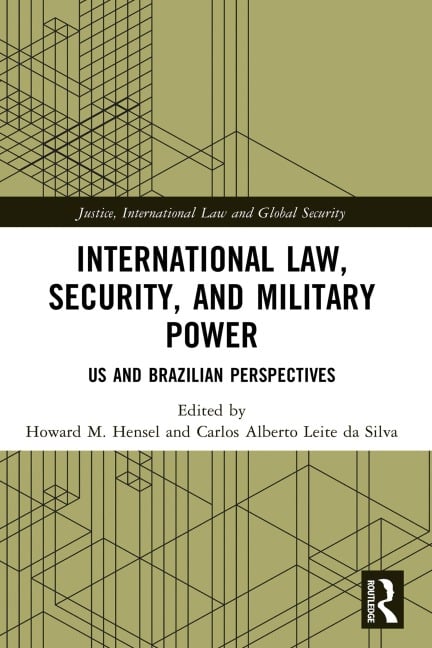
This book contributes to our understanding and appreciation of the contemporary relevance of international humanitarian law and international human rights law by analyzing and assessing the foundational norms, principles, and provisions contained within these bodies. It also explores the ways in which they inform and condition military doctrine and the planning and the execution of military operations in the land, air, cyber, and space domains as perceived through the lens of two of the most important military establishments in the Western Hemisphere - the United States and Brazilian militaries. The expert contributors promote a better awareness and comparative understanding of the rapidly changing, diverse traditional and non-traditional challenges and demands of the 21st century. This volume will be useful to both scholars whose research focuses on international law and military professionals.
Howard M. Hensel is the Henry H. Arnold Professor of International Relations and Strategic Studies at the U.S. Air Force Air War College. His publications include The Law of Armed Conflict, The Legitimate Use of Military Force, and The Prism of Just War. Carlos Alberto Leite da Silva, a retired Brazilian Air Force Colonel, is Professor in the Postgraduate Program in Aerospace Science at the Brazilian Air Force University (UNIFA) and Vice-Dean of Postgraduate Studies and Research. Kesia G. Arraes Gomes, a Brazilian Air Force Lieutenant Colonel, is Deputy Head of Governance at the Brazilian Department of Veterans Affairs. Carlos Eduardo Valle Rosa, a retired Brazilian Air Force Colonel, is Professor of Aerospace Power Theory at the Brazilian Air Force University (UNIFA).
INTRODUCTION Howard M. Hensel Carlos Alberto Leite da Silva Carlos Eduardo Valle Rosa Kesia Gomes PART I: THE DEVELOPMENT OF HUMAN RIGHTS LAW AND INTERNATIONAL HUMANITARIAN LAW: Chapter 1: The Moral Heritage: The Just War Tradition and the Concept of Human Rights - James Turner Johnson Chapter 2: International Human Rights Law: Advancing Human Security? A Complex and Uneven Trajectory - George J. Andreopoulos Chapter 3: International Humanitarian Law and Aerial Bombardment: Pre World War II - Howard M. Hensel Chapter 4: International Humanitarian Law and Aerial Bombardment: Post World War II - Howard M. Hensel PART II: NEW DOMAINS - NEW INTERNATIONAL LAW Chapter 5: Cyber Law - Jeffrey Biller Chapter 6: Space Law - Tatiana Ribeiro Viana PART III: INTERNATIONAL LAW, REGIONAL SECURITY CHALLENGES, AND THE APPLICATION OF MILITARY POWER Chapter 7: International Humanitarian Law and Theory of Aerospace Power - Carlos Eduardo Valle Rosa Chapter 8: International Humanitarian Law, Human Rights Law, and the US Armed Force's Role in Responding to Contemporary "Traditional" and "Non-Traditional" Security Challenges in South America - Michael Raming and David Lee Chapter 9: Human Rights Law, the Brazilian Armed Forces, and the Protection of Refugees - Carlos Alberto Leite da Silva and Gustavo Simões Chapter 10: International Law, the Brazilian Armed Forces, the Response to Natural and Man-Made Disasters - Natasha da Silva Terres and Rodrigo Antônio Silveira dos Santos Chapter 11: Toward the Institutionalization of an Expanded Protection of Human Rights Carlos Alberto Leite da Silva and Guilherme Sandoval Góes PART IV: INTERNATIONAL LAW AND THE APPLICATION OF POWER IN NEW DOMAINS Chapter 12: New Frontiers for the US Armed Forces: International Law and Operations in the Cyber Domain- Timothy Goines Chapter 13: Cyber Law and the Role of the Brazilian Air Force in the Cyber Domain - Pedro Arthur Linhares Lima and Constança Maia Chapter 14: New Frontiers for the US Armed Forces: International Law and Operationsin Space - Theodore Richard CONCLUSION: The Future of International Law and Air, Space, and Cyber Defense - Julia Grignon
Dieses eBook wird im PDF-Format geliefert und ist mit einem Adobe Kopierschutz (DRM) versehen. Sie können dieses eBook mit allen Geräten lesen, die das PDF-Format und den Adobe Kopierschutz (DRM) unterstützen.
Zum Beispiel mit den folgenden Geräten:
• tolino Reader
Laden Sie das eBook direkt über den Reader-Shop auf dem tolino herunter oder übertragen Sie das eBook auf Ihren tolino mit einer kostenlosen Software wie beispielsweise Adobe Digital Editions.
• Sony Reader & andere eBook Reader
Laden Sie das eBook direkt über den Reader-Shop herunter oder übertragen Sie das eBook mit der kostenlosen Software Sony READER FOR PC/Mac oder Adobe Digital Editions auf ein Standard-Lesegeräte mit epub- und Adobe DRM-Unterstützung.
• Tablets & Smartphones
Möchten Sie dieses eBook auf Ihrem Smartphone oder Tablet lesen, finden Sie hier unsere kostenlose Lese-App für iPhone/iPad und Android Smartphone/Tablets.
• PC & Mac
Lesen Sie das eBook direkt nach dem Herunterladen mit einer kostenlosen Lesesoftware, beispielsweise Adobe Digital Editions, Sony READER FOR PC/Mac oder direkt über Ihre eBook-Bibliothek in Ihrem Konto unter „Meine eBooks“ - „online lesen“.
Schalten Sie das eBook mit Ihrer persönlichen Adobe ID auf bis zu sechs Geräten gleichzeitig frei.
Bitte beachten Sie, dass die Kindle-Geräte das Format nicht unterstützen und dieses eBook somit nicht auf Kindle-Geräten lesbar ist.