Und dann auf "Zum Home-Bildschirm [+]".

Stöbern
genialokal zum Startbildschirm hinzufügen
Installieren Sie die genialokal App auf Ihrem Startbildschirm für einen schnellen Zugriff und eine komfortable Nutzung.
Installieren Sie die genialokal App auf Ihrem Startbildschirm für einen schnellen Zugriff und eine komfortable Nutzung.


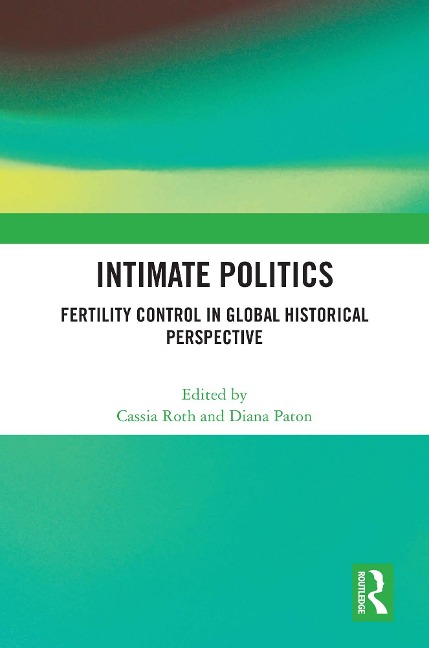
This book places the intimate experience of fertility control at the heart of political and social approaches toward women's bodies. Across the globe, women have always controlled their fertility through intimate efforts ultimately tied to larger political processes and gendered power dynamics. Women's biological reproductive capabilities have been contested sites of power struggles, shaping the formation, rule, and dissolution of political regimes throughout history. Yet these intersections between the intimate and the political remain understudied in the historical literature. This book explores these questions from the perspective of multiple time periods, geographic locations, actors, and methods. Chapters analyze how women's individual practices of fertility control, including contraception, abortion, and infanticide, alongside methods for achieving conception and birth, intersected with larger political, economic, and cultural trends. Others problematize the ideas of 'control' in history. What did it mean to 'control one's fertility' in different historical periods and geographical regions? How did historical actors understand and practise what we now call fertility control? How can we expand conventional definitions of fertility control to interrogate ideas related to infertility, menstruation, and heteronormativity? Contributors also highlight how race, ethnicity, and class intersect with gender to shape if, and how, women and men approached fertility control. This book will be of great value to students and scholars of history including the history of the body, women's rights, and health equity, as well as the intersectionality of gender and health. The chapters in this book were originally published as a special issue of Women's History Review.
Cassia Roth is Associate Professor in the Department of Society, Environment, and Health Equity at the University of California, Riverside, USA. She is the author of A Miscarriage of Justice: Women's Reproductive Lives and the Law in Early Twentieth-Century Brazil and articles in Gender & History, Journal of Women's History, Slavery & Abolition, Medical History, and História, Ciências, Saúde - Manguinhos, among others. She has an MPH in Epidemiology and a PhD in History. Diana Paton is William Robertson Professor of History at the University of Edinburgh. Her books include No Bond but the Law: Punishment, Race and Gender in Jamaican State Formation, 1780-1870, and The Cultural Politics of Obeah: Religion, Colonialism and Modernity in the Caribbean World.
Introduction 1. Fertility control in ancient Rome 2. Who's in control? Varying and changing translations of 'birth control' in Japan 3. 'Performing public piety:' Infanticide and reproductive agency in Reformation Spain 4. The many meanings of aborto: Pregnancy termination and the instability of a medical category over time 5. Debates on family planning and the contraceptive pill in the Irish magazine Woman's Way, 1963-1973 6. Bringing the law home: Abortion, reproductive coercion, and the family in early twentieth-century China 7. In the family way: Incest, fertility control, and the power of the patriarchal family in Brazil 8. 'It is impossible to judge the extent to which the crime is prevalent': Infanticide and the law in India, 1870-1926 9. Embodied sources: abortion, medicine, and the law in early twentieth-century British Guiana Afterword: Governing reproduction
Dieses eBook wird im PDF-Format geliefert und ist mit einem Adobe Kopierschutz (DRM) versehen. Sie können dieses eBook mit allen Geräten lesen, die das PDF-Format und den Adobe Kopierschutz (DRM) unterstützen.
Zum Beispiel mit den folgenden Geräten:
• tolino Reader
Laden Sie das eBook direkt über den Reader-Shop auf dem tolino herunter oder übertragen Sie das eBook auf Ihren tolino mit einer kostenlosen Software wie beispielsweise Adobe Digital Editions.
• Sony Reader & andere eBook Reader
Laden Sie das eBook direkt über den Reader-Shop herunter oder übertragen Sie das eBook mit der kostenlosen Software Sony READER FOR PC/Mac oder Adobe Digital Editions auf ein Standard-Lesegeräte mit epub- und Adobe DRM-Unterstützung.
• Tablets & Smartphones
Möchten Sie dieses eBook auf Ihrem Smartphone oder Tablet lesen, finden Sie hier unsere kostenlose Lese-App für iPhone/iPad und Android Smartphone/Tablets.
• PC & Mac
Lesen Sie das eBook direkt nach dem Herunterladen mit einer kostenlosen Lesesoftware, beispielsweise Adobe Digital Editions, Sony READER FOR PC/Mac oder direkt über Ihre eBook-Bibliothek in Ihrem Konto unter „Meine eBooks“ - „online lesen“.
Schalten Sie das eBook mit Ihrer persönlichen Adobe ID auf bis zu sechs Geräten gleichzeitig frei.
Bitte beachten Sie, dass die Kindle-Geräte das Format nicht unterstützen und dieses eBook somit nicht auf Kindle-Geräten lesbar ist.