Und dann auf "Zum Home-Bildschirm [+]".

Stöbern
genialokal zum Startbildschirm hinzufügen
Installieren Sie die genialokal App auf Ihrem Startbildschirm für einen schnellen Zugriff und eine komfortable Nutzung.
Installieren Sie die genialokal App auf Ihrem Startbildschirm für einen schnellen Zugriff und eine komfortable Nutzung.
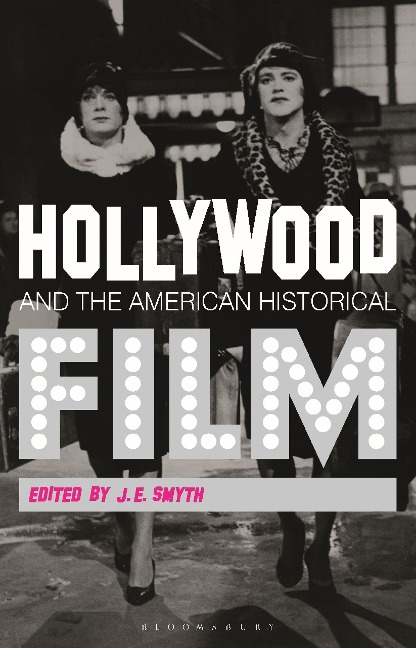
How do Hollywood filmmakers construct and interpret American history? Is film's visual historical language inherently different from the traditions of written history? This definitive collection of essays by leading scholars probes the theoretical and historical contexts of films made about the American past - from the silent era to the present.
Exploring issues deeply connected with historical filmmaking, from historiography to censorship, to race, gender, and sexuality, the book discusses a wide range of films and genres- including classics such as The Virginian, Gone with the Wind and Citizen Kane. This collection is essential reading for anyone interested in studying, or researching American history and film.
Includes essays by Susan Courtney, David Culbert, Nicholas J. Cull, Vera Dika, David Eldridge, Vittorio Hösle, Marcia Landy, Mark W. Roche, Robert Rosenstone, Ian Scott, Robert Sklar, J.E. Smyth, and Warren I. Susman.
J.E. Smyth is Assistant Professor of History and Comparative American Studies at the University of Warwick, UK. She is the author of Reconstructing American Historical Cinema from Cimarron to Citizen Kane and Edna Ferber's Hollywood: American Fictions of Gender, Race and History.
Introduction; J.E.Smyth Film and History: Artefact and Experience; W.Susman Film History, Reconstruction and Southern Legendary History in The Birth of a Nation (1915); D.Culbert The Hollywood Western, the Movement-Image and Making History; M.Landy Ripping the Portieres at the Seams: Lessons from A Streetcar Named Desire (1951) on Gone with the Wind (1939); S.Courtney Hollywood About Hollywood: Genre as Historiography; R.Sklar Some Like it Hot (1959) and The Virtues of Not Taking History Too Seriously; D.Eldridge Vico's Age of Heroes and the Age of Men in John Ford's The Man Who Shot Liberty Valance (1962); M.Roche & V.Hösle Anatomy of a Shipwreck: Warner Bros., The White House and the Celluloid Sinking of PT 109 (1963); N.J.Cull The Long Road of Women's Memory: Fred Zinnemann's Julia (1977); J.E.Smyth Inventing Historical Truth on the Silver Screen; R.Rosenstone 'This is not America; this is Los Angeles': Crime, Space and History in the City of Angels; I.Scott Between Nostalgia and Regret: Strategies of Historical Disruption from Douglas Sirk to Mad Men; V.Dika Further Reading.
Dieses eBook wird im PDF-Format geliefert und ist mit einem Adobe Kopierschutz (DRM) versehen. Sie können dieses eBook mit allen Geräten lesen, die das PDF-Format und den Adobe Kopierschutz (DRM) unterstützen.
Zum Beispiel mit den folgenden Geräten:
• tolino Reader
Laden Sie das eBook direkt über den Reader-Shop auf dem tolino herunter oder übertragen Sie das eBook auf Ihren tolino mit einer kostenlosen Software wie beispielsweise Adobe Digital Editions.
• Sony Reader & andere eBook Reader
Laden Sie das eBook direkt über den Reader-Shop herunter oder übertragen Sie das eBook mit der kostenlosen Software Sony READER FOR PC/Mac oder Adobe Digital Editions auf ein Standard-Lesegeräte mit epub- und Adobe DRM-Unterstützung.
• Tablets & Smartphones
Möchten Sie dieses eBook auf Ihrem Smartphone oder Tablet lesen, finden Sie hier unsere kostenlose Lese-App für iPhone/iPad und Android Smartphone/Tablets.
• PC & Mac
Lesen Sie das eBook direkt nach dem Herunterladen mit einer kostenlosen Lesesoftware, beispielsweise Adobe Digital Editions, Sony READER FOR PC/Mac oder direkt über Ihre eBook-Bibliothek in Ihrem Konto unter „Meine eBooks“ - „online lesen“.
Schalten Sie das eBook mit Ihrer persönlichen Adobe ID auf bis zu sechs Geräten gleichzeitig frei.
Bitte beachten Sie, dass die Kindle-Geräte das Format nicht unterstützen und dieses eBook somit nicht auf Kindle-Geräten lesbar ist.