Und dann auf "Zum Home-Bildschirm [+]".

Stöbern
genialokal zum Startbildschirm hinzufügen
Installieren Sie die genialokal App auf Ihrem Startbildschirm für einen schnellen Zugriff und eine komfortable Nutzung.
Installieren Sie die genialokal App auf Ihrem Startbildschirm für einen schnellen Zugriff und eine komfortable Nutzung.

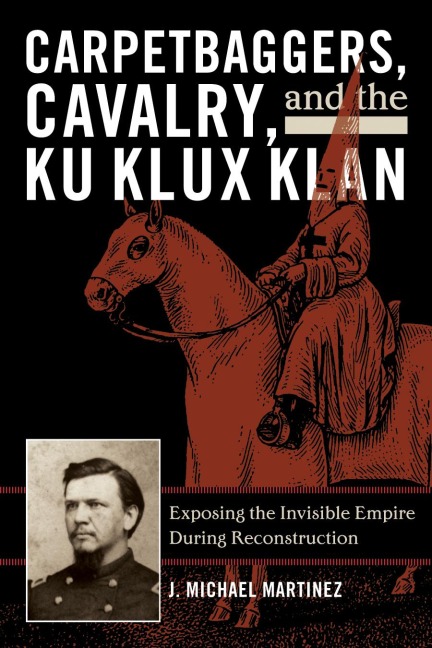
In some places, the Ku Klux Klan (KKK) was a social fraternity whose members enjoyed sophomoric hijinks and homemade liquor. In other areas, the KKK was a paramilitary group intent on keeping former slaves away from white women and Republicans away from ballot boxes. South Carolina saw the worst Klan violence and, in 1871, President Grant sent federal troops under the command of Major Lewis Merrill to restore law and order. Merrill did not eradicate the Klan, but they arguably did more than any other person or entity to expose the identity of the Invisible Empire as a group of hooded, brutish, homegrown terrorists. In compiling evidence to prosecute the leading Klansmen and by restoring at least a semblance of order to South Carolina, Merrill and his men demonstrated that the portrayal of the KKK as a chivalric organization was at best a myth, and at worst a lie.
This is the story of the rise and fall of the Reconstruction-era Klan, focusing especially on Major Merrill and the Seventh Cavalry's efforts to expose the secrets of the Ku Klux Klan to the light of day.
J. Michael Martinez works as a corporate attorney and teaches political science as a part-time faculty member at Kennesaw State University. His most recent book, Life and Death in Civil War Prisons, traces the parallel lives of two Civil War prisoners. Martinez lives in Monroe, Georgia, with his wife and family.
Prologue: "Jim Williams on His Big Muster"
Chapter 1: "A Brotherhood of Property-Holders, the Peaceable, Law-Abiding Citizens of the State"
Chapter 2: "The Foundations Must Be Broken Up and Relaid, or All Our Blood and Treasure Have Been Spent in Vain"
Chapter 3: "The Whole Fabric of Reconstruction . . . Will Topple and Fall"
Chapter 4: "It Was to Be His Life-long Complaint That His Services Were Never Properly Recognized or Rewarded"
Chapter 5: "The Dagger That Was Made Illustrious in the Hands of Brutus"
Chapter 6: "A Perversion of Moral Sentiment Among the Southern Whites"
Chapter 7: "As Far as I Can Learn, the Prosecuting Lawyers Have Managed the Business Ably"
Chapter 8: "The Causes from Which Ku Kluxism Sprung Are Still Potent for Evil"
Chapter 9: "He Became So Offensive a Partisan That the Papers of That Section Applied to Him the Most Opprobrious Epithets"
Epilogue: "It Is Like Writing History with Lightning"
Bibliographic Essay