Und dann auf "Zum Home-Bildschirm [+]".

Stöbern
genialokal zum Startbildschirm hinzufügen
Installieren Sie die genialokal App auf Ihrem Startbildschirm für einen schnellen Zugriff und eine komfortable Nutzung.
Installieren Sie die genialokal App auf Ihrem Startbildschirm für einen schnellen Zugriff und eine komfortable Nutzung.
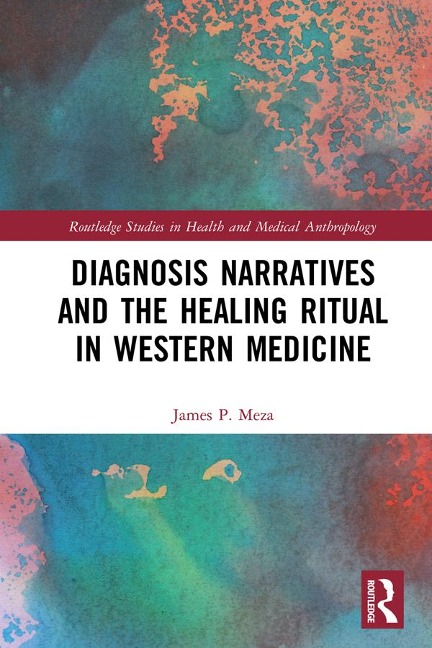
The dominance of "illness narratives" in narrative healing studies has tended to mean that the focus centers around the healing of the individual. Meza proposes that this emphasis is misplaced and the true focus of cultural healing should lie in managing the disruption of disease and death (cultural or biological) to the individual's relationship with society. By explicating narrative theory through the lens of cognitive anthropology, Meza reframes the epistemology of narrative and healing, moving it from relativism to a philosophical perspective of pragmatic realism. Using a novel combination of narrative theory and cognitive anthropology to represent the ethnographic data, Meza's ethnography is a valuable contribution in a field where ethnographic records related to medical clinical encounters are scarce. The book will be of interest to scholars of medical anthropology and those interested in narrative history and narrative medicine.
James P. Meza is Assistant Professor in the Department of Family Medicine and Public Health Science at Wayne State University School of Medicine, USA. He holds a PhD in Cultural Anthropology and is a practising doctor of medicine (MD).
Part I: Methods 1. Fieldwork methods 2. The theoretical frame Part II: The diagnosis narratives 3. Entrance into the field 4. Who is narrating and what story are they telling? 5. Spatial cognitions 6. The doctor tells the diagnostic story to the patient 7. Joint attention to the diagnostic narrative 8. Spatial therapy Part III: Ritual healing in Western medicine 9. Ritual theory 10. Disease as an existential threat 11. Qualifications of a leech 12. Healing relationships 13. When the healing ritual fails Part IV: The body politic 14. The business of medicine 15. Overdiagnosis and overtreatment Part V: Narrative studies on healing reconsidered 16. Narrative healing reconsidered 17. Theoretical synthesis 18. Reflections of a healer Appendix A: Individual patient narratives Appendix B: Doctors talk about work Appendix C: Codebook and themes
Dieses eBook wird im PDF-Format geliefert und ist mit einem Adobe Kopierschutz (DRM) versehen. Sie können dieses eBook mit allen Geräten lesen, die das PDF-Format und den Adobe Kopierschutz (DRM) unterstützen.
Zum Beispiel mit den folgenden Geräten:
• tolino Reader
Laden Sie das eBook direkt über den Reader-Shop auf dem tolino herunter oder übertragen Sie das eBook auf Ihren tolino mit einer kostenlosen Software wie beispielsweise Adobe Digital Editions.
• Sony Reader & andere eBook Reader
Laden Sie das eBook direkt über den Reader-Shop herunter oder übertragen Sie das eBook mit der kostenlosen Software Sony READER FOR PC/Mac oder Adobe Digital Editions auf ein Standard-Lesegeräte mit epub- und Adobe DRM-Unterstützung.
• Tablets & Smartphones
Möchten Sie dieses eBook auf Ihrem Smartphone oder Tablet lesen, finden Sie hier unsere kostenlose Lese-App für iPhone/iPad und Android Smartphone/Tablets.
• PC & Mac
Lesen Sie das eBook direkt nach dem Herunterladen mit einer kostenlosen Lesesoftware, beispielsweise Adobe Digital Editions, Sony READER FOR PC/Mac oder direkt über Ihre eBook-Bibliothek in Ihrem Konto unter „Meine eBooks“ - „online lesen“.
Schalten Sie das eBook mit Ihrer persönlichen Adobe ID auf bis zu sechs Geräten gleichzeitig frei.
Bitte beachten Sie, dass die Kindle-Geräte das Format nicht unterstützen und dieses eBook somit nicht auf Kindle-Geräten lesbar ist.