Und dann auf "Zum Home-Bildschirm [+]".

Stöbern
genialokal zum Startbildschirm hinzufügen
Installieren Sie die genialokal App auf Ihrem Startbildschirm für einen schnellen Zugriff und eine komfortable Nutzung.
Installieren Sie die genialokal App auf Ihrem Startbildschirm für einen schnellen Zugriff und eine komfortable Nutzung.

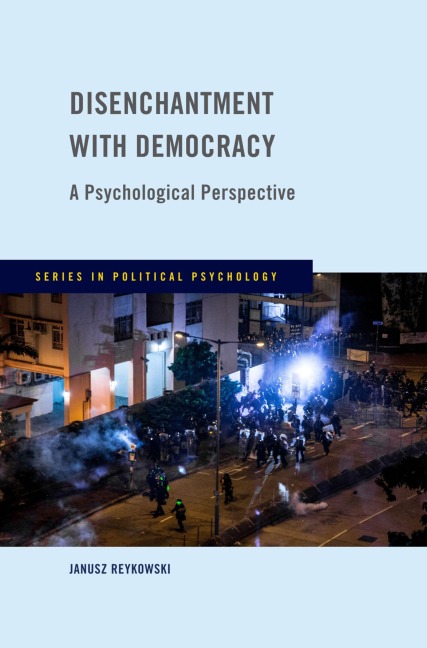
In recent years, there has been a rise in social movements and organizations that challenge the very foundations of liberal democracy on a global scale. Discrepancies of interests, ideological or worldview contradictions, and identity differences are more likely now to transform into destructive conflicts, and violence is used as a legitimate method for attaining political and economic goals. Drawing on the knowledge accumulated in social and political psychology, this book scrutinizes these phenomena and provides an even deeper understanding of the nature of these conflicts. The book also addresses the imperfections of liberal institutions, which can exacerbate these divides, providing crucial context for understanding contemporary political tensions and their effects on the world's democracies.
Janusz Reykowski is Professor of Psychology at the Polish Academy of Science and co-founder and Chairman (until 2013) of the Academic Council of the Warsaw School of Social Psychology. He is a member of the Academia Europea, a Past President of the Polish Psychological Association, Past President of the International Society of Political Psychology, and an Honorary Member of the Polish Society of Social Psychology. In the last three decades, his research has focused on political psychology, specifically on solving political conflicts and on the development of democratic attitudes. He has published 10 books and over 150 articles and chapters in various languages. He was also awarded the Sanford Prize for Lifetime Achievement in Political Psychology by the International Society of Political Psychology.
Contents Preface Introduction
Chapter 1. Violence as a Means of Attaining Group Goals Chapter 2: Differences in Mentality-- A Source of Ideological Conflicts Chapter 3: Opposed Interests as a Source of Conflict Chapter 4: Economic Freedom as an Ideology Chapter 5: The Market System as a Psychological Mechanism Chapter 6: The Sources of Disenchantment with Democracy Chapter 7: Political Dialogue as an Instrument of the Democratic Policy Making
References