Und dann auf "Zum Home-Bildschirm [+]".

Stöbern
genialokal zum Startbildschirm hinzufügen
Installieren Sie die genialokal App auf Ihrem Startbildschirm für einen schnellen Zugriff und eine komfortable Nutzung.
Installieren Sie die genialokal App auf Ihrem Startbildschirm für einen schnellen Zugriff und eine komfortable Nutzung.
Ihr gewünschter Artikel ist in 0 Buchhandlungen vorrätig - wählen Sie hier eine Buchhandlung in Ihrer Nähe aus:

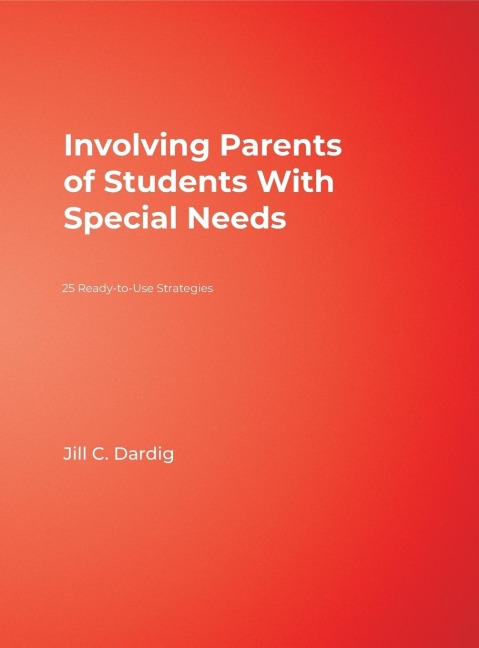

Bridge the communication gap with parents of children with special needs!The author provides 25 ready-to-use techniques for involving parents in the education of their children. General and special education teachers in Grades PreK-12 can use these strategies to reach the parents of students with a wide range of learning needs. This teacher-friendly resource provides sample materials and tips for: Using letters, telephone, email, newsletters, and progress reports to communicate with parents Conducting parent conferences and in-person meetings Connecting parents with resources Helping parents teach their children at home Dealing with home/school conflicts Preparing a parent involvement action plan
Jill C. Dardig is a professor of education at Ohio Dominican University, where she teaches a variety of courses and supervises student teachers. She has trained intervention specialists for the past 30 years at the university and was the first recipient of Ohio Dominican-s Booth-Ferris Master Faculty Award. Dardig has served as president of the Teacher Education Division of the Ohio Federation Council for Exceptional Children. She worked previously as a curriculum specialist for the Ohio Department of Mental Retardation and Developmental Disabilities, a special education faculty member at Russell Sage College, a research assistant for the Northeast Regional Media Center for the Deaf, and a parent educator for Project Change. Dardig has written a variety of books and other publications about and for parents.
Special Feature Figures
Preface
Acknowledgments
About the Author
1. Introduction
Parent Involvement Is Important and Up to You!
Your Personal Philosophy of Parent Involvement
2. Getting Started
Strategy 1: Personalized Letterhead
Strategy 2: Parent Contact Log
Strategy 3: Introductory Letter
Strategy 4: Parent Volunteer Invitation
3. Designing Your Classroom to Educate Parents
Strategy 5: The Visible Curriculum
4. Group Written Communication and Interaction
Strategy 6: Suggestion Box Letter
Strategy 7: Class Newsletter
5. Personalized Written Communication and Interaction
Strategy 8: Weekly Progress Report
Strategy 9: Parent Appreciation Letter
Strategy 10: Print Resource Letter
Strategy 11: Internet Resource Letter
Strategy 12: E-mail Communication
6. Telephone Communication
Strategy 13: Phone Call to an Organization
Strategy 14: Phone Calls to Parents
Strategy 15: Voicemail
7. In-Person Meetings
Strategy 16: Parent Group Meetings
Strategy 17: Pre-Conference Parent Survey
Strategy 18: Tips for Successful Conferences
8. Helping Parents Teach Their Children at Home
Strategy 19: IEP/IFSP Practice Letter
Strategy 20: Home Activity Calendar
Strategy 21: Home Response Cards
Strategy 22: Make-It-Take-It Workshop
Strategy 23: Summer Activities Letter
9. Challenges to Parent Involvement
Strategy 24: Conflict Situations
Obstacles to Parent Involvement
10. Staying Organized and Planning for Next Year
Strategy 25: Parent Involvement Portfolio
Parent Involvement Action Plan
References
Index