Und dann auf "Zum Home-Bildschirm [+]".

Stöbern
genialokal zum Startbildschirm hinzufügen
Installieren Sie die genialokal App auf Ihrem Startbildschirm für einen schnellen Zugriff und eine komfortable Nutzung.
Installieren Sie die genialokal App auf Ihrem Startbildschirm für einen schnellen Zugriff und eine komfortable Nutzung.

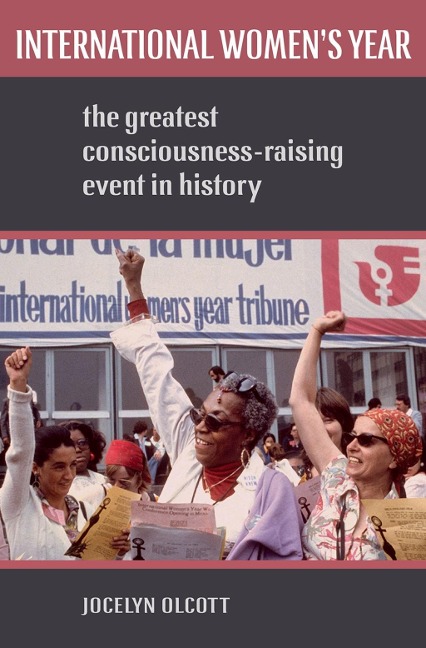
Amid the geopolitical and social turmoil of the 1970s, the United Nations declared 1975 as International Women's Year. The capstone event, a two-week conference in Mexico City, was dubbed by organizers and journalists as "the greatest consciousness-raising event in history." The event drew an all-star cast of characters, including Soviet cosmonaut Valentina Tereshkova, Iranian Princess Ashraf Pahlavi, and US feminist Betty Friedan, as well as a motley array of policymakers, activists, and journalists.
International Women's Year, the first book to examine this critical moment in feminist history, starts by exploring how organizers juggled geopolitical rivalries and material constraints amid global political and economic instability. The story then dives into the action in Mexico City, including conflicts over issues ranging from abortion to Zionism. The United Nations provided indispensable infrastructure and support for this encounter, even as it came under fire for its own discriminatory practices. While participants expressed dismay at levels of discord and conflict, Jocelyn Olcott explores how these combative, unanticipated encounters generated the most enduring legacies, including women's networks across the global south, greater attention to the intersectionalities of marginalization, and the arrival of women's micro-credit on the development scene.
This watershed moment in transnational feminism, colorfully narrated in International Women's Year, launched a new generation of activist networks that spanned continents, ideologies, and generations.
Jocelyn Olcott is associate professor of History and Gender, Sexuality, and Feminist Studies at Duke University. She is the author of Revolutionary Women in Postrevolutionary Mexico and the co-editor of Sex in Revolution: Gender, Politics, and Power in Modern Mexico.
Acknowledgments Glossary of Acronyms Dramatis Personae Introduction Act I: International Women's Year Deserves No Less Scene One: WINGO Politics Scene Two: Choosing Battles in the Cold War Scene Three: Getting to Mexico City Scene Four: Follow the Money Act II: The Conference Scene Five: Opening Acts Scene Six: Inauguration Day Scene Seven: "Betty Friedan vs. the Third World" Scene Eight: "This Is an Illegitimate Delegation" Scene Nine: "Other Kinds of Problems" Scene Ten: The Politics of Peace Scene Eleven: The First Rule of Fight Club Scene Twelve: Coming Out Party Scene Thirteen: Chaos in the Tribune Scene Fourteen: Counter-congresses Scene Fifteen: ¡Domitila a la Tribuna! Scene Sixteen: The Final Push Scene Seventeen: Unceremonious Closing Act III: Legacies Scene Eighteen: Beyond Mexico City Notes on Sources, Theories, and Methods Notes Bibliography Index