Und dann auf "Zum Home-Bildschirm [+]".

Stöbern
genialokal zum Startbildschirm hinzufügen
Installieren Sie die genialokal App auf Ihrem Startbildschirm für einen schnellen Zugriff und eine komfortable Nutzung.
Installieren Sie die genialokal App auf Ihrem Startbildschirm für einen schnellen Zugriff und eine komfortable Nutzung.
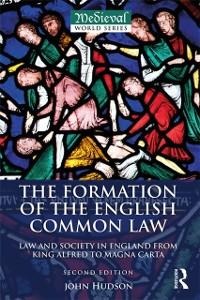
The Formation of English Common Law provides a comprehensive overview of the development of early English law, one of the classic subjects of medieval history. This much expanded second edition spans the centuries from King Alfred to Magna Carta, abandoning the traditional but restrictive break at the Norman Conquest. Within a strong interpretative framework, it also integrates legal developments with wider changes in the thought, society, and politics of the time. Rather than simply tracing elements of the common law back to their Anglo-Saxon, Norman or other origins, John Hudson examines and analyses the emergence of the common law from the interaction of various elements that developed over time, such as the powerful royal government inherited from Anglo-Saxon England and land holding customs arising from the Norman Conquest. Containing a new chapter charting the Anglo-Saxon period, as well as a fully revised Further Reading section, this new edition is an authoritative yet highly accessible introduction to the formation of the English common law and is ideal for students of history and law.
John Hudson is Professor of Legal History at St Andrews University, UK, and William W. Cook Global Law Professor at the University of Michigan. His previous publications include F. W. Maitland and the Englishness of English Law (2008), The Oxford History of the Laws of England, Volume II 871-1216 (2012) and Papers Preparatory to the Making of English Law: King Alfred to the Twelfth Century, Volume II: From God's Law to Common Law, ed., with Stephen Baxter (2014).
Editor's Preface to First Edition Author's Preface to First Edition Author's Preface to Second Edition Abbreviations CHAPTER 1 Introduction The concept of law The functions of law Disputing and negotiating English common law The formation of the English common law CHAPTER 2 The Court Framework in Anglo-Saxon and Anglo-Norman England The king's court Local and itinerant justices Shire courts Hundred courts Seignorial courts Urban courts Ecclesiastical courts Conclusions CHAPTER 3 Violence and Theft in Anglo-Saxon and Anglo-Norman England Bricstan's case Offences, offenders, and motives Prevention and police Trial Punishment and compensation Conclusions CHAPTER 4 Law and Land-holding in Anglo-Saxon England Æscwynn of Stonea, Ogga of Mildenhall, Wulfstan of Dalham and their gifts to the church of Ely The forms of land Land, lordship, and law The customary framework Disputes Conclusions CHAPTER 5 Law and Land-holding in Anglo-Norman England Land, lordship, and law The forms of land-holding The customary framework: control of land held in fee Disputes Anglo-Norman land law and common law property Conclusions CHAPTER 6 Angevin Reform Kingship, Stephen's reign, and Angevin reform The eyre Chronology The stages and nature of reform Henry II and reform The administrator's mentality Conclusions CHAPTER 7 Crime and the Angevin Reforms Ailward's case Classification The continuation of traditional methods Presentment and the extension of royal authority The limits of royal authority Conclusions CHAPTER 8 Law and Land-holding in Angevin England Abbot Samson of Bury St Edmunds New procedures The impact of change Conclusions CHAPTER 9 Magna Carta and the Formation of the English Common Law King John and the administration of justice Magna Carta Law and legal expertise The common law Concluding comparisons Glossary Note on sources Further reading Index
Dieses eBook wird im PDF-Format geliefert und ist mit einem Adobe Kopierschutz (DRM) versehen. Sie können dieses eBook mit allen Geräten lesen, die das PDF-Format und den Adobe Kopierschutz (DRM) unterstützen.
Zum Beispiel mit den folgenden Geräten:
• tolino Reader
Laden Sie das eBook direkt über den Reader-Shop auf dem tolino herunter oder übertragen Sie das eBook auf Ihren tolino mit einer kostenlosen Software wie beispielsweise Adobe Digital Editions.
• Sony Reader & andere eBook Reader
Laden Sie das eBook direkt über den Reader-Shop herunter oder übertragen Sie das eBook mit der kostenlosen Software Sony READER FOR PC/Mac oder Adobe Digital Editions auf ein Standard-Lesegeräte mit epub- und Adobe DRM-Unterstützung.
• Tablets & Smartphones
Möchten Sie dieses eBook auf Ihrem Smartphone oder Tablet lesen, finden Sie hier unsere kostenlose Lese-App für iPhone/iPad und Android Smartphone/Tablets.
• PC & Mac
Lesen Sie das eBook direkt nach dem Herunterladen mit einer kostenlosen Lesesoftware, beispielsweise Adobe Digital Editions, Sony READER FOR PC/Mac oder direkt über Ihre eBook-Bibliothek in Ihrem Konto unter „Meine eBooks“ - „online lesen“.
Schalten Sie das eBook mit Ihrer persönlichen Adobe ID auf bis zu sechs Geräten gleichzeitig frei.
Bitte beachten Sie, dass die Kindle-Geräte das Format nicht unterstützen und dieses eBook somit nicht auf Kindle-Geräten lesbar ist.