Und dann auf "Zum Home-Bildschirm [+]".

Stöbern
genialokal zum Startbildschirm hinzufügen
Installieren Sie die genialokal App auf Ihrem Startbildschirm für einen schnellen Zugriff und eine komfortable Nutzung.
Installieren Sie die genialokal App auf Ihrem Startbildschirm für einen schnellen Zugriff und eine komfortable Nutzung.
Ihr gewünschter Artikel ist in 0 Buchhandlungen vorrätig - wählen Sie hier eine Buchhandlung in Ihrer Nähe aus:

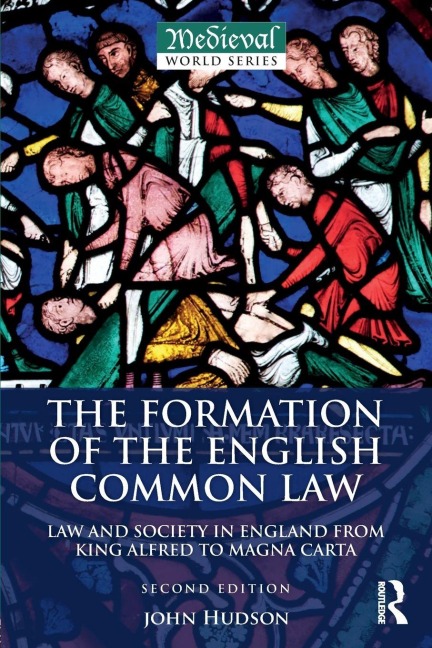
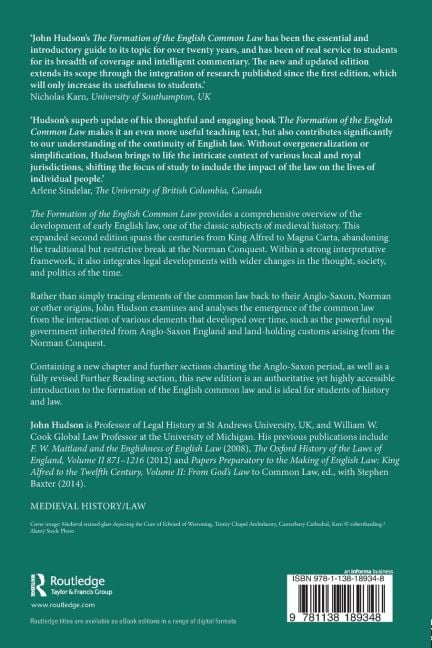
The Formation of English Common Law provides a comprehensive overview of the development of early English law, one of the classic subjects of medieval history. This much expanded second edition spans the centuries from King Alfred to Magna Carta, abandoning the traditional but restrictive break at the Norman Conquest. Within a strong interpretative framework, it also integrates legal developments with wider changes in the thought, society, and politics of the time.
Rather than simply tracing elements of the common law back to their Anglo-Saxon, Norman or other origins, John Hudson examines and analyses the emergence of the common law from the interaction of various elements that developed over time, such as the powerful royal government inherited from Anglo-Saxon England and land holding customs arising from the Norman Conquest.
Containing a new chapter charting the Anglo-Saxon period, as well as a fully revised Further Reading section, this new edition is an authoritative yet highly accessible introduction to the formation of the English common law and is ideal for students of history and law.
The late John Hudson was born at Balovale (now Zambezi) on the upper Zambezi River, Northern Rhodesia (now Zambia) in 1930. From 1985 until finalretirement in 1994, he was Executive Director of the Zambia National Farmers' Union.
Editor's Preface to First Edition Author's Preface to First Edition Author's Preface to Second Edition Abbreviations CHAPTER 1 Introduction The concept of law The functions of law Disputing and negotiating English common law The formation of the English common law CHAPTER 2 The Court Framework in Anglo-Saxon and Anglo-Norman England The king's court Local and itinerant justices Shire courts Hundred courts Seignorial courts Urban courts Ecclesiastical courts Conclusions CHAPTER 3 Violence and Theft in Anglo-Saxon and Anglo-Norman England Bricstan's case Offences, offenders, and motives Prevention and police Trial Punishment and compensation Conclusions CHAPTER 4 Law and Land-holding in Anglo-Saxon England Æscwynn of Stonea, Ogga of Mildenhall, Wulfstan of Dalham and their gifts to the church of Ely The forms of land Land, lordship, and law The customary framework Disputes Conclusions CHAPTER 5 Law and Land-holding in Anglo-Norman England Land, lordship, and law The forms of land-holding The customary framework: control of land held in fee Disputes Anglo-Norman land law and common law property Conclusions CHAPTER 6 Angevin Reform Kingship, Stephen's reign, and Angevin reform The eyre Chronology The stages and nature of reform Henry II and reform The administrator's mentality Conclusions CHAPTER 7 Crime and the Angevin Reforms Ailward's case Classification The continuation of traditional methods Presentment and the extension of royal authority The limits of royal authority Conclusions CHAPTER 8 Law and Land-holding in Angevin England Abbot Samson of Bury St Edmunds New procedures The impact of change Conclusions CHAPTER 9 Magna Carta and the Formation of the English Common Law King John and the administration of justice Magna Carta Law and legal expertise The common law Concluding comparisons Glossary Note on sources Further reading Index