Und dann auf "Zum Home-Bildschirm [+]".

Stöbern
genialokal zum Startbildschirm hinzufügen
Installieren Sie die genialokal App auf Ihrem Startbildschirm für einen schnellen Zugriff und eine komfortable Nutzung.
Installieren Sie die genialokal App auf Ihrem Startbildschirm für einen schnellen Zugriff und eine komfortable Nutzung.
Ihr gewünschter Artikel ist in 0 Buchhandlungen vorrätig - wählen Sie hier eine Buchhandlung in Ihrer Nähe aus:

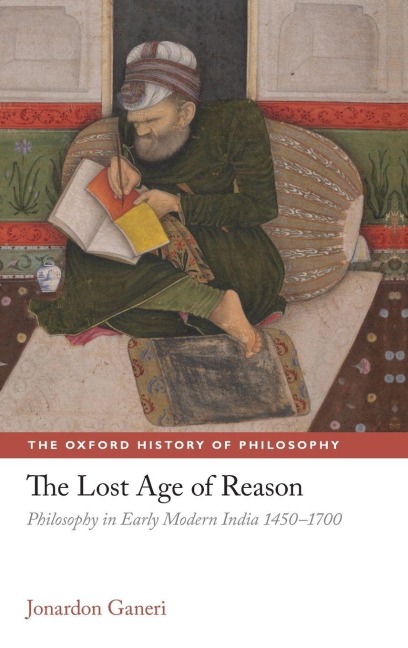
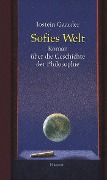
The Lost Age of Reason deals with a fascinating and rich episode in the history of philosophy, one from which those who are interested in the nature of modernity and its global origins have a great deal to learn. Early modernity in India consists in the formation of a new philosophical self, one which makes it possible meaningfully to conceive of oneself as engaging the ancient and the alien in conversation. The ancient texts are now not thought of asauthorities to which one must defer, but regarded as the source of insight in the company of which one pursues the quest for truth. This new attitude implies a change in the conception of one's duties towards the past. After reconstructing the historical intellectual context in detail, and developing a suitablemethodological framework, Ganeri reviews work on the concept of knowledge, the nature of evidence, the self, the nature of the categories, mathematics, realism, and a new language for philosophy. A study of early modern philosophy in India has much to teach us today - about the nature of modernity as such, about the reform of educational institutions and its relationship to creative research, and about cosmopolitan identities in circumstances of globalisation.
Jonardon Ganeri is a philosopher who draws upon Indian, European and Ango-American sources in his work. He is currently Professor of Philosophy at the University of Sussex. He read Mathematics at Cambridge before commencing graduate studies in Philosophy at London and Oxford. He has been a Jacobsen Fellow in Philosophy at King's College London and a Spalding Fellow at Clare Hall Cambridge. As well as teaching at various Universities in Britain, he has held visiting professorships at the University of Chicago and the University of Pennsylvania.
- Introduction
- PART I: INDIA EXPANDING
- 1: The World and India: 1656
- 2: Dãrã Shukoh: A Spacious Islam
- 3: The Cosmopolitan Vision of Yasovijaya Gani
- 4: Navadvïpa: A Place of Hindu-Muslim Confluence in Bengal
- PART II: TEXT AND METHOD
- 5: Contextualism in The Study of Indian Philosophical Literature
- 6: Philosophy outside Academies: Networks
- 7: An Analysis of the New Reason's Literary Artefacts
- 8: Commentary and Creativity
- PART III: THE POSSIBILITY OF INQUIRY
- 9: Inquiry: The History of a Crisis
- 10: Challenge From The Ritualists
- 11: Interventions in a New Research Programme
- PART IV : THE REAL WORLD
- 12: Realism in Question
- 13: New Foundations in the Metaphysics of Mathematics
- 14: Metaphysics in a Different Key
- PART V: A NEW LANGUAGE FOR PHILOSOPHY
- 15: The Technical Language Assessed
- 16: Rival Logics of Domain Restriction
- Conclusion
- Bibliography