Und dann auf "Zum Home-Bildschirm [+]".

Stöbern
genialokal zum Startbildschirm hinzufügen
Installieren Sie die genialokal App auf Ihrem Startbildschirm für einen schnellen Zugriff und eine komfortable Nutzung.
Installieren Sie die genialokal App auf Ihrem Startbildschirm für einen schnellen Zugriff und eine komfortable Nutzung.
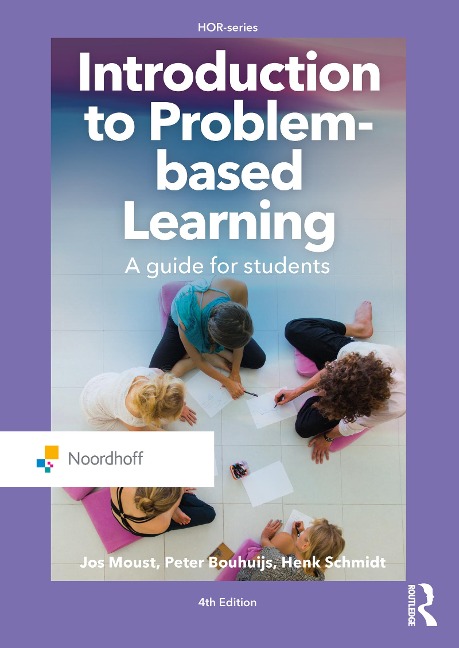
Introduction to Problem-based Learning teaches students how to work with the problem-based learning method, which requires mainly self-directed learning. Particular attention is given to the necessary skills to apply this method effectively. Why Introduction to Problem-based Llearning? . comprehensible introduction in the problem-based learning method . enables students to experience the full potential of this concept . discusses the use of digital devices Introduction to Problem-based learning provides students with the necessary skills to operate within as well as outside problem-based groups. It discusses issues like: How do you take on a problem? How do you collaborate with others? How do you deal with cultural diversity? How do you lead a tutorial group? How can you organize your studies best? Special attention is given to the use of computers, tablets and internet in a problem-based environment.
Jos Moust Peter Bouhuijs Henk Schmidt
1 Features of Problem-based Learning 1.1 Introduction 1.2 What is learning about? 1.3 Learning from and with each other 1.4 What do we know about the effectiveness of problem-based learning? 1.5 Problem-based learning in an electronic environment 1.6 Skills in problem-based learning 2 Learning through problems 2.1 Introduction 2.2 Various types of problems for problem-based learning 2.3 Explanation problems 2.4 The seven-step method of working with explanation problems 2.5 Strategy problems 2.6 Dilemma problems 2.7 Other types of problems 2.8 Variations in problem-based learning 2.9 Educational approaches related to problem-based learning 3 Collaborative learning in the tutorial group 3.1 Introduction 3.2 What is a tutorial group? 3.3 The importance of learning in small groups 3.4 Collaborative learning in a tutorial group 3.5 Some elementary characteristics of communication 3.6 Informal roles played out in the tutorial group 3.7 Formal roles played out in the tutorial group 4 Individual study skills 4.1 Introduction 4.2 Selecting learning resources 4.3 Studying texts 4.4 Making notes and diagrams 4.5 Studying texts in a foreign language 4.6 Recording your studies 4.7 Time management 4.8 Exams, finals and course assessment 4.9 Learning issues 4.10 Learning to learn 5 Skills required by tutorial group members 5.1 Introduction 5.2 The first meeting in a module 5.3 Providing and requesting information 5.4 Active listening 5.5 Making summaries 5.6 Taking notes 5.7 Evaluating tutorial group meetings 5.8 Giving and receiving feedback Appendix: Tools to improve your skills as a tutorial group member 1 Observation list: 'Being a tutorial group member' 2 A questionnaire for evaluating processes in tutorial groups 3 Checklist: 'Skills of a tutorial group member' 6 Chairing a tutorial group meeting 6.1 Introduction 6.2 Taking turns 6.3 Some general points 6.4 The role of the discussion leader during the synthesis phase 6.5 The role of the discussion leader during the analysis phase 6.6 Stimulating a collaborative working atmosphere 6.7 Some final points Appendix: Tools to improve your skills as a discussion leader 1 Observation form 'Discussion leader functioning in the synthesis phase' 2 Observation form 'Discussion leader functioning in the analysis phase' 3 Checklist: Discussion leader skills 4 PROfessional Functioning in Teams (PROFiT) Notes Recommended literature References Index
Dieses eBook wird im PDF-Format geliefert und ist mit einem Adobe Kopierschutz (DRM) versehen. Sie können dieses eBook mit allen Geräten lesen, die das PDF-Format und den Adobe Kopierschutz (DRM) unterstützen.
Zum Beispiel mit den folgenden Geräten:
• tolino Reader
Laden Sie das eBook direkt über den Reader-Shop auf dem tolino herunter oder übertragen Sie das eBook auf Ihren tolino mit einer kostenlosen Software wie beispielsweise Adobe Digital Editions.
• Sony Reader & andere eBook Reader
Laden Sie das eBook direkt über den Reader-Shop herunter oder übertragen Sie das eBook mit der kostenlosen Software Sony READER FOR PC/Mac oder Adobe Digital Editions auf ein Standard-Lesegeräte mit epub- und Adobe DRM-Unterstützung.
• Tablets & Smartphones
Möchten Sie dieses eBook auf Ihrem Smartphone oder Tablet lesen, finden Sie hier unsere kostenlose Lese-App für iPhone/iPad und Android Smartphone/Tablets.
• PC & Mac
Lesen Sie das eBook direkt nach dem Herunterladen mit einer kostenlosen Lesesoftware, beispielsweise Adobe Digital Editions, Sony READER FOR PC/Mac oder direkt über Ihre eBook-Bibliothek in Ihrem Konto unter „Meine eBooks“ - „online lesen“.
Schalten Sie das eBook mit Ihrer persönlichen Adobe ID auf bis zu sechs Geräten gleichzeitig frei.
Bitte beachten Sie, dass die Kindle-Geräte das Format nicht unterstützen und dieses eBook somit nicht auf Kindle-Geräten lesbar ist.