Und dann auf "Zum Home-Bildschirm [+]".

Stöbern
genialokal zum Startbildschirm hinzufügen
Installieren Sie die genialokal App auf Ihrem Startbildschirm für einen schnellen Zugriff und eine komfortable Nutzung.
Installieren Sie die genialokal App auf Ihrem Startbildschirm für einen schnellen Zugriff und eine komfortable Nutzung.
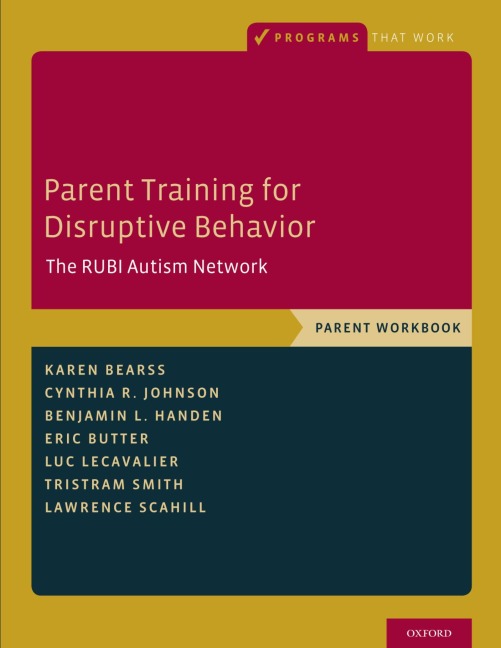
To access the video vignettes, please visit oup.com/RUBI Autism spectrum disorder (ASD) involves difficulties in social interaction and communication, restricted interests and repetitive behavior. Approximately half of children with ASD also exhibit disruptive behaviors such as tantrums and aggression, which can be stressful for the child and family. Parent Training for Disruptive Behavior is an 11-session intervention for parents who wish to learn how to reduce disruptive behaviors and increase adaptive skills in their children with ASD. Each session introduces effective behavior change strategies and includes easy-to-use worksheets, checklists, and take-home activities to help parents apply what they have learned. By participating in this intervention with a trained therapist, parents can help their children overcome behavior problems, promoting happier kids and families.
Karen Bearss, PhD is Assistant Professor in the Department of Psychiatry and Behavioral Sciences at the University of Washington. Dr. Bearss specializes in the assessment and treatment of individuals with Autism Spectrum Disorder (ASD) and their families. Her current research focus is in developing, implementing, and evaluating evidence-based parenting interventions for children with Autism Spectrum Disorders (ASD). She is also invested in designing strategies for improving the dissemination and implementation of evidence-based treatments into the community. Cynthia R. Johnson, PhD is the Director of the Cleveland Clinic Center for Autism and faculty of the Lerner College of Medicine, Case Western Reserve University. She is currently the principal investigator of a NIH-funded grant studying the efficacy of parent training in the treatment of feeding problems. She has had prior NIH funding on the efficacy of parent training in the treatment of disruptive behaviors in young children with Autism Spectrum Disorder and the treatment of sleep disturbances. Dr. Johnson is a licensed psychologist and a board-certified behavior analyst- doctoral level. Benjamin Handen, PhD is Professor of Psychiatry and Pediatrics at the University of Pittsburgh School of Medicine and principal investigator of the University of Pittsburgh Autism Treatment Network (ATN). Over the past 30 years, Dr. Handen has led a number of federally-funded and foundation-funded studies involving both children and adults with autism spectrum disorder. His research has focused on both pharmacological and psychosocial interventions. He is a licensed psychologist and board-certified behavior analyst-doctoral level. Eric M. Butter, PhD is an Associate Professor of Pediatrics and Psychology at the Ohio State University and Chief of Pediatric Psychology and Neuropsychology at Nationwide Children's Hospital in Columbus, Ohio, where is also the Director of the Child Development Center. Dr. Butter is a Clinical Psychologist with specialization in autism spectrum disorder and other neurodevelopmental disabilities and his research has focused on the bio-medical correlates, potential etiologies and treatment of these disorders. Luc Lecavalier, PhD, is a Professor of Psychology and Psychiatry at The Ohio State University. He is a clinical psychologist who is interested in the assessment and treatment of individuals with autism spectrum disorder and other neurodevelopmental disabilities. He has authored or co-authored more than 100 publications on the topic. Tristram Smith, PhD, is the Haggerty-Friedman Professor of Developmental/Behavioral Pediatric Research at the University of Rochester Medical Center (URMC), where he leads federally funded studies comparing the efficacy of different interventions for children with autism spectrum disorder. He is also a clinician in URMC's Community Consultation Program, serving students with ASD and other intellectual disabilities in schools and other agencies. Lawrence Scahill, MSN, PhD, is Professor of Pediatrics at Emory University School of Medicine and Director of Clinical Trials at the Marcus Autism Center. He has played a central role in the Research Units on Pediatric Psychopharmacology (RUPP) Autism Network and the Research Units on Behavioral Intervention (RUBI).
CONTENTS Acknowledgments
Introduction to the RUBI Parent Workbook
Core Sessions
Session 1: Behavioral Principles Session 2: Prevention Strategies Session 3: Daily Schedules Session 4: Reinforcement 1 Session 5: Reinforcement 2 Session 6: Planned Ignoring Session 7: Compliance Training Session 8: Functional Communication Training Session 9: Teaching Skills 1 Session 10: Teaching Skills 2 Session 11: Generalization and Maintenance About the Authors
Dieses eBook wird im PDF-Format geliefert und ist mit einem Adobe Kopierschutz (DRM) versehen. Sie können dieses eBook mit allen Geräten lesen, die das PDF-Format und den Adobe Kopierschutz (DRM) unterstützen.
Zum Beispiel mit den folgenden Geräten:
• tolino Reader
Laden Sie das eBook direkt über den Reader-Shop auf dem tolino herunter oder übertragen Sie das eBook auf Ihren tolino mit einer kostenlosen Software wie beispielsweise Adobe Digital Editions.
• Sony Reader & andere eBook Reader
Laden Sie das eBook direkt über den Reader-Shop herunter oder übertragen Sie das eBook mit der kostenlosen Software Sony READER FOR PC/Mac oder Adobe Digital Editions auf ein Standard-Lesegeräte mit epub- und Adobe DRM-Unterstützung.
• Tablets & Smartphones
Möchten Sie dieses eBook auf Ihrem Smartphone oder Tablet lesen, finden Sie hier unsere kostenlose Lese-App für iPhone/iPad und Android Smartphone/Tablets.
• PC & Mac
Lesen Sie das eBook direkt nach dem Herunterladen mit einer kostenlosen Lesesoftware, beispielsweise Adobe Digital Editions, Sony READER FOR PC/Mac oder direkt über Ihre eBook-Bibliothek in Ihrem Konto unter „Meine eBooks“ - „online lesen“.
Schalten Sie das eBook mit Ihrer persönlichen Adobe ID auf bis zu sechs Geräten gleichzeitig frei.
Bitte beachten Sie, dass die Kindle-Geräte das Format nicht unterstützen und dieses eBook somit nicht auf Kindle-Geräten lesbar ist.