Und dann auf "Zum Home-Bildschirm [+]".

Stöbern
genialokal zum Startbildschirm hinzufügen
Installieren Sie die genialokal App auf Ihrem Startbildschirm für einen schnellen Zugriff und eine komfortable Nutzung.
Installieren Sie die genialokal App auf Ihrem Startbildschirm für einen schnellen Zugriff und eine komfortable Nutzung.
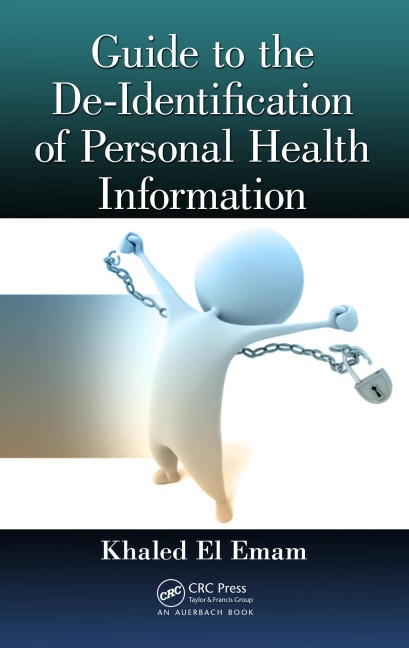
Offering compelling practical and legal reasons why de-identification should be one of the main approaches to protecting patients' privacy, the Guide to the De-Identification of Personal Health Information outlines a proven, risk-based methodology for the de-identification of sensitive health information. It situates and contextualizes this risk-based methodology and provides a general overview of its steps. The book supplies a detailed case for why de-identification is important as well as best practices to help you pin point when it is necessary to apply de-identification in the disclosure of personal health information. It also: - Outlines practical methods for de-identification - Describes how to measure re-identification risk - Explains how to reduce the risk of re-identification - Includes proofs and supporting reference material - Focuses only on transformations proven to work on health information-rather than covering all possible approaches, whether they work in practice or not Rated the top systems and software engineering scholar worldwide by The Journal of Systems and Software, Dr. El Emam is one of only a handful of individuals worldwide qualified to de-identify personal health information for secondary use under the HIPAA Privacy Rule Statistical Standard. In this book Dr. El Emam explains how we can make health data more accessible-while protecting patients' privacy and complying with current regulations.
Dr. El Emam holds the Canada Research Chair in Electronic Health Information at the University of Ottawa and is an Associate Professor in the Faculty of Medicine at the university. In 2003 and 2004, he was ranked as the top systems and software engineering scholar worldwide by The Journal of Systems and Software based on his research on measurement and quality evaluation and improvement. He is a senior scientist at the Children's Hospital of Eastern Ontario Research Institute and leads the multi-disciplinary Electronic Health Information Laboratory (EHIL) team. Dr. El Emam is one of only a handful of individuals worldwide known to be qualified to de-identify personal health information for secondary use under the HIPAA Privacy Rule Statistical Standard. Khaled is also a world-renowned expert in health information privacy and the head of the Electronic Health Information Laboratory www.ehealthinformation.ca which conducts cutting edge research in this area. He has been de-identifying data since 2004, and has a large following and speaks extensively on this topic. He has edited 2 books and written one already, as well as contributed chapters to a number of others.
The Case for De-Identifying Personal Health Information. Permitted Disclosures, Consent, and De-identification of PHI. Permitted Uses and Disclosures of Health Information. The Impact of Consent. Data Breach Notifications. Peeping and Snooping. Unplanned but Legitimate Uses and Disclosures. Public Perception and Privacy Protective Behaviors. Alternative Methods for Data Access. Understanding Disclosure Risks. Scope, Terminology, and Definitions. Frequently Asked Questions about De-identification. A Methodology for Managing Re-identification Risk. Definitions of Identifiability. Data Masking Methods. Theoretical Re-identification Attacks. Measuring Re-Identification Risk. Measuring the Probability of Re-identification. Measures of Uniqueness. Modeling the Threat. Choosing Metric Thresholds. Practical Methods for De-Identification. De-identification Methods. Practical Tips. End Matter. An Analysis of Historical Breach Notification Trends. Methods of Attack for Maximum Journalist Risk. How Many Friends Do We Have? Cell Size Precedents. The Invasion of Privacy Construct. General Information on Mitigating Controls. Assessing Motives and Capacity. Invasion of Privacy.
Dieses eBook wird im PDF-Format geliefert und ist mit einem Adobe Kopierschutz (DRM) versehen. Sie können dieses eBook mit allen Geräten lesen, die das PDF-Format und den Adobe Kopierschutz (DRM) unterstützen.
Zum Beispiel mit den folgenden Geräten:
• tolino Reader
Laden Sie das eBook direkt über den Reader-Shop auf dem tolino herunter oder übertragen Sie das eBook auf Ihren tolino mit einer kostenlosen Software wie beispielsweise Adobe Digital Editions.
• Sony Reader & andere eBook Reader
Laden Sie das eBook direkt über den Reader-Shop herunter oder übertragen Sie das eBook mit der kostenlosen Software Sony READER FOR PC/Mac oder Adobe Digital Editions auf ein Standard-Lesegeräte mit epub- und Adobe DRM-Unterstützung.
• Tablets & Smartphones
Möchten Sie dieses eBook auf Ihrem Smartphone oder Tablet lesen, finden Sie hier unsere kostenlose Lese-App für iPhone/iPad und Android Smartphone/Tablets.
• PC & Mac
Lesen Sie das eBook direkt nach dem Herunterladen mit einer kostenlosen Lesesoftware, beispielsweise Adobe Digital Editions, Sony READER FOR PC/Mac oder direkt über Ihre eBook-Bibliothek in Ihrem Konto unter „Meine eBooks“ - „online lesen“.
Schalten Sie das eBook mit Ihrer persönlichen Adobe ID auf bis zu sechs Geräten gleichzeitig frei.
Bitte beachten Sie, dass die Kindle-Geräte das Format nicht unterstützen und dieses eBook somit nicht auf Kindle-Geräten lesbar ist.