Und dann auf "Zum Home-Bildschirm [+]".

Stöbern
genialokal zum Startbildschirm hinzufügen
Installieren Sie die genialokal App auf Ihrem Startbildschirm für einen schnellen Zugriff und eine komfortable Nutzung.
Installieren Sie die genialokal App auf Ihrem Startbildschirm für einen schnellen Zugriff und eine komfortable Nutzung.
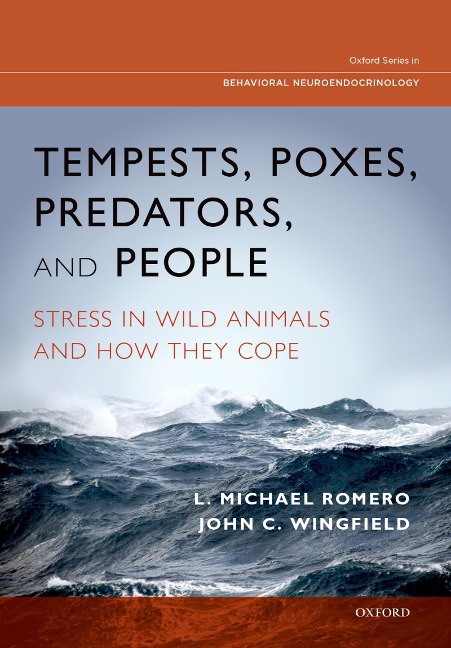
Although scientists have discovered many fundamental physiological and behavioral mechanisms that comprise the stress response, most of current knowledge is based on laboratory experiments using domesticated or captive animals. Scientists are only beginning, however, to understand how stress impacts wild animals - by studying the nature of the stressful stimuli that animals in their natural environments have adapted to for survival, and what the mechanisms that allow that survival might be. This book summarizes, for the first time, several decades of work on understanding stress in natural contexts. The aim is two-fold. The first goal of this work is to place modern stress research into an evolutionary context. The stress response clearly did not evolve to cause disease, so that studying how animals use the stress response to survive in the wild should provide insight into why mechanisms evolved the way that they did. The second goal is to provide predictions on how wild animals might cope with the Anthropocene, the current period of Earth's history characterized by the massive human remodeling of habitats on a global scale. Conservation of species will rely upon how wild animals use their stress response to successfully cope with human-created stressors.
L. Michael Romero is Professor of Biology at Tufts University.
John C. Wingfield is Distinguished Professor of Neurobiology, Physiology, and Behavior and Endowed Chair in Physiology at the University of California, Davis.
Professors Romero and Wingfield have spent their careers studying the endocrinology of wild animals in their natural habitats. A major focus has been on how animals cope with stressors in the environment. Between the two of them, they have studied over 100 different species covering all of the major vertebrate taxa (mammals, birds, fish, reptiles, and amphibians).
PART I. Biology of Stress
Chapter 1: Environment and the Earth: A Stressful Planet Chapter 2: Mediators of Stress Chapter 3: Models of Stress Chapter 4: Classic Stress Response Chapter 5: Impacts on Physiological and Behavioral Systems
PART II. Coping with a Capricious Environment
Chapter 6: Field Techniques Chapter 7: Responses to Natural Perturbations: Variation in Available Energy Chapter 8: Responses to Natural Perturbations: Tempests-Weather and Climate Events Chapter 9: Responses to Natural Perturbations: Poxes, Predators, and Personalities Chapter 10. Modulation of the Adrenocortical Response to Stress Chapter 11: Development, Environmental, and Maternal Effects Chapter 12: Global Change: Consequences of Human Disturbance Chapter 13: Global Change: Conservation Implications and the Role of Stress Physiology Chapter 14: Conclusions and the Future
Index
Dieses eBook wird im PDF-Format geliefert und ist mit einem Adobe Kopierschutz (DRM) versehen. Sie können dieses eBook mit allen Geräten lesen, die das PDF-Format und den Adobe Kopierschutz (DRM) unterstützen.
Zum Beispiel mit den folgenden Geräten:
• tolino Reader
Laden Sie das eBook direkt über den Reader-Shop auf dem tolino herunter oder übertragen Sie das eBook auf Ihren tolino mit einer kostenlosen Software wie beispielsweise Adobe Digital Editions.
• Sony Reader & andere eBook Reader
Laden Sie das eBook direkt über den Reader-Shop herunter oder übertragen Sie das eBook mit der kostenlosen Software Sony READER FOR PC/Mac oder Adobe Digital Editions auf ein Standard-Lesegeräte mit epub- und Adobe DRM-Unterstützung.
• Tablets & Smartphones
Möchten Sie dieses eBook auf Ihrem Smartphone oder Tablet lesen, finden Sie hier unsere kostenlose Lese-App für iPhone/iPad und Android Smartphone/Tablets.
• PC & Mac
Lesen Sie das eBook direkt nach dem Herunterladen mit einer kostenlosen Lesesoftware, beispielsweise Adobe Digital Editions, Sony READER FOR PC/Mac oder direkt über Ihre eBook-Bibliothek in Ihrem Konto unter „Meine eBooks“ - „online lesen“.
Schalten Sie das eBook mit Ihrer persönlichen Adobe ID auf bis zu sechs Geräten gleichzeitig frei.
Bitte beachten Sie, dass die Kindle-Geräte das Format nicht unterstützen und dieses eBook somit nicht auf Kindle-Geräten lesbar ist.