Und dann auf "Zum Home-Bildschirm [+]".

Stöbern
genialokal zum Startbildschirm hinzufügen
Installieren Sie die genialokal App auf Ihrem Startbildschirm für einen schnellen Zugriff und eine komfortable Nutzung.
Installieren Sie die genialokal App auf Ihrem Startbildschirm für einen schnellen Zugriff und eine komfortable Nutzung.
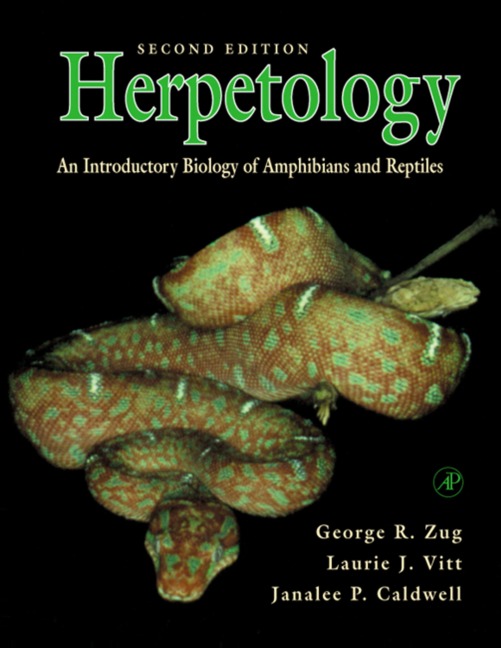
Herpetology, Second Edition has been thoroughly revised. The text has been reorganized, new chapters have been added, new text references have been inserted. All this plus new color systematics sections will maintain this book as THE leading textbook on the biology of amphibians and reptiles. The book will also showcase reptiles and amphibians as model systems in conceptual areas of biology. Such a text will help integrate herpetology as a discipline into conceptually oriented undergraduate programs. The book should also appeal to a large audience of sophisticated lay people interested in reptiles and amphibians. - Written by internationally recognized experts on the biology of amphibians and reptiles
- Provides a general background on the evolution and morphology of amphibians and reptiles
- Details what is known about reproduction and life histories
- Examines physiological ecology, emphasizing water balance, temperature, and energy
- Integrates population and community ecology with conservation biology
- Provides detailed taxonomic accounts of all higher taxa, including high quality distribution maps and color photographs
Dr. Vitt is a reptile ecologist who received his Ph.D. from Arizona Sate University in 1976. He was a Professor at UCLA for 8 years and Professor and Curator at the Sam Noble Museum at the University of Oklahoma for 21 years. He currently maintains Emeritus status. He has had extensive field experience in American deserts and New World tropics, especially Brazil. He has published more than 250 research articles and 8 books. Awards include appointment as a George Lynn Cross Research Professor at the University of Oklahoma, membership in the Brazilian Academy of Scientists, Distinguished Alumnus (Western Washington University), Distinguished Herpetologist (Herpetologist League), and two book awards.
Part I: Evolutionary HistoryChapter 1. Tetrapod Relationships and Evolutionary SystematicsAmphibians and Reptiles-Evolutionary HistorySystematics-Theory and PracticeAdditional ReadingReferencesChapter 2. Anatomy of Amphibians and ReptilesDevelopment and GrowthIntegument-The External EnvelopeSkeleton and Muscles-Support, Movement, and FormNerves and Sense Organs-Coordination and PerceptionHeart and Vascular Network-Internal TransportDigestive and Respiratory Organs-Waste Removal and PropagationUrinary and Reproductive Organs-Waste Removal and PropagationEndocrine Glands-Chemical Regulators and InitiatorsAdditional ReadingReferencesChapter 3. Evolution of Ancient and Modern Amphibians and ReptilesHistory of AmphibiansHistory of ReptilesAdditional ReadingReferencesPart II: Reproduction and Life HistoriesChapter 4. Modes of Reproduction and Parental CareGametogenesis and FertilizationReproductive ModesSexual versus Asexual ReproductionParental CareEvolution of Parental CareAdditional ReadingReferencesChapter 5. Reproductive Ecology and Life HistoriesReproductive EcologyLife HistoriesAdditional ReadingReferencesPart III: Physiological EcologyChapter 6. Water Balance and Gas ExchangeWater and Salt BalanceRespiratory Gas ExchangeRespiration and MetabolismAdditional ReadingReferencesChapter 7. Thermoregulation, Performance, and EnergeticsThermoregulationDormancyEnergeticsAdditional ReadingReferencesPart IV: Behavioral EcologyChapter 8. Spacing, Movements, and OrientationLocal Distribution of IndividualsMovements, Homing, and MigrationsAdditional ReadingReferencesChapter 9. Communication and Social BehaviorCommunicationReproductive BehaviorAdditional ReadingReferencesChapter 10. Foraging Ecology and DietsForaging ModesDetecting, Capturing, and Eating PreyAdditional ReadingReferencesChapter 11. Defense and EscapePredator AvoidanceOffsetting the Effects of ParasitismAdditional ReadingReferencesPart V: Population and Community EcologyChapter 12. Population Structure and DynamicsCharacteristics of PopulationsPopulation Structure and GrowthAdditional ReadingReferencesChapter 13. Community and Geographical EcologyCommunitiesGeography of PopulationsAdditional ReadingReferencesChapter 14. Conservation BiologyGeneral PrinciplesHuman Impact on Amphibian and ReptilePreservation and Management-Ideals and ProblemsAdditional ReadingReferencesPart VI: Classification and DiversityChapter 15. CaeciliansOverviewTaxonomic AccountsChapter 16. SalamandersOverviewTaxonomic AccountsChapter 17. FrogsOverviewTaxonomic AccountsChapter 18. TurtlesOverviewTaxonomic AccountsChapter 19. Crocodylians OverviewTaxonomic AccountsChapter 20. Tuataras and LizardsOverview-SphenodontidaTaxonomic AccountOverview-SquamataTaxonomic AccountsChapter 21. SnakesOverviewTaxonomic AccountsGlossaryBibliographyTaxonomic IndexAuthor IndexSubject Index