Und dann auf "Zum Home-Bildschirm [+]".

Stöbern
genialokal zum Startbildschirm hinzufügen
Installieren Sie die genialokal App auf Ihrem Startbildschirm für einen schnellen Zugriff und eine komfortable Nutzung.
Installieren Sie die genialokal App auf Ihrem Startbildschirm für einen schnellen Zugriff und eine komfortable Nutzung.
Ihr gewünschter Artikel ist in 0 Buchhandlungen vorrätig - wählen Sie hier eine Buchhandlung in Ihrer Nähe aus:

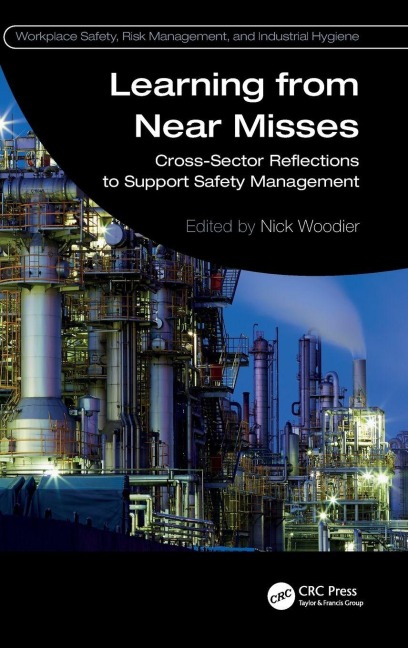
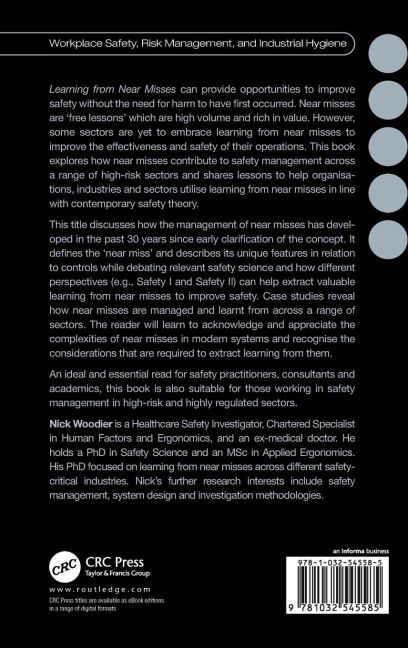
Learning From Near Misses can provide opportunities to improve safety without the need for harm to have first occurred. This book explores how near misses contribute to safety management across high-risk sectors, to help organisations, industries and sectors utilise learning from near misses in line with contemporary safety theory.
Nick Woodier is a Healthcare Safety Investigator, Chartered Specialist in Human Factors and Ergonomics, and an ex- medical doctor. He holds a PhD in Safety Science and an MSc in Applied Ergonomics. His PhD focused on learning from near misses across different safety- critical industries. Nick's further research interests include safety management, system design and investigation methodologies.
Table of Contents Preface Foreword List of Contributors Acknowledgements Disclaimer Part I - Introduction and Background Chapter 1: Near Misses: What and Why? (Woodier) Chapter 2: Near Misses and the Evolution of Safety Science (Thoroman) Part II - Cross-Sector Reflections and Case Studies Chapter 3: Aviation Near Misses and Safety Management: Operational and Academic Perspectives (Davis & Woodier) Chapter 4: Children, Parents and the Near Miss: An Opportunity to Learn in the Agricultural Sector (Cosby, Menchon, Sinai & Manning) Chapter 5: Process Safety: Using Human Factors Safety Critical Task Analysis to Learn from Near Misses (Furniss & Embrey) Chapter 6: Viewing a Near Miss as a Quality Upgrade Opportunity in the Construction Industry (Whiteoak, Appleby & Sullivan) Chapter 7: Learning from What Goes Right in Healthcare: Reframing Approaches to Safety Investigation (Higham & Lounsbury) Chapter 8: Enhancing Safety in Mining: Understanding and Utilizing Near-Miss Reports (Haas, Demich & McGuire) Chapter 9: Nuclear Professionals and Near Misses: The UK Civil Nuclear Perspective (Burrage & Barton) Chapter 10: Near Misses in the Rail Industry: Why Does Reporting Matter? (Chamberlain-Clark) Part III - Supporting Conditions and Final Reflections Chapter 11: Overcoming the Near-Miss Bias in High-Risk Industries (Tinsley & Dillon) Chapter 12: Safety Culture: Reflections and Alignment with Near Misses (Woodier & Chamberlain-Clark) Chapter 13: Designing a Near-Miss Management System: An Example from Occupational Safety (Gnoni & Tornese) Chapter 14: Conclusions and Final Reflections to Support Learning from Near Misses (Woodier) Index