Und dann auf "Zum Home-Bildschirm [+]".

Stöbern
genialokal zum Startbildschirm hinzufügen
Installieren Sie die genialokal App auf Ihrem Startbildschirm für einen schnellen Zugriff und eine komfortable Nutzung.
Installieren Sie die genialokal App auf Ihrem Startbildschirm für einen schnellen Zugriff und eine komfortable Nutzung.

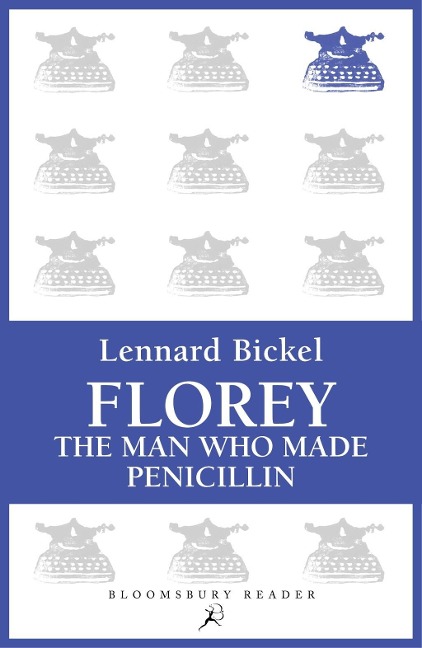
It wouldn't be for years after that fateful day when Alexander Fleming sneezed on a petri dish and stumbled upon Penicillin, that the almost miraculous power of this mould would transform the lives of every person on the planet. In Florey, The Man Who Made Penicillin we follow the life of Howard Walter Florey, who worked tirelessly for years with his dedicated team at Oxford to realise the potential of not only penicillin, but also the huge breadth of 'tailor made' antibiotics.
Born in Australia, Florey left Adelaide for Oxford on a Rhodes scholarship after graduating in medicine, seeking a career in medical science. In a time when an infection from a thorn scratch could lead to a long and painful death, and meningitis, rheumatic fever, venereal disease and other bacterial infections had meant certain doom, the idea of an antibiotic that could treat all of these afflictions was almost unimaginable. In the aftermath of WW1, when septicaemia and gas gangrene had claimed the lives of so many young men, the need for antibiotics had never been keener.
First published in 1972, Florey, the Man Who Made Penicillin tracks Florey's battle with funding, the many set-backs and limitations of his equipment and public opinion, and the fascinating journey that led humankind to Penicillin. Whist Fleming got the lion's share of the credit, it was Florey who truly gave the world Penicillin.
Lennard Bickel (1913-2002) was a science writer for the Australian Broadcasting Corporation in the 1960s. He was the only Australian journalist invited to witness the 1969 Apollo II moon landing from the launch site.
In 1970, Bickel was awarded a Commonwealth Literary Fellowship in order to write Rise Up To Life, a biography of Howard Florey, who pioneered the development of penicillin. He subsequently wrote a number of other books that highlight remarkable human achievement: little-known epics of triumph over diversity, including This Accursed Land (1977), about Douglas Mawson's struggle to stay alive in the Antarctic, and Triumph Over Darkness: The Life of Louis Braille (1988).
In 1974 he was made a Knight of the Order of Mark Twain for his biography of Norman Borlaug, the Nobel-winning humanitarian scientist.
Author's Note
Prologue
Part 1: Fluctuating Fortunes
Part 2: Miracle in a Mould
Part 3: The Prize and the Price
Epilogue
Appendix
Chapter Notes
Footnotes
A Note on the Author