Und dann auf "Zum Home-Bildschirm [+]".

Stöbern
genialokal zum Startbildschirm hinzufügen
Installieren Sie die genialokal App auf Ihrem Startbildschirm für einen schnellen Zugriff und eine komfortable Nutzung.
Installieren Sie die genialokal App auf Ihrem Startbildschirm für einen schnellen Zugriff und eine komfortable Nutzung.
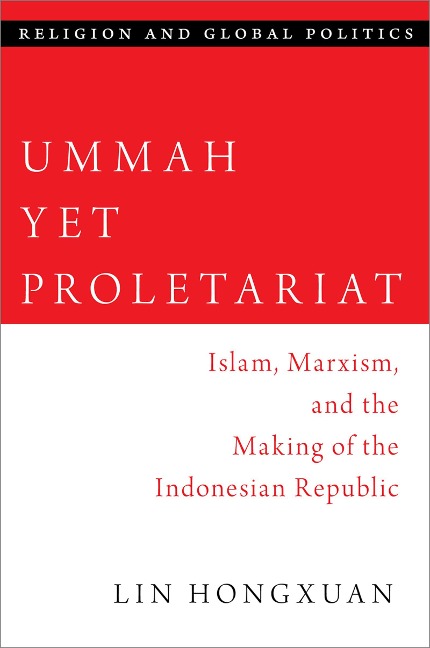
From 1965 to 1966, at least 500,000 Indonesians were killed in military-directed violence that targeted suspected Communists. Muslim politicians justified the killings, arguing that Marxism posed an existential threat to all religions. Since then, the demonization of Marxism, as well as the presumed irreconcilability of Islam and Marxism, has permeated Indonesian society. Today, the Indonesian military and Islamic political parties regularly invoke the spectre of Marxism as an enduring threat that would destroy the republic if left unchecked. In Ummah Yet Proletariat, Lin Hongxuan explores the relationship between Islam and Marxism in the Netherlands East Indies (NEI) and Indonesia from the publication of the first Communist periodical in 1915 to the beginning of the 1965-66 massacres. Lin demonstrates how, in contrast to state-driven narratives, Muslim identity and Marxist analytical frameworks coexisted in Indonesian minds, as well as how individuals' Islamic faith shaped their openness to Marxist ideas. Examining Indonesian-language print culture, including newspapers, books, pamphlets, memoirs, letters, novels, plays, and poetry, Lin shows how deeply embedded confluences of Islam and Marxism were in the Indonesian nationalist project. He argues that these confluences were the result of Indonesian participation in networks of intellectual exchange across Asia, Europe, and the Middle East, of Indonesians "translating" the world to Indonesia in an ambitious project of creative adaptation.
Lin Hongxuan is Senior Tutor in the Department of Southeast Asian Studies at the National University of Singapore. In 2022, he was a Visiting Fellow at the Saw Swee Hock Centre for Southeast Asian Studies, London School of Economics and Political Science. A scholar of Indonesian history, his work has been published in Southeast Asian Studies, Studia Islamika, Positions: Asia Critique, and New Mandala.
Introduction
Chapter One: Incubating Communism in the Netherlands East Indies Chapter Two: New Modes of Movement Chapter Three: The Revolutionary Consensus Chapter Four: A Critical Ummah, A Conscious Proletariat
Epilogue: NASAKOM and Its Proponents Conclusion
Dieses eBook wird im PDF-Format geliefert und ist mit einem Adobe Kopierschutz (DRM) versehen. Sie können dieses eBook mit allen Geräten lesen, die das PDF-Format und den Adobe Kopierschutz (DRM) unterstützen.
Zum Beispiel mit den folgenden Geräten:
• tolino Reader
Laden Sie das eBook direkt über den Reader-Shop auf dem tolino herunter oder übertragen Sie das eBook auf Ihren tolino mit einer kostenlosen Software wie beispielsweise Adobe Digital Editions.
• Sony Reader & andere eBook Reader
Laden Sie das eBook direkt über den Reader-Shop herunter oder übertragen Sie das eBook mit der kostenlosen Software Sony READER FOR PC/Mac oder Adobe Digital Editions auf ein Standard-Lesegeräte mit epub- und Adobe DRM-Unterstützung.
• Tablets & Smartphones
Möchten Sie dieses eBook auf Ihrem Smartphone oder Tablet lesen, finden Sie hier unsere kostenlose Lese-App für iPhone/iPad und Android Smartphone/Tablets.
• PC & Mac
Lesen Sie das eBook direkt nach dem Herunterladen mit einer kostenlosen Lesesoftware, beispielsweise Adobe Digital Editions, Sony READER FOR PC/Mac oder direkt über Ihre eBook-Bibliothek in Ihrem Konto unter „Meine eBooks“ - „online lesen“.
Schalten Sie das eBook mit Ihrer persönlichen Adobe ID auf bis zu sechs Geräten gleichzeitig frei.
Bitte beachten Sie, dass die Kindle-Geräte das Format nicht unterstützen und dieses eBook somit nicht auf Kindle-Geräten lesbar ist.