Und dann auf "Zum Home-Bildschirm [+]".

Stöbern
genialokal zum Startbildschirm hinzufügen
Installieren Sie die genialokal App auf Ihrem Startbildschirm für einen schnellen Zugriff und eine komfortable Nutzung.
Installieren Sie die genialokal App auf Ihrem Startbildschirm für einen schnellen Zugriff und eine komfortable Nutzung.
Ihr gewünschter Artikel ist in 0 Buchhandlungen vorrätig - wählen Sie hier eine Buchhandlung in Ihrer Nähe aus:

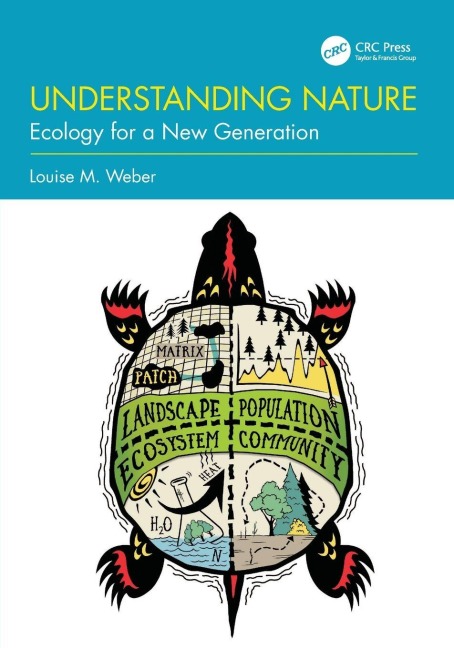
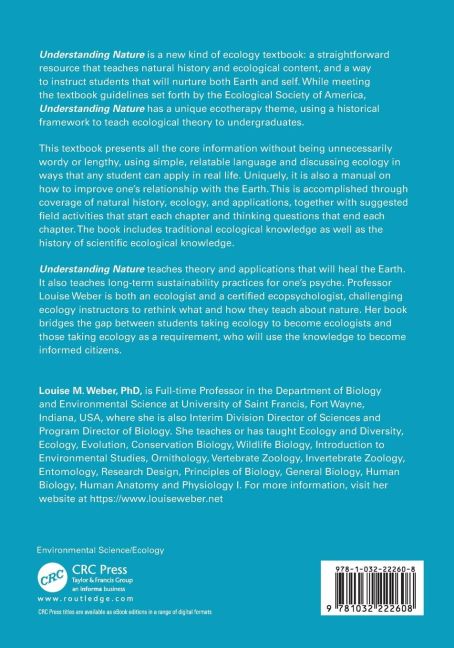
This is a new kind of ecology textbook: a straight-forward resource that teaches natural history and ecological content, and a way to instruct students that will nurture both Earth and self.
Louise M. Weber, PhD, is Full-time Professor in the Department of Biology and Environmental Science at University of Saint Francis, Fort Wayne, Indiana, USA, where she is also Interim Division Director of Sciences and Program Director of Biology. She teaches or has taught Ecology and Diversity, Ecology, Evolution, Conservation Biology, Wildlife Biology, Introduction to Environmental Studies, Ornithology, Vertebrate Zoology, Invertebrate Zoology, Entomology, Research Design, Principles of Biology, General Biology, Human Biology, Human Anatomy and Physiology I. For more information, visit her website at https://www.louiseweber.net
1. Introduction. 2. We Stand on Their Shoulders. 3. Biomes, Life Forms, and Ecoregions. 4. Biomes: Tundra, and Tiaga. 5. Biomes: Grassland. 6. Biomes: Shrubland, Thickets, and Desert. 7. Biomes: Savanna, and Forest. 8. Why are Biomes Where They Are? 9. Why are Individual Species Where They Are?. 10. Introduction to Evolution: The Modern Synthesis. 11. Advances in Microevolution, Molecular Evolution, and Evo-devo. 12. An Autobiography of the Earth. 13. Introduction to Statistics. 14. Population Ecology Basics. 15. Population Ecologys' Profound Questions. 16. Community Ecology Basics. 17.Theory in Community Ecology/Competition. 18. Predation. 19. Succession. 20. Ecosystem Ecology Basics. 21. Energy. 22. Matter. 23. Ecosystem Regulation. 24. Landscape Ecology. 25. Wildlife Management and Habitat Ecology. 26. Wildlife Management for Temperate Farms and Ranches. 27. Wildlife Management in Temperate Forests. 28. Conservation Biology. 29. Restoration Ecology. 30. Aquatic Ecology. 31. New Perspectives in Biogeography. 32. Wicked Problems. 33. Epilogue: The Evolution of an Idea