Und dann auf "Zum Home-Bildschirm [+]".

Stöbern
genialokal zum Startbildschirm hinzufügen
Installieren Sie die genialokal App auf Ihrem Startbildschirm für einen schnellen Zugriff und eine komfortable Nutzung.
Installieren Sie die genialokal App auf Ihrem Startbildschirm für einen schnellen Zugriff und eine komfortable Nutzung.
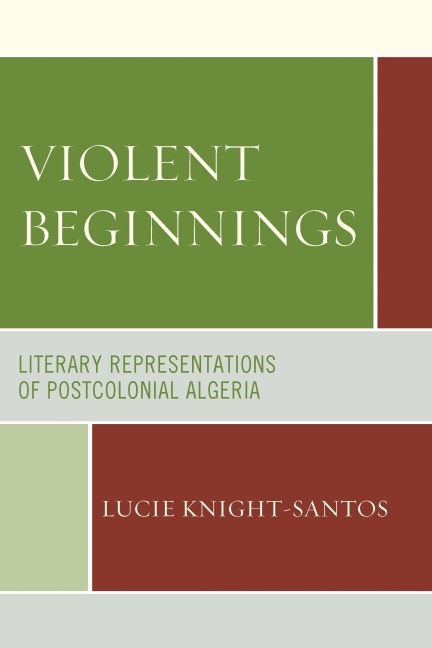
From a colonial campaign that was envisioned by France as the redemption of its Algerian "children" through Western civilization to Algerian Independence that was lived by both parties as a bloody divorce; recent Algerian history has been imagined and represented in terms of the family. Prominent authors such as Kateb Yacine and Mouloud Mammeri pondered their own fate during the War of Independence as the "mixed" children of a failed colonial marriage. Contemporary postcolonial authors such as Rachid Boudjedra, Yasmina Salah, and Arezki Mellal have filled their narratives with orphaned children searching for ideal parents as a civil war ripped Algeria apart in the 1990s.
Violent Beginnings: Literary Representations of Postcolonial Algeria explores how violence, during the War of Independence (1954-1962) to the more recent civil war (1991-2002), has shaped literary representations of both family and nation in contemporary literature. For example, discussions of the struggle for independence in Assia Djebar's La femme sans sépulture and Ahlam Mostaghanemi's Memory of the Flesh, represent sexual torture associated with this earlier war period as having a negative impact on victims' ability to have children and contribute to the development of the Algerian nation. Texts examining the more recent civil war such as Rachid Boudjedra's La vie à l'endroit and Yasmina Salah's Glass Nation establish a link between the earlier violence of the independence struggle and contemporary events. Additionally, these texts proceed todemonstrate how violence has shaped familial and national structures, more specifically causing distorted familial bonds and political chaos in contemporary Algerian society.
Lucie Knight-Santos is an instructor at the Hun School of Princeton where she teaches Arabic language, French language, and literature courses.
Table of Contents
Introduction
Chapter One: The Text(ure) of Torture
Chapter Two: Internal Exclusions
Chapter Three: Representations of the Postcolonial Algerian Family
Conclusion
Bibliography
Dieses eBook wird im PDF-Format geliefert und ist mit einem Adobe Kopierschutz (DRM) versehen. Sie können dieses eBook mit allen Geräten lesen, die das PDF-Format und den Adobe Kopierschutz (DRM) unterstützen.
Zum Beispiel mit den folgenden Geräten:
• tolino Reader
Laden Sie das eBook direkt über den Reader-Shop auf dem tolino herunter oder übertragen Sie das eBook auf Ihren tolino mit einer kostenlosen Software wie beispielsweise Adobe Digital Editions.
• Sony Reader & andere eBook Reader
Laden Sie das eBook direkt über den Reader-Shop herunter oder übertragen Sie das eBook mit der kostenlosen Software Sony READER FOR PC/Mac oder Adobe Digital Editions auf ein Standard-Lesegeräte mit epub- und Adobe DRM-Unterstützung.
• Tablets & Smartphones
Möchten Sie dieses eBook auf Ihrem Smartphone oder Tablet lesen, finden Sie hier unsere kostenlose Lese-App für iPhone/iPad und Android Smartphone/Tablets.
• PC & Mac
Lesen Sie das eBook direkt nach dem Herunterladen mit einer kostenlosen Lesesoftware, beispielsweise Adobe Digital Editions, Sony READER FOR PC/Mac oder direkt über Ihre eBook-Bibliothek in Ihrem Konto unter „Meine eBooks“ - „online lesen“.
Schalten Sie das eBook mit Ihrer persönlichen Adobe ID auf bis zu sechs Geräten gleichzeitig frei.
Bitte beachten Sie, dass die Kindle-Geräte das Format nicht unterstützen und dieses eBook somit nicht auf Kindle-Geräten lesbar ist.