Und dann auf "Zum Home-Bildschirm [+]".

Stöbern
genialokal zum Startbildschirm hinzufügen
Installieren Sie die genialokal App auf Ihrem Startbildschirm für einen schnellen Zugriff und eine komfortable Nutzung.
Installieren Sie die genialokal App auf Ihrem Startbildschirm für einen schnellen Zugriff und eine komfortable Nutzung.
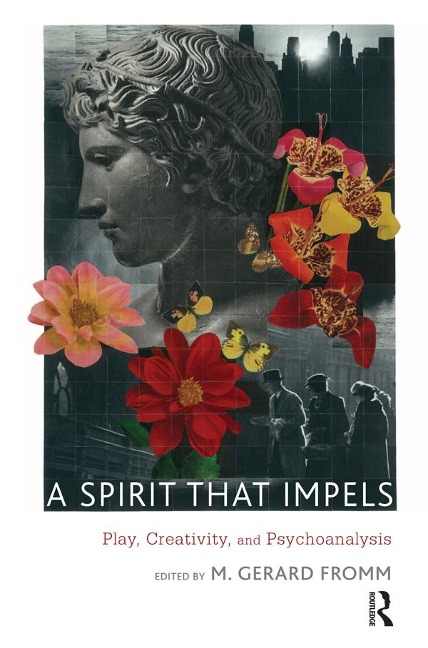
This volume brings together some of the papers presented by leading scholars, artists and psychoanalysts at an annual Creativity Seminar organised by the Erikson Institute of the Austen Riggs Center. Looking at creativity through a psychoanalytic lens - and very importantly, vice versa - the authors examine great works, such as Nathaniel Hawthorne's The Scarlet Letter, Mahler's Eighth Symphony, and William Gibson's The Miracle Worker; as well as great artists, such as Van Gogh and Lennon and McCartney, for what we might learn about the creative process itself. Deepening this conversation are a number of clinical studies and other reflections on the creative process - in sickness and in health, so to speak. A central theme is that of "deep play", the level at which the artist may be unconsciously playing out, on behalf of all of us, the deepest dynamics of human emotion in order that we may leave the encounter not only emotionally spent, but profoundly informed as well.
M Gerard Fromm
Introduction , Introduction to Chapter One: On (not) being able to paint: the 2003 Creativity Seminar , Creativity and psychoanalysis , I ntroduction to Chapters Two and Three: The Scarlet Letter-the artist and analyst as outsiders: the 2004 Creativity Seminar , A moonlight visibility: turning The Scarlet Letter into a play , Dimmesdale's ailment, Hawthorne's insight , Introduction to Chapter Four: Mahler, Freud, and the symphony of a thousand: the 2005 Creativity Seminar , Sublimation and das Ding in Mahler's Symphony No. 8 , Introduction to Chapter Five: The play's the thing: the 2006 Creativity Seminar , Stepping on to the transference stage: from actualised unconscious trauma to therapeutic play , Introduction to Chapter Six: Creativity at the extremes: the 2007 Creativity Seminar , Pattern as inspiration and mode of communication in the works of Van Gogh , Introduction to Chapter Seven: Chaos is come again - creativity, chaos and change: the 2008 Creativity Seminar , Photography as transitional functioning , Introduction to Chapters Eight and Nine: Miracle workers - transformation through creativity: the 2009 Creativity Seminar , To teach and to treat: meditations on The Miracle Worker , Unconscious creative activity and the restoration of reverie , Introduction to Chapter Ten: Creative collaborations: the 2010 Creativity Seminar , Two of us: inside the Lennon-McCartney connection , Introduction to Chapter Eleven: Finding voice, lifting voices - creativity and oppression: the 2011 Creativity Seminar , Oppression, healing, and Delia's story , Introduction to Chapter Twelve: The brightening glance - creativity and childhood: the 2012 Creativity Seminar , Snapshots of childhood creativity in science, music, and art: Richard Feynman, Clara Schumann, and René Magritte , Afterword: Tell me a story - creativity and storytelling: the 2013 Creativity Seminar
Dieses eBook wird im PDF-Format geliefert und ist mit einem Adobe Kopierschutz (DRM) versehen. Sie können dieses eBook mit allen Geräten lesen, die das PDF-Format und den Adobe Kopierschutz (DRM) unterstützen.
Zum Beispiel mit den folgenden Geräten:
• tolino Reader
Laden Sie das eBook direkt über den Reader-Shop auf dem tolino herunter oder übertragen Sie das eBook auf Ihren tolino mit einer kostenlosen Software wie beispielsweise Adobe Digital Editions.
• Sony Reader & andere eBook Reader
Laden Sie das eBook direkt über den Reader-Shop herunter oder übertragen Sie das eBook mit der kostenlosen Software Sony READER FOR PC/Mac oder Adobe Digital Editions auf ein Standard-Lesegeräte mit epub- und Adobe DRM-Unterstützung.
• Tablets & Smartphones
Möchten Sie dieses eBook auf Ihrem Smartphone oder Tablet lesen, finden Sie hier unsere kostenlose Lese-App für iPhone/iPad und Android Smartphone/Tablets.
• PC & Mac
Lesen Sie das eBook direkt nach dem Herunterladen mit einer kostenlosen Lesesoftware, beispielsweise Adobe Digital Editions, Sony READER FOR PC/Mac oder direkt über Ihre eBook-Bibliothek in Ihrem Konto unter „Meine eBooks“ - „online lesen“.
Schalten Sie das eBook mit Ihrer persönlichen Adobe ID auf bis zu sechs Geräten gleichzeitig frei.
Bitte beachten Sie, dass die Kindle-Geräte das Format nicht unterstützen und dieses eBook somit nicht auf Kindle-Geräten lesbar ist.