Und dann auf "Zum Home-Bildschirm [+]".

Stöbern
genialokal zum Startbildschirm hinzufügen
Installieren Sie die genialokal App auf Ihrem Startbildschirm für einen schnellen Zugriff und eine komfortable Nutzung.
Installieren Sie die genialokal App auf Ihrem Startbildschirm für einen schnellen Zugriff und eine komfortable Nutzung.
Ihr gewünschter Artikel ist in 0 Buchhandlungen vorrätig - wählen Sie hier eine Buchhandlung in Ihrer Nähe aus:

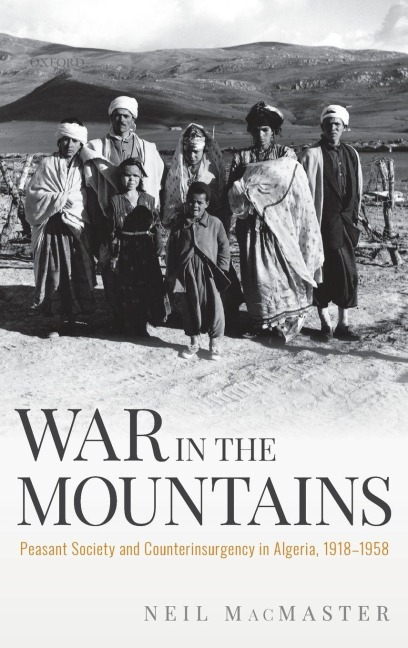
The role of the peasantry during the Algerian War of Independence (1954-1962) has long been neglected by historians, in part because they have been viewed as a 'primitive' mass devoid of political consciousness. War in the Mountains: Peasant Society and Counterinsurgency in Algeria, 1918-1958 challenges this conventional understanding by tracing the ability of the peasant community to sustain an autonomous political culture through family, clan, and village assemblies.
The long-established system of indirect rule by which the colonial state controlled and policed the vast mountainous interior of Algeria began to break down after the 1920s. War in the Mountains explains how competing guerrilla forces and the French military sought to harness djemâas as part of a hearts-and-minds strategy. Djemâas formed a pole of opposition to the patron-client relations of the rural Ã(c)lites, with clandestine urban-rural networks emerging that prepared the way for armed resistance and a system of rebel governance. Contrary to accepted historical analysis suggesting that rural society was massively uprooted and dislocated, War in the Mountains demonstrates that the peasantry demonstrated a high level of social cohesion and resistance based on powerful family and kin networks.
Neil MacMaster taught at the University of East Anglia from 1971 to 2004. He taught the history of European ideas and popular culture of the 16th to 19th centuries at the University of East Anglia, before changing field to contemporary French politics, European racism, international migration, and Islam. At retirement in 2004 he won a Leverhulme award to continue his work on Algerian and French colonialism. Among his publications are Colonial Migrants and Racism: Algerians in France, 1900-62 (1997); with Jim House, Paris 1961: Algerians, State Terror, and Memory (2006); and Burning the Veil: The Algerian War and the 'Emancipation' of Muslim Women, 1954-62 (2009).
- Introduction
- Part I: The Dualism of the Colonial State, Indirect Rule, and the Crisis of the Commune Mixte System
- 1: Separate Worlds? European domination of the Chelif plain
- 2: Separate Worlds? Peasant society in the mountains
- 3: The Caids and the Communes Mixtes System
- 4: The Janus-faced politics of the Caids, c.1936 to 1954
- 5: Lucien Paye's Commune Reform: the failure of the peasant modernisation programme, 1944-1948
- Part II: Peasant Political Mobilization and Resistance, c. 1932-1954
- 6: Fraction Resistance and Everyday Politics
- 7: The Communist Party and Peasant Mobilization, c. 1932-1948
- 8: Peasant Organization in the Urban Centres of the Chelif Region
- 9: The Battle for the Douars and the Djemâa elections of 1947
- 10: The Nationalists go Underground: PPA Organization in the Ouarsenis mountains, 1948-1954
- 11: Popular Islam: The Rural Battleground
- Part III: Organization of the Early Maquis: Rebel Governance and the Formation of the FLN Counter-State
- 12: From Earthquake to 'Red Maquis', September 1954 to June 1956
- 13: The Zitoufi Maquis
- 14: Organization of the early ALN guerrilla, 1954-1957
- 15: Creating the FLN counter-state
- Part IV: Operate Pilote: Anthropology goes to war, 1956-1958
- 16: The Genesis of Operation Pilote
- 17: Psychological warfare and the Dahra peasants
- 18: The Arzew training camp: anthropology or 'brain-washing'?
- 19: Modernity or Neo-Tribalism? Third-Force strategies in the Ouarsenis
- 20: The Regroupements camps and the collapse of Pilote 1
- Conclusion