Und dann auf "Zum Home-Bildschirm [+]".

Stöbern
genialokal zum Startbildschirm hinzufügen
Installieren Sie die genialokal App auf Ihrem Startbildschirm für einen schnellen Zugriff und eine komfortable Nutzung.
Installieren Sie die genialokal App auf Ihrem Startbildschirm für einen schnellen Zugriff und eine komfortable Nutzung.
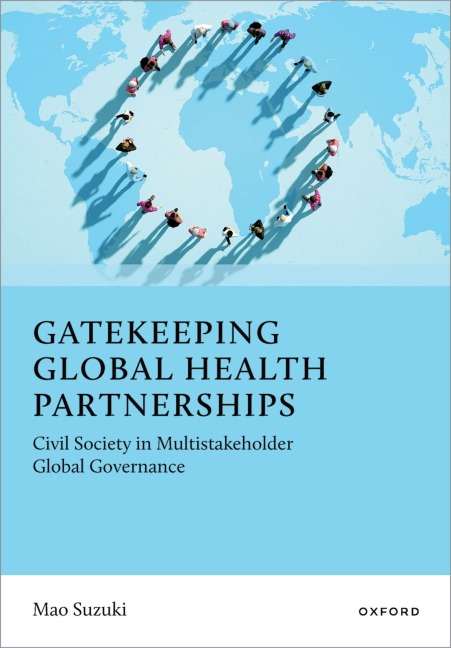
Global governance is undergoing significant transformation. Scholars have long acknowledged a shift from hierarchical modes of global governance - such as international law negotiated under traditional international organizations - toward more flexible modes, like voluntary partnerships, networks, and market-based interventions. However, the reality is more complex than a simple transition from "old" to "new" governance modalities. Sometimes, public-private cooperation flourishes; other times, states retain exclusive control over global decision making. This raises a fundamental question: Why do public and private actors collaborate to address some global challenges but not others? Gatekeeping Global Health Partnerships engages with this question, investigating why public-private partnerships (PPPs) emerge to address only certain global health issues. It argues that civil society organizations (CSOs) play a crucial role in shaping these outcomes by influencing whether other types of actors - international organizations, states, and private actors - consider partnerships legitimate and desirable. This book develops a theory of multistakeholder interactions, showing that PPPs are more likely to arise when CSOs advocate for the provision of specific goods, such as medicines, rather than for regulatory measures. Drawing on an original dataset of 124 partnerships, it combines network visualization, qualitative text analysis, and comparative case studies of HIV/AIDS, neglected tropical diseases, nutrition, and non-communicable diseases. Through a mixed-method approach, it demonstrates how CSOs can both facilitate and block PPP formation. This book's argument and findings offer new insights into the politics of global health governance and provide a refined understanding of why public and private actors work together to address some global challenges but not others.
Mao Suzuki is an Assistant Professor of Political Science at the National University of Singapore. She received her Ph.D. in Political Science and International Relations from the University of Southern California.
Dieses eBook wird im PDF-Format geliefert und ist mit einem Adobe Kopierschutz (DRM) versehen. Sie können dieses eBook mit allen Geräten lesen, die das PDF-Format und den Adobe Kopierschutz (DRM) unterstützen.
Zum Beispiel mit den folgenden Geräten:
• tolino Reader
Laden Sie das eBook direkt über den Reader-Shop auf dem tolino herunter oder übertragen Sie das eBook auf Ihren tolino mit einer kostenlosen Software wie beispielsweise Adobe Digital Editions.
• Sony Reader & andere eBook Reader
Laden Sie das eBook direkt über den Reader-Shop herunter oder übertragen Sie das eBook mit der kostenlosen Software Sony READER FOR PC/Mac oder Adobe Digital Editions auf ein Standard-Lesegeräte mit epub- und Adobe DRM-Unterstützung.
• Tablets & Smartphones
Möchten Sie dieses eBook auf Ihrem Smartphone oder Tablet lesen, finden Sie hier unsere kostenlose Lese-App für iPhone/iPad und Android Smartphone/Tablets.
• PC & Mac
Lesen Sie das eBook direkt nach dem Herunterladen mit einer kostenlosen Lesesoftware, beispielsweise Adobe Digital Editions, Sony READER FOR PC/Mac oder direkt über Ihre eBook-Bibliothek in Ihrem Konto unter „Meine eBooks“ - „online lesen“.
Schalten Sie das eBook mit Ihrer persönlichen Adobe ID auf bis zu sechs Geräten gleichzeitig frei.
Bitte beachten Sie, dass die Kindle-Geräte das Format nicht unterstützen und dieses eBook somit nicht auf Kindle-Geräten lesbar ist.