Und dann auf "Zum Home-Bildschirm [+]".

Stöbern
genialokal zum Startbildschirm hinzufügen
Installieren Sie die genialokal App auf Ihrem Startbildschirm für einen schnellen Zugriff und eine komfortable Nutzung.
Installieren Sie die genialokal App auf Ihrem Startbildschirm für einen schnellen Zugriff und eine komfortable Nutzung.
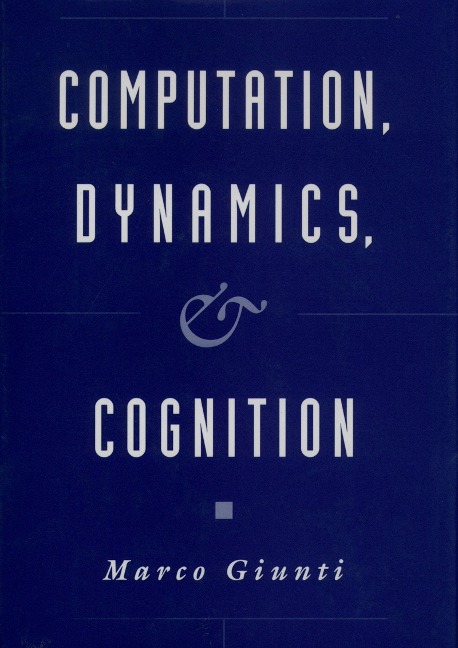
Currently there is growing interest in the application of dynamical methods to the study of cognition. Computation, Dynamics, and Cognition investigates this convergence from a theoretical and philosophical perspective, generating a provocative new view of the aims and methods of cognitive science. Advancing the dynamical approach as the methodological frame best equipped to guide inquiry in the field's two main research programs--the symbolic and connectionist approaches--Marco Giunti engages a host of questions crucial not only to the science of cognition, but also to computation theory, dynamical systems theory, philosophy of mind, and philosophy of science. In chapter one Giunti employs a dynamical viewpoint to explore foundational issues in computation theory. Using the concept of Turing computability, he precisely and originally defines the nature of a computational system, sharpening our understanding of computation theory and its applications. In chapter two he generalizes his definition of a computational system, arguing that the concept of Turing computability itself is relative to the kind of support on which Turing machine operate. Chapter three completes the book's conceptual foundation, discussing a form of scientific explanation for real dynamical systems that Giunti calls "Galilean explanation." The book's fourth and final chapter develops the methodological thesis that all cognitive systems are dynamical systems. On Giunti's view, a dynamical approach is likely to benefit even those scientific explanations of cognition which are based on symbolic models. Giunti concludes by proposing a new modeling practice for cognitive science, one based on "Galilean models" of cognitive systems. Innovative, lucidly-written, and broad-ranging in its analysis, Computation, Dynamics, and Cognition will interest philosophers of science and mind, as well as cognitive scientists, computer scientists, and theorists of dynamical systems. This book elaborates a comprehensive picture of the application of dynamical methods to the study of cognition. Giunti argues that both computational systems and connectionist networks are special types of dynamical systems. He shows how this dynamical approach can be applied to problems of cognition, information processing, consciousness, meaning, and the relation between body and mind.
Dieses eBook wird im PDF-Format geliefert und ist mit einem Adobe Kopierschutz (DRM) versehen. Sie können dieses eBook mit allen Geräten lesen, die das PDF-Format und den Adobe Kopierschutz (DRM) unterstützen.
Zum Beispiel mit den folgenden Geräten:
• tolino Reader
Laden Sie das eBook direkt über den Reader-Shop auf dem tolino herunter oder übertragen Sie das eBook auf Ihren tolino mit einer kostenlosen Software wie beispielsweise Adobe Digital Editions.
• Sony Reader & andere eBook Reader
Laden Sie das eBook direkt über den Reader-Shop herunter oder übertragen Sie das eBook mit der kostenlosen Software Sony READER FOR PC/Mac oder Adobe Digital Editions auf ein Standard-Lesegeräte mit epub- und Adobe DRM-Unterstützung.
• Tablets & Smartphones
Möchten Sie dieses eBook auf Ihrem Smartphone oder Tablet lesen, finden Sie hier unsere kostenlose Lese-App für iPhone/iPad und Android Smartphone/Tablets.
• PC & Mac
Lesen Sie das eBook direkt nach dem Herunterladen mit einer kostenlosen Lesesoftware, beispielsweise Adobe Digital Editions, Sony READER FOR PC/Mac oder direkt über Ihre eBook-Bibliothek in Ihrem Konto unter „Meine eBooks“ - „online lesen“.
Schalten Sie das eBook mit Ihrer persönlichen Adobe ID auf bis zu sechs Geräten gleichzeitig frei.
Bitte beachten Sie, dass die Kindle-Geräte das Format nicht unterstützen und dieses eBook somit nicht auf Kindle-Geräten lesbar ist.