Und dann auf "Zum Home-Bildschirm [+]".

Stöbern
genialokal zum Startbildschirm hinzufügen
Installieren Sie die genialokal App auf Ihrem Startbildschirm für einen schnellen Zugriff und eine komfortable Nutzung.
Installieren Sie die genialokal App auf Ihrem Startbildschirm für einen schnellen Zugriff und eine komfortable Nutzung.
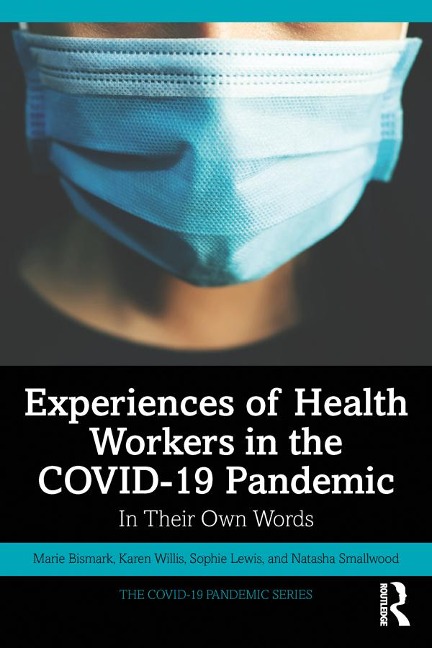
Experiences of Health Workers in the COVID-19 Pandemic shares the stories of frontline health workers-told in their own words-during the second wave of COVID-19 in Australia. The book records the complex emotions healthcare workers experienced as the pandemic unfolded, and the challenges they faced in caring for themselves, their families, and their patients. The book shares their insights on what we can learn from the pandemic to strengthen our health system and prepare for future crises. The book draws on over 9,000 responses to a survey examining the psychological, occupational, and social impact of the COVID-19 pandemic on frontline health workers. Survey participants came from all areas of the health sector, from intensive care doctors to hospital cleaners to aged care nurses, and from large metropolitan hospitals to rural primary care practices. The authors organise these free-text responses thematically, creating a shared narrative of health workers experiences. Each chapter is prefaced by a brief commentary that provides context and introduces the the themes that emerged from the survey. This book offers a unique historical record of the experiences of thousands of healthcare workers at the height of the second wave of the pandemic and will be of great interest to anyone interested in the experiences of healthcare workers, and the psychological, organisational, healthcare policy, and social challenges of the COVID-19 pandemic.
Marie Bismark is a public health physician, health lawyer and Associate Professor in the Melbourne School of Population and Global Health at the University of Melbourne, Australia. During the COVID-19 pandemic, she provided mental health care to patients in the emergency department, intensive care unit, and on the COVID-19 ward of The Royal Melbourne Hospital. She also leads a research team at the University of Melbourne, focused on the interface between patient safety, clinician wellbeing, and health regulation. Karen Willis is Professor of Public Health at Victoria University, Australia. She is a health sociologist and qualitative methodologist. She co-led the Australian Frontline Health Worker Study and is currently co-leading the Future-Proofing the Frontline project to develop interventions to support health workers during times of crisis. Her previous research has examined how patients and professionals navigate the healthcare system, self-management of chronic conditions, and the experience of loneliness for people with chronic conditions. She is co-editor of The Covid-19 Crisis: Social Perspectives (Routledge, 2021) and co-editor of Navigating Private and Public Healthcare: Experiences of Patients, Doctors and Policy-Makers (Palgrave Macmillan, 2020). Sophie Lewis is Senior Lecturer in the School of Health Sciences at the University of Sydney, Australia. She has an inter-disciplinary background in sociology and public health and her research uses innovative qualitative methods to explore the experience of living with long-term conditions. Her current research examines how people with chronic illnesses experience loneliness, self-management support in patient/clinician interactions, end of life care decision-making, and the experiences of living with advanced cancer. Natasha Smallwood is an Associate Professor in the Central Clinical School at Monash University, Australia, Clinical Associate Professor at the University of Melbourne, Australia, and Consultant Respiratory Physician at Alfred Health. Her research interests include symptom management, supporting patients with severe lung diseases, gender equity and clinician wellbeing. She co-led the Australian Frontline Health Worker Study and is currently co-leading the Future-Proofing the Frontline project to develop interventions to support health workers during times of crisis.
Foreword Series foreword Acknowledgements Terms and abbreviations 1 Introduction 2 A roller-coaster of mood and meaning 3 Pervasive, precarious, and perilous 4 Self-care struggles and strategies 5 The impossible juggle of work and care 6 Missing the human connection 7 Dispensable and disillusioned 8 Overwork, burnout, and resignation 9 Leadership and teams 10 Communication and understanding 11 Feeling valued and appreciated 12 Showing up all the cracks 13 Not being able to hug a dying patient 14 Supporting emotional wellbeing 15 Purpose, compassion, and gratitude 16 Looking back, looking forwards Postscript: to whoever is reading this Index
Dieses eBook wird im PDF-Format geliefert und ist mit einem Adobe Kopierschutz (DRM) versehen. Sie können dieses eBook mit allen Geräten lesen, die das PDF-Format und den Adobe Kopierschutz (DRM) unterstützen.
Zum Beispiel mit den folgenden Geräten:
• tolino Reader
Laden Sie das eBook direkt über den Reader-Shop auf dem tolino herunter oder übertragen Sie das eBook auf Ihren tolino mit einer kostenlosen Software wie beispielsweise Adobe Digital Editions.
• Sony Reader & andere eBook Reader
Laden Sie das eBook direkt über den Reader-Shop herunter oder übertragen Sie das eBook mit der kostenlosen Software Sony READER FOR PC/Mac oder Adobe Digital Editions auf ein Standard-Lesegeräte mit epub- und Adobe DRM-Unterstützung.
• Tablets & Smartphones
Möchten Sie dieses eBook auf Ihrem Smartphone oder Tablet lesen, finden Sie hier unsere kostenlose Lese-App für iPhone/iPad und Android Smartphone/Tablets.
• PC & Mac
Lesen Sie das eBook direkt nach dem Herunterladen mit einer kostenlosen Lesesoftware, beispielsweise Adobe Digital Editions, Sony READER FOR PC/Mac oder direkt über Ihre eBook-Bibliothek in Ihrem Konto unter „Meine eBooks“ - „online lesen“.
Schalten Sie das eBook mit Ihrer persönlichen Adobe ID auf bis zu sechs Geräten gleichzeitig frei.
Bitte beachten Sie, dass die Kindle-Geräte das Format nicht unterstützen und dieses eBook somit nicht auf Kindle-Geräten lesbar ist.