Und dann auf "Zum Home-Bildschirm [+]".

Stöbern
genialokal zum Startbildschirm hinzufügen
Installieren Sie die genialokal App auf Ihrem Startbildschirm für einen schnellen Zugriff und eine komfortable Nutzung.
Installieren Sie die genialokal App auf Ihrem Startbildschirm für einen schnellen Zugriff und eine komfortable Nutzung.
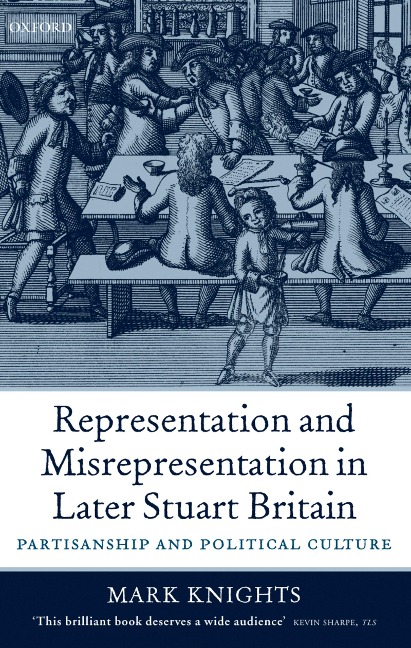
In this original and illuminating study, Mark Knights reveals how the political culture of the eighteenth century grew out of earlier trends and innovations. Arguing that the period 1675-1720 needs to be seen as the second stage of a seventeenth-century revolution that ran on until c.1720, the book traces the development of the public as an arbiter of politics, the growth of a national political culture, the shift towards a representative society, a crisis of public discourse and credibility, and a political enlightenment rooted in local and national partisan conflict. The 'public' acquired a new status in the later Stuart period as a result of frequent elections, the lapse of pre-publication licensing, the emergence of party politics, the creation of a public debt and ideological conflict over popular sovereignty. These factors enlarged the role of the public and required it to make frequent acts of judgement. Yet contemporaries from across the political spectrum feared that the public might be misled by the misrepresentations peddled by their rivals. Each side, and those ostensibly of no side, discerned a culture of passion, slander, libel, lies, hypocrisy, dissimulation, conspiracy, private languages and fictions. 'Truth' appeared an ambiguous, political matter. But the reaction to partisanship was also creative, for it helped to construct an ideal form of political discourse. This was one based on reason rather than passion, on politeness rather than incivility, on moderation rather than partisan zeal, on critical reading rather than credulity; and the realisation of those ideals rested on infrequent rather than frequent elections. Finding synergies between social, political, religious, scientific, literary, cultural and intellectual history, 'Representation and Misrepresentation' reinvigorates the debate about the emergence of 'the public sphere' in the later Stuart period.
Mark Knights is Senior Lecturer in British History at the University of East Anglia, Norwich
- Representation and the Public - 1.: Introduction - 2.: Public Politics - 3.: Petitions and Addresses - 4.: Informing Public Judgement at the Polls - Public Discourse and Truth - 5.: The Evolution of Print Culture and the Libels of Public Discourse - 6.: Truth and Fiction in Age of Party - 7.: Consequences - Bibliography
Dieses eBook wird im PDF-Format geliefert und ist mit einem Adobe Kopierschutz (DRM) versehen. Sie können dieses eBook mit allen Geräten lesen, die das PDF-Format und den Adobe Kopierschutz (DRM) unterstützen.
Zum Beispiel mit den folgenden Geräten:
• tolino Reader
Laden Sie das eBook direkt über den Reader-Shop auf dem tolino herunter oder übertragen Sie das eBook auf Ihren tolino mit einer kostenlosen Software wie beispielsweise Adobe Digital Editions.
• Sony Reader & andere eBook Reader
Laden Sie das eBook direkt über den Reader-Shop herunter oder übertragen Sie das eBook mit der kostenlosen Software Sony READER FOR PC/Mac oder Adobe Digital Editions auf ein Standard-Lesegeräte mit epub- und Adobe DRM-Unterstützung.
• Tablets & Smartphones
Möchten Sie dieses eBook auf Ihrem Smartphone oder Tablet lesen, finden Sie hier unsere kostenlose Lese-App für iPhone/iPad und Android Smartphone/Tablets.
• PC & Mac
Lesen Sie das eBook direkt nach dem Herunterladen mit einer kostenlosen Lesesoftware, beispielsweise Adobe Digital Editions, Sony READER FOR PC/Mac oder direkt über Ihre eBook-Bibliothek in Ihrem Konto unter „Meine eBooks“ - „online lesen“.
Schalten Sie das eBook mit Ihrer persönlichen Adobe ID auf bis zu sechs Geräten gleichzeitig frei.
Bitte beachten Sie, dass die Kindle-Geräte das Format nicht unterstützen und dieses eBook somit nicht auf Kindle-Geräten lesbar ist.