Und dann auf "Zum Home-Bildschirm [+]".

Stöbern
genialokal zum Startbildschirm hinzufügen
Installieren Sie die genialokal App auf Ihrem Startbildschirm für einen schnellen Zugriff und eine komfortable Nutzung.
Installieren Sie die genialokal App auf Ihrem Startbildschirm für einen schnellen Zugriff und eine komfortable Nutzung.
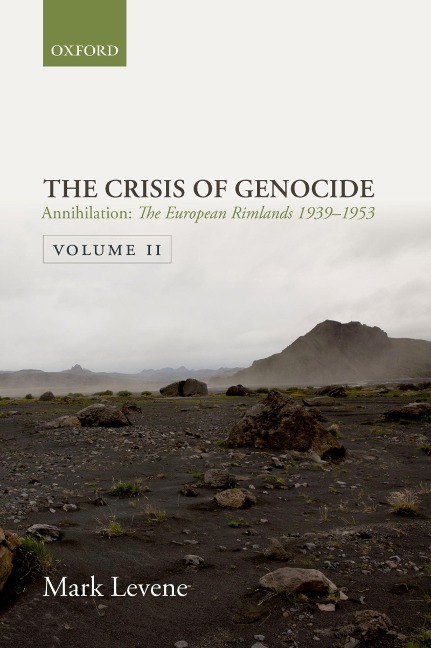
From the years leading up to the First World War to the aftermath of the Second, Europe experienced an era of genocide. As well as the Holocaust, this period also witnessed the Armenian genocide in 1915, mass killings in Bolshevik and Stalinist Russia, and a host of further ethnic cleansings in Anatolia, the Balkans, and Eastern Europe. Crisis of Genocide seeks to integrate these genocidal events into a single, coherent history. Over two volumes, Mark Levene demonstrates how the relationship between geography, nation, and power came to play a key role in the emergence of genocide in a collapsed or collapsing European imperial zone - the Rimlands - and how the continuing geopolitical contest for control of these Eastern European or near-European regions destabilised relationships between diverse and multifaceted ethnic communities who traditionally had lived side by side. An emergent pattern of toxicity can also be seen in the struggles for regional dominance as pursued by post-imperial states, nation-states, and would-be states. Volume II: Annihilation covers the period from 1939 to 1953, particularly focussing on the Second World War, and its aftermath, the Holocaust and its lasting impact, and the latter part of the Stalinist regime. Levene demonstrates that while the attempted Nazi mass murder of the entirety of European Jewry represents the most thoroughgoing and extreme consequence of efforts aimed at political and social reformulation of the Rimlands' arena in particular, the accumulation and concentration of genocidal violence against many 'minority' groups would suggest that anti-Semitism or racism alone is insufficient to provide a comprehensive explanation for genocide.
Mark Levene is Reader in Comparative History at the University of Southampton, and in the Parkes Centre for Jewish/non-Jewish Relations. His writing ranges from Jewish history to genocide and anthropogenic climate change, including, most recently History at the End of the World? History, Climate Change and the Possibility of Closure (co-edited with Rob Johnson and Penny Roberts, 2010). He is founder of Rescue! History, and co-founder of the Crisis Forum. The two volumes of Crisis of Genocide continue a multi-volume project - begun with The Meaning of Genocide and The Rise of the West and the Coming of Genocide (2005) - to chart the history of genocide in the age of the nation-state.
- Introduction - Part One: Renewed European Cataclysm - 1: The Second Crisis of the Rimlands - 2: The Nazi Wars of Jewish - and Roma - Extermination - 3: Other Europeans and the Destruction of the Jews - 4: Wars of All against All - Part Two: Post-war 'Pacifications' - 5: Stalinist Reordering: Russian Peace - 6: An Expurgated Rimlands - Appendix: Major Incidents of Genocide and Sub-Genocidal Violence: Rimlands and Near-Regions, 1912-1953 - Select Bibliography - Index
Dieses eBook wird im PDF-Format geliefert und ist mit einem Adobe Kopierschutz (DRM) versehen. Sie können dieses eBook mit allen Geräten lesen, die das PDF-Format und den Adobe Kopierschutz (DRM) unterstützen.
Zum Beispiel mit den folgenden Geräten:
• tolino Reader
Laden Sie das eBook direkt über den Reader-Shop auf dem tolino herunter oder übertragen Sie das eBook auf Ihren tolino mit einer kostenlosen Software wie beispielsweise Adobe Digital Editions.
• Sony Reader & andere eBook Reader
Laden Sie das eBook direkt über den Reader-Shop herunter oder übertragen Sie das eBook mit der kostenlosen Software Sony READER FOR PC/Mac oder Adobe Digital Editions auf ein Standard-Lesegeräte mit epub- und Adobe DRM-Unterstützung.
• Tablets & Smartphones
Möchten Sie dieses eBook auf Ihrem Smartphone oder Tablet lesen, finden Sie hier unsere kostenlose Lese-App für iPhone/iPad und Android Smartphone/Tablets.
• PC & Mac
Lesen Sie das eBook direkt nach dem Herunterladen mit einer kostenlosen Lesesoftware, beispielsweise Adobe Digital Editions, Sony READER FOR PC/Mac oder direkt über Ihre eBook-Bibliothek in Ihrem Konto unter „Meine eBooks“ - „online lesen“.
Schalten Sie das eBook mit Ihrer persönlichen Adobe ID auf bis zu sechs Geräten gleichzeitig frei.
Bitte beachten Sie, dass die Kindle-Geräte das Format nicht unterstützen und dieses eBook somit nicht auf Kindle-Geräten lesbar ist.