Und dann auf "Zum Home-Bildschirm [+]".

Stöbern
genialokal zum Startbildschirm hinzufügen
Installieren Sie die genialokal App auf Ihrem Startbildschirm für einen schnellen Zugriff und eine komfortable Nutzung.
Installieren Sie die genialokal App auf Ihrem Startbildschirm für einen schnellen Zugriff und eine komfortable Nutzung.
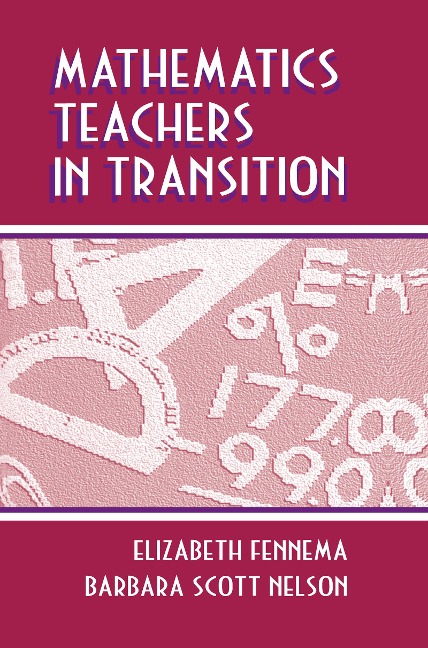
This book addresses the need of professional development leaders and policymakers for scholarly knowledge about influencing teachers to modify mathematical instruction to bring it more in alignment with the recommendations of the current reform movement initiated by the National Council of Teachers of Mathematics. The book presents: * theoretical perspectives for studying, analyzing, and understanding teacher change; * descriptions of contextual variables to be considered as one studies and attempts to understand teacher change; and * descriptions of professional development programs that resulted in teacher change. One chapter builds a rationale for looking to developmental psychology for guidance in constructing models of reconstructing new forms of mathematical instruction. Another highlights the relevance to mathematics teacher development of research-based knowledge about how children construct mathematical ideas. Other chapters explore the relationships between the various contexts of schooling and instructional change. Included also are chapters that describe and analyze major reform efforts designed to assist teachers in modifying their instructional practices (Cognitively Guided Instruction, Math-Cubed, Project Impact, Mathematics in Context, and the Case-Based Project). Finally, the current state of knowledge about encouraging teachers to modify their instruction is discussed, the implications of major research and implementation findings are suggested, and some of the major questions that need to be addressed are identified, such as what we have learned about teacher change.
Elizabeth Fennema, Barbara Scott Nelson
Contents: Preface. Part I: Introduction.B.S. Nelson, Learning About Teacher Change in the Context of Mathematics Reform: Where Have We Come From? Part II: Theoretical Perspectives on Studying Teacher Change.L. Goldsmith, D. Shifter, Understanding Teachers in Transition: Characteristics of a Model for Developing Teachers. M. Simon, Developing New Models of Mathematics Teaching: An Imperative for Research on Mathematics Teacher Development. T.J. Cooney, B. Shealy, On Understanding the Structure of Teachers' Beliefs and Their Relationship to Change. P.B. Campbell, The More Things Change...Gender, Change, and Mathematics Education. Part III: Context and Teacher Change.D. Jones, A Conceptual Framework for Studying the Relevance of Context to Mathematics Teachers' Change. M.K. Stein, C. Brown, Teacher Learning in Social Context: Integrating Collaborative and Institutional Processes With the Study of Teacher Change. W.G. Secada, L.B. Adajian, Mathematics Teachers' Change in the Context of Their Professional Communities. Part IV: Studies of Professional Development Programs in Action.C.A. Lubinski, P.A. Jaberg, Teacher Change and Mathematics K-4: Developing a Theoretical Perspective. M. Franke, E. Fennema, T.P. Carpenter, Changing Teachers: Interactions Between Beliefs and Classroom Practice. J. Stocks, J. Schofield, Educational Reform and Professional Development. P.F. Campbell, D.Y. White, Project IMPACT: Influencing and Supporting Teacher Change in Predominately Minority Schools. T.A. Romberg, Mathematics in Context: Impact on Teachers. C. Barnett, S. Friedman, Mathematics Case Discussions: Nothing Is Sacred. Part V: Summary and Synthesis.B.S. Nelson, Learning About Teacher Change in the Context of Mathematics Education Reform: Where Are We Going?
Dieses eBook wird im PDF-Format geliefert und ist mit einem Adobe Kopierschutz (DRM) versehen. Sie können dieses eBook mit allen Geräten lesen, die das PDF-Format und den Adobe Kopierschutz (DRM) unterstützen.
Zum Beispiel mit den folgenden Geräten:
• tolino Reader
Laden Sie das eBook direkt über den Reader-Shop auf dem tolino herunter oder übertragen Sie das eBook auf Ihren tolino mit einer kostenlosen Software wie beispielsweise Adobe Digital Editions.
• Sony Reader & andere eBook Reader
Laden Sie das eBook direkt über den Reader-Shop herunter oder übertragen Sie das eBook mit der kostenlosen Software Sony READER FOR PC/Mac oder Adobe Digital Editions auf ein Standard-Lesegeräte mit epub- und Adobe DRM-Unterstützung.
• Tablets & Smartphones
Möchten Sie dieses eBook auf Ihrem Smartphone oder Tablet lesen, finden Sie hier unsere kostenlose Lese-App für iPhone/iPad und Android Smartphone/Tablets.
• PC & Mac
Lesen Sie das eBook direkt nach dem Herunterladen mit einer kostenlosen Lesesoftware, beispielsweise Adobe Digital Editions, Sony READER FOR PC/Mac oder direkt über Ihre eBook-Bibliothek in Ihrem Konto unter „Meine eBooks“ - „online lesen“.
Schalten Sie das eBook mit Ihrer persönlichen Adobe ID auf bis zu sechs Geräten gleichzeitig frei.
Bitte beachten Sie, dass die Kindle-Geräte das Format nicht unterstützen und dieses eBook somit nicht auf Kindle-Geräten lesbar ist.