Und dann auf "Zum Home-Bildschirm [+]".

Stöbern
genialokal zum Startbildschirm hinzufügen
Installieren Sie die genialokal App auf Ihrem Startbildschirm für einen schnellen Zugriff und eine komfortable Nutzung.
Installieren Sie die genialokal App auf Ihrem Startbildschirm für einen schnellen Zugriff und eine komfortable Nutzung.
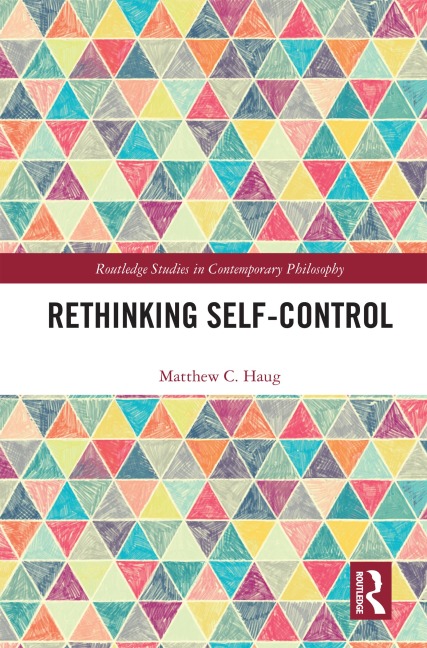
Research on self-control in both philosophy and psychology is thriving. Yet, despite a wealth of recent philosophical work on the exercise of self-control, there has been surprisingly little empirically informed work in philosophy on self-control as a psychological trait. This book aims to fill this gap. There is abundant evidence that self-control is beneficial both to those who have it and to the societies in which they live. This book shows that the neo-Aristotelian framework for understanding self-control-related traits, which has dominated both philosophy and the sciences, is psychologically unrealistic and should be replaced. The traditional conceptions of temperance and continence need to be revised so that they reflect actual human capacities. The author argues for an indirect harmony hypothesis, which claims that high trait self-control consists in having an excellent ability to use indirect strategies to achieve motivational harmony that would not otherwise be possible. He fruitfully combines work from ancient Greek philosophy, contemporary virtue ethics, philosophy of action, moral psychology, social psychology, and cognitive neuropsychology to develop a novel hypothesis about what constitutes human excellence with respect to self-control. Rethinking Self-Control is an essential resource for philosophers and psychologists interested in virtue ethics, moral psychology, philosophy of mind, philosophy of action, and ancient philosophy.
Matthew C. Haug is an associate professor of philosophy at William & Mary. He works on issues in philosophy of mind, philosophy of science, moral psychology, and related areas. He is the editor of Philosophical Methodology: The Armchair or the Laboratory? (Routledge, 2014).
1. Introduction 2. Self-Regulation and Self-Control 3. Self-Control-Related Traits 4. Contradictions in Continence 5. Tensions in Temperance 6. High Trait Self-Control and the Indirect Harmony Hypothesis 7. Self-Control, Executive Function, and Effort 8. Self-Control-Related Traits and Human Excellence 9. Conclusion
Dieses eBook wird im PDF-Format geliefert und ist mit einem Adobe Kopierschutz (DRM) versehen. Sie können dieses eBook mit allen Geräten lesen, die das PDF-Format und den Adobe Kopierschutz (DRM) unterstützen.
Zum Beispiel mit den folgenden Geräten:
• tolino Reader
Laden Sie das eBook direkt über den Reader-Shop auf dem tolino herunter oder übertragen Sie das eBook auf Ihren tolino mit einer kostenlosen Software wie beispielsweise Adobe Digital Editions.
• Sony Reader & andere eBook Reader
Laden Sie das eBook direkt über den Reader-Shop herunter oder übertragen Sie das eBook mit der kostenlosen Software Sony READER FOR PC/Mac oder Adobe Digital Editions auf ein Standard-Lesegeräte mit epub- und Adobe DRM-Unterstützung.
• Tablets & Smartphones
Möchten Sie dieses eBook auf Ihrem Smartphone oder Tablet lesen, finden Sie hier unsere kostenlose Lese-App für iPhone/iPad und Android Smartphone/Tablets.
• PC & Mac
Lesen Sie das eBook direkt nach dem Herunterladen mit einer kostenlosen Lesesoftware, beispielsweise Adobe Digital Editions, Sony READER FOR PC/Mac oder direkt über Ihre eBook-Bibliothek in Ihrem Konto unter „Meine eBooks“ - „online lesen“.
Schalten Sie das eBook mit Ihrer persönlichen Adobe ID auf bis zu sechs Geräten gleichzeitig frei.
Bitte beachten Sie, dass die Kindle-Geräte das Format nicht unterstützen und dieses eBook somit nicht auf Kindle-Geräten lesbar ist.