Und dann auf "Zum Home-Bildschirm [+]".

Stöbern
genialokal zum Startbildschirm hinzufügen
Installieren Sie die genialokal App auf Ihrem Startbildschirm für einen schnellen Zugriff und eine komfortable Nutzung.
Installieren Sie die genialokal App auf Ihrem Startbildschirm für einen schnellen Zugriff und eine komfortable Nutzung.
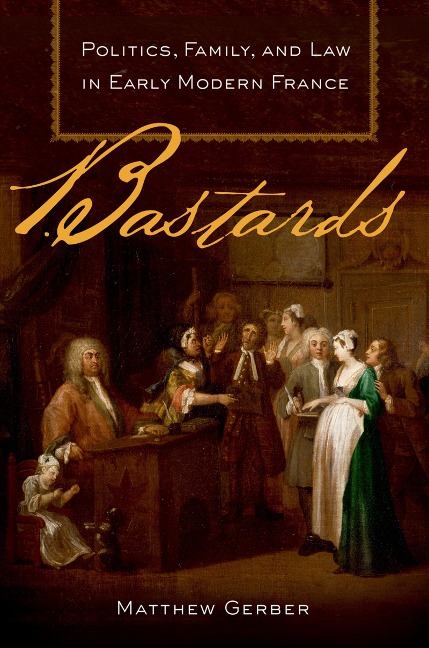
Children born out of wedlock were commonly stigmatized as "bastards" in early modern France. Deprived of inheritance, they were said to have neither kin nor kind, neither family nor nation. Why was this the case? Gentler alternatives to "bastard" existed in early modern French discourse, and many natural parents voluntarily recognized and cared for their extramarital offspring. Drawing upon a wide array of archival and published sources, Matthew Gerber has reconstructed numerous disputes over the rights and disabilities of children born out of wedlock in order to illuminate the changing legal condition and practical treatment of extramarital offspring over a period of two and half centuries. Gerber's study reveals that the exclusion of children born out of wedlock from the family was perpetually debated. In sixteenth- and seventeenth-century France, royal law courts intensified their stigmatization of extramarital offspring even as they usurped jurisdiction over marriage from ecclesiastic courts. Mindful of preserving elite lineages and dynastic succession of power, reform-minded jurists sought to exclude illegitimate children more thoroughly from the household. Adopting a strict moral tone, they referred to illegitimate children as "bastards" in an attempt to underscore their supposed degeneracy. Hostility toward extramarital offspring culminated in 1697 with the levying of a tax on illegitimate offspring. Contempt was never unanimous, however, and in the absence of a unified body of French law, law courts became vital sites for a highly contested cultural construction of family. Lawyers pleading on behalf of extramarital offspring typically referred to them as "natural children." French magistrates grew more receptive to this sympathetic discourse in the eighteenth century, partly in response to soaring rates of child abandonment. As costs of "foundling" care increasingly strained the resources of local communities and the state, some French elites began to publicly advocate a destigmatization of extramarital offspring while valorizing foundlings as "children of the state." By the time the Code Civil (1804) finally established a uniform body of French family law, the concept of bastardy had become largely archaic. With a cast of characters ranging from royal bastards to foundlings, Bastards explores the relationship between social and political change in the early modern era, offering new insight into the changing nature of early modern French law and its evolving contribution to the historical construction of both the family and the state.
Matthew Gerber is Assistant Professor of History at the University of Colorado at Boulder.
Preface A Note on the Text Introduction: Illegitimacy and the Political History of the Family Part I: Stigmatizing the Bastard Chapter One: Bastardy in Sixteenth-Century French Legal Doctrine and Practice Chapter Two: Jurisprudential Reform of Illegitimacy in Seventeenth-Century France Chapter Three: Royal Bastardy & Dynastic Crisis Part II: Destigmatizing the Natural Child Chapter Four: State Expansion, Social Practice, and the Quandaries of Legal Unification Chapter Five: Redefining Social Interest: The Eighteenth-Century Foundling Crisis Chapter Six: Illegitimacy and Legal Change in the French Enlightenment Conclusion Appendix Notes Bibliography Index
Dieses eBook wird im PDF-Format geliefert und ist mit einem Adobe Kopierschutz (DRM) versehen. Sie können dieses eBook mit allen Geräten lesen, die das PDF-Format und den Adobe Kopierschutz (DRM) unterstützen.
Zum Beispiel mit den folgenden Geräten:
• tolino Reader
Laden Sie das eBook direkt über den Reader-Shop auf dem tolino herunter oder übertragen Sie das eBook auf Ihren tolino mit einer kostenlosen Software wie beispielsweise Adobe Digital Editions.
• Sony Reader & andere eBook Reader
Laden Sie das eBook direkt über den Reader-Shop herunter oder übertragen Sie das eBook mit der kostenlosen Software Sony READER FOR PC/Mac oder Adobe Digital Editions auf ein Standard-Lesegeräte mit epub- und Adobe DRM-Unterstützung.
• Tablets & Smartphones
Möchten Sie dieses eBook auf Ihrem Smartphone oder Tablet lesen, finden Sie hier unsere kostenlose Lese-App für iPhone/iPad und Android Smartphone/Tablets.
• PC & Mac
Lesen Sie das eBook direkt nach dem Herunterladen mit einer kostenlosen Lesesoftware, beispielsweise Adobe Digital Editions, Sony READER FOR PC/Mac oder direkt über Ihre eBook-Bibliothek in Ihrem Konto unter „Meine eBooks“ - „online lesen“.
Schalten Sie das eBook mit Ihrer persönlichen Adobe ID auf bis zu sechs Geräten gleichzeitig frei.
Bitte beachten Sie, dass die Kindle-Geräte das Format nicht unterstützen und dieses eBook somit nicht auf Kindle-Geräten lesbar ist.