Und dann auf "Zum Home-Bildschirm [+]".

Stöbern
genialokal zum Startbildschirm hinzufügen
Installieren Sie die genialokal App auf Ihrem Startbildschirm für einen schnellen Zugriff und eine komfortable Nutzung.
Installieren Sie die genialokal App auf Ihrem Startbildschirm für einen schnellen Zugriff und eine komfortable Nutzung.
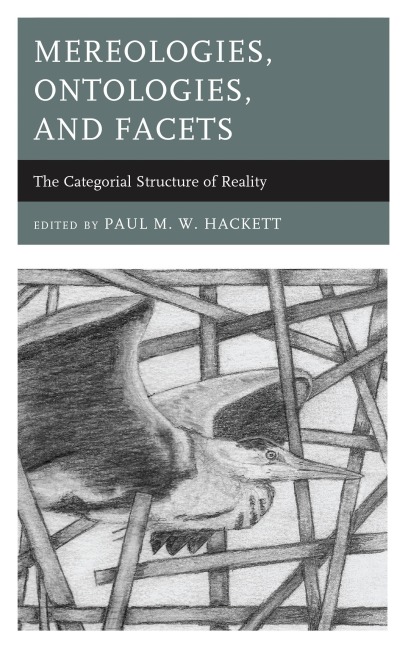
The assignment events, objects, state of beings, etc., to an experiential category is a fundamental activity carried out by human (and by other animals). So rudimentary are the processes involved in categorizing that it is indeed impossible to imagine conscious awareness to exist without the presence of categories. A considerable body of writing exists on categories dating from the times of Classical philosophy. Plato developed a categorical ontology and Aristotle produced one of the earliest examples of a complex understanding of basic ontologies. A number of other categorially structured ontologies have been proposed including those by Lowe, Westerhoff, Chisholm, etc.
The book is an edited collection of up to the moment essays that address critical aspects on the understanding of categories and categorial systems. The perspectives included in the book are drawn from philosophy, psychology, theology, divinity, comparative cognition and facet theory. The authors are all renowned experts in the area of their writing. Topics addressed include both contemporary advances in the understanding of perennial debates and latest thinking upon how categories are employed to structure our experiences of the world we live in.
The book is distinct as being written by philosophers and psychologists. The book is a collection of writings from selected academics at the fore of debates and understandings of categories in contemporary thought. The text provides a single source for contemporary scholarship in categories. No single text that brings together expositions of categorial experiences for students and academics within the above listed disciplines.
Paul M.W. Hackett is professor in the School of Communication at Emerson College.
Introduction: Theoretical and Applied Categories in Philosophy and Psychology by Paul M.W. Hackett
Chapter 1: Categorization by the Animal Mind by Alison L. Greggor and Paul M.W. Hackett
Chapter 2: Necessary Categories of Conscious Experience by Gal Yehezkel
Chapter 3: On Limning the True and Ultimate Structure of Reality by Claire Ortiz Hill
Chapter 4: A Category Semantics by Paul Symington
Chapter 5: Giving Descartes His Due byJonathan C.W. Edwards
Chapter 6: Categorical Analysis in Pragmatism: Specialization in Science and the Role of Philosophy by Torgus Midtgarden
Chapter 7: Declarative Mapping Sentence Mereologies: Categories From Aristotle to Lowe by Paul M.W. Hackett
Chapter 8: Facet Methodology and Analysis: Mining the Unconquered Lands of Behavioral Sciences Research by Aharon Tziner
Chapter 9: Divine Action, Ontological Dependence, and Truthmaking by Walter J. Schultz
Dieses eBook wird im PDF-Format geliefert und ist mit einem Adobe Kopierschutz (DRM) versehen. Sie können dieses eBook mit allen Geräten lesen, die das PDF-Format und den Adobe Kopierschutz (DRM) unterstützen.
Zum Beispiel mit den folgenden Geräten:
• tolino Reader
Laden Sie das eBook direkt über den Reader-Shop auf dem tolino herunter oder übertragen Sie das eBook auf Ihren tolino mit einer kostenlosen Software wie beispielsweise Adobe Digital Editions.
• Sony Reader & andere eBook Reader
Laden Sie das eBook direkt über den Reader-Shop herunter oder übertragen Sie das eBook mit der kostenlosen Software Sony READER FOR PC/Mac oder Adobe Digital Editions auf ein Standard-Lesegeräte mit epub- und Adobe DRM-Unterstützung.
• Tablets & Smartphones
Möchten Sie dieses eBook auf Ihrem Smartphone oder Tablet lesen, finden Sie hier unsere kostenlose Lese-App für iPhone/iPad und Android Smartphone/Tablets.
• PC & Mac
Lesen Sie das eBook direkt nach dem Herunterladen mit einer kostenlosen Lesesoftware, beispielsweise Adobe Digital Editions, Sony READER FOR PC/Mac oder direkt über Ihre eBook-Bibliothek in Ihrem Konto unter „Meine eBooks“ - „online lesen“.
Schalten Sie das eBook mit Ihrer persönlichen Adobe ID auf bis zu sechs Geräten gleichzeitig frei.
Bitte beachten Sie, dass die Kindle-Geräte das Format nicht unterstützen und dieses eBook somit nicht auf Kindle-Geräten lesbar ist.