Und dann auf "Zum Home-Bildschirm [+]".

Stöbern
genialokal zum Startbildschirm hinzufügen
Installieren Sie die genialokal App auf Ihrem Startbildschirm für einen schnellen Zugriff und eine komfortable Nutzung.
Installieren Sie die genialokal App auf Ihrem Startbildschirm für einen schnellen Zugriff und eine komfortable Nutzung.

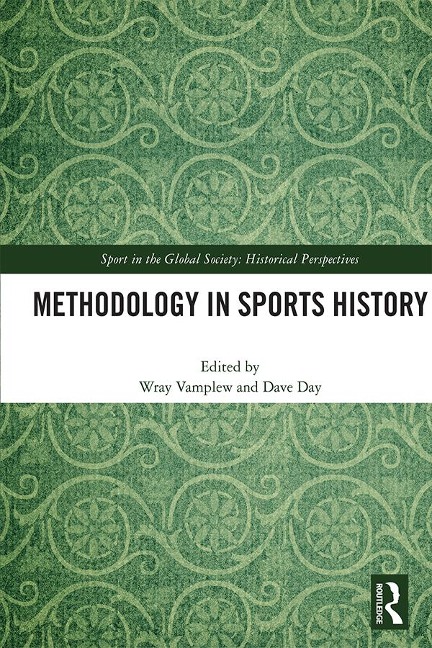
The process of converting the 'past' into 'history' involves engagement with a multitude of different sources and methods, and sports historians inevitably participate in the same debates over approaches and methodologies as their counterparts in other historical disciplines. At its heart, history remains a genre of empirical knowledge that is based upon the remains of the past, and without suitable evidence, there can be no sports history. A burgeoning range of sources has stimulated new ways of thinking and a significant expansion in the sports historian's evidentiary base, as textual sources have been supplemented by photos, films and cartoons, uniforms, architecture, maps and landscapes, and material culture more generally. This book deals with some of these innovations. It is divided into two sections, the first offering chapter-length studies of particular methodologies, and the second, brief responses from experts in their fields to the question 'what can sports historians learn from other disciplines?'
Wray Vamplew is Emeritus Professor of Sports History at the University of Stirling, UK, and Visiting Research Professor at Manchester Metropolitan University, UK. His research has gained awards from the North American Society for Sport History and the Australian Sports Commission. He is currently working on an international economic history of sport. Dave Day is Professor of Sports History at Manchester Metropolitan University, UK. He has a particular interest in the history of sports training and coaching, cross-cultural exchanges of sporting knowledge, the development of Victorian swimming communities, and the lives of working-class sportsmen and women in the nineteenth and early twentieth centuries.
1. Introduction: Sports History Methodology: Old and New Dave Day and Wray Vamplew 2. A Bird's-Eye View of the Past: Digital History, Distant Reading and Sport History Murray G. Phillips, Gary Osmond and Stephen Townsend 3. Diplomatic and International History: Athletes and Ambassadors Heather L. Dichter 4. Still Playing Together(?): A Recall to Physical Education and Sport History Intersections Geoffery Z. Kohe 5. Towards a Critical Dialogue between the History of Sport, Management History, and Sport Management/Organization Studies in Research and Teaching Matthew L. McDowell 6. Geography and the Methodological Ballpark: Putting Place into Sports History Chris Perkins 7. Methodology in Sports History: Learning from Legal Scholarship? Jack Anderson 8. Parallel Fields: Labour History and Sports History Matthew Taylor 9. Economics and (Modern) Sports History Stefan Szymanski 10. The Development of Sport in Museums J. Reilly 11. Archives and Historians of Sport Martin Johnes 12. Ways of Seeing, Ways of Telling: From Art History to Sport History John Hughson 13. The Philosophy of Sport Andrew Edgar 14. Durkheim and Sociological Method: Historical Sociology, Sports History, and the Role of Comparison Dominic Malcolm 15. The Visual in Sport History: Approaches, Methodologies and Sources Mike Huggins 16. Complexity, Critique, and Close Reading: Sport History and Literary Studies Shannon R. Smith 17. In Praise of Numbers: Quantitative Sports History Wray Vamplew 18. Cultural Studies and Sport History Daniel A. Nathan 19. Narrative Methods in Sport History Research: Biography, Collective Biography, and Prosopography Samantha-Jayne Oldfield 20. It's Good to Talk: Oral History, Sports History and Heritage Fiona Skillen and Carol Osborne