Und dann auf "Zum Home-Bildschirm [+]".

Stöbern
genialokal zum Startbildschirm hinzufügen
Installieren Sie die genialokal App auf Ihrem Startbildschirm für einen schnellen Zugriff und eine komfortable Nutzung.
Installieren Sie die genialokal App auf Ihrem Startbildschirm für einen schnellen Zugriff und eine komfortable Nutzung.

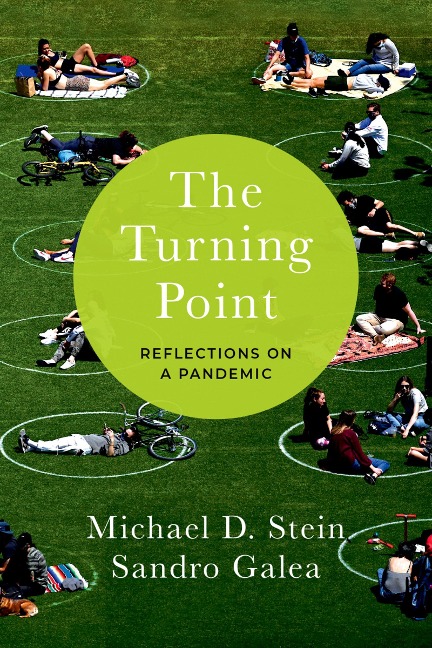
In the early years of COVID-19, Americans witnessed the intersection of a global pandemic, an economic collapse, and civil unrest that galvanized the country and the world and ushered in an era of unprecedented disruption. Three years later, we can begin to reflect on the experience of the pandemic and ask ourselves how the lessons of that experience can inform a healthier present and future. The Turning Point: Reflections on a Pandemic examines the first years of COVID-19 through the lens of population health, revealing a critical turning point in our engagement with key public health issues. Through a series of short, provocative essays, the authors leverage their experience as prominent public health leaders to untangle the social, economic, environmental, and political forces at work in our response to the pandemic. Combining cutting-edge data with philosophical insights, these bold and revelatory essays encourage us to broaden and sharpen our vision of health and renegotiate policies that can allow health to flourish in extraordinary-and ordinary-times.
Michael D. Stein is Professor and Chair of Health Law, Policy and Management of the School of Public Health at Boston University. He is primary care doctor and has been a leader in general medicine and substance use research and policy for decades. He is Executive Editor of Public Health Post, a popular website on matters of population health. He is the author of award-winning novels and works of non-fiction. He has been interviewed by Terry Gross on Fresh Air and has been included in Best American Essays Notables. Sandro Galea is Robert A Knox Professor and Dean of the School of Public Health at Boston University. He is a past president of the Society for Epidemiologic Research and of the Interdisciplinary Society for Population Health Science, past chair of the board of the Association of Schools and Programs of Public Health, and is an elected member of the National Academy of Medicine.
Acknowledgments
Dedication
Preface
Section 1. LESSONS
1. From Theory to Practice 2. Next Time, Testing First 3. The Irreplaceable Public Sector 4. Holding Our Breath 5. The Challenge of Addressing Multiple Crises 6. The Invisible Mental Health Burdens of a Pandemic 7. Pandemics and Prisons 8. The Necessity of Speaking with Care 9. Health Behavior 10. The Caring Infrastructure 11. Does Today Matter More Than Tomorrow? 12. Telling Different Stories with the Same Data 13. How Our Expectations Shape Our Perceptions of Reality 14. Can Contact Tracing Work Here? 15. Prescription Against Worry
Section 2. STORY
16. Political Decisions and Science 17. Should We Be More Upset By This? 18. The Responsibility of Experts 19. Defining Our Goalposts 20. The Limits of Our Science 21. The National Character 22. The Right to Bear News 23. The Story of COVID-19 24. Why Did We Close Schools? 25. The Limits of Our Tolerance 26. Mismanaging Messages 27. The Vaccination Glass Half Full
Section 3. ETHICS
28. Time for an Ethics Refresh? 29. Who Goes First? 30. What's Most Important? 31. Achieving Health Equity, Efficiently 32. The Long Shadow of Medical Racism 33. Health Inequities Beyond COVID-19 34. A Hard Weight 35. Mandating Vaccines 36. Leaving the World Behind 37. Digital Surveillance 38. Balancing Autonomy and Individual Responsibility 39. Profits and Profiteering
Section 4. EMOTIONS
40. Grief and Loss 41. Recognizing and Moving Beyond Our Collective Grief 42. Epistemic Humility During a Global Pandemic 43. The Selling of Vaccines 44. Will We Stop Being Afraid? 45. Hope Dies Last 46. Can We Forget? 47. The Centrality of Compassion 48. False Confidence 49. A Tale of Volition 50. Trust and COVID-19
Section 5. THE FUTURE
51. The New Us? 52. Who Decides? 53. Fixing Our Health System After COVID-19 54. HIV and COVID-19 55. Guns and the Unanticipated Consequences of COVID-19 56. Policies That Persist 57. The Invisible Work of Public Health 58. Will Better Public Health Funding Be Enough? 59. Chronic COVID 60. COVID-19 Collectivism 61. Can We Be Led? 62. COVID-19 and the Office 63. A COVID-19 Poverty Surprise 64. Is it Over Yet? 65. Now What?
Sources