Und dann auf "Zum Home-Bildschirm [+]".

Stöbern
genialokal zum Startbildschirm hinzufügen
Installieren Sie die genialokal App auf Ihrem Startbildschirm für einen schnellen Zugriff und eine komfortable Nutzung.
Installieren Sie die genialokal App auf Ihrem Startbildschirm für einen schnellen Zugriff und eine komfortable Nutzung.
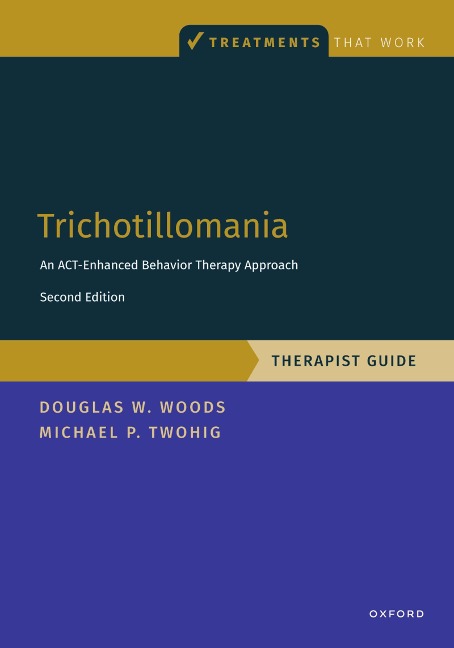
Trichotillomania (TTM) is a complex disorder that is difficult to treat and few effective therapeutic options exist. This Therapist Guide for the Acceptance and Commitment Therapy (ACT) Enhanced Behavior Therapy for Trichotillomania (AEBT-T), and the accompanying client workbook, is a 10-session program designed to teach therapists how to help clients reduce their pulling, think differently about the internal experiences that trigger pulling, and learn to live a more valued life.
The approach blends traditional behavior therapy approaches of habit reversal training and stimulus control techniques with a more contemporary ACT-based approach. This ACT-based approach teaches clients to behave flexibly and concert with their values whenever they face the uncomfortable thoughts, feelings, urges, and cravings that often trigger the pulling. Since its original publication in 2008, AEBT-T has been studied extensively and shown to be effective in individual and group format using both face-to-face and telehealth modalities. Emerging evidence suggests the treatment can also be successfully applied to older children and adolescents, and this latest version of the manual describes how the treatment can be modified for these populations.
Fully updated to reflect new research and organized in an easy-to-use session-by-session format with accompanying therapy support forms and materials, this intervention has proven efficacy and will be a valuable resource and powerful tool for clinicians who commonly treat TTM, OCD and related disorders.
Douglas Woods is currently Dean of the Graduate School and Professor of Psychology at Marquette University in Milwaukee, WI. Prior to that he was Head of Psychology at Texas A&M University from 2013-2015 and held various faculty and administrative appointments at the University of Wisconsin-Milwaukee from 1999-2013. Dr. Woods received his Ph.D. in Clinical Psychology from Western Michigan University and is a licensed psychologist in Wisconsin. Dr. Woods has authored or co-authored over 300 papers and 9 books and multiple grants for his work on tic disorders, trichotillomania, and other OCD-related problems. Michael P. Twohig, Ph.D. is a psychologist in Utah and a Professor of Psychology at Utah State University, where he co-runs the ACT Research Group (with Dr. Levin). He studied at the University of Wisconsin-Milwaukee, the University of Nevada, Reno, and the University of British Columbia Hospital. He is past-President of the Association of Contextual Behavioral Science. His research focuses on the use of ACT with an emphasis on obsessive compulsive and related disorders. He has published over 200 scholarly works including 7 books. His research has been funded through multiple sources including the NIMH and the IOCDF.
Introductory Information for Therapists and Assessment Chapter 1: Session 1: Trichotillomania (TTM) Education, Therapy Overview, Expectations, and Assessment of Pulling Triggers Chapter 2: Session 2: Habit Reversal Training and Trigger Reduction Strategies Chapter 3: Session 3: Increasing Motivation for Treatment Through Values Chapter 4: Session 4: Can Pulling-Related Inner Experiences Be Controlled? Chapter 5: Session 5: Acceptance of Pulling-Related Inner Experiences Chapter 6: Sessions 6 and 7: Defusion from Your Inner Experiences: You Are Not Your Urges to Pull Chapter 7: Session 8: Practicing Acceptance and Commitment Therapy (ACT) Chapter 8: Session 9: Practicing ACT and Review of Treatment Chapter 9: Session 10: Review and Relapse Prevention Chapter 10: Modifications for Working with Adolescents Appendix A: Assessment Measures Appendix B: Client Forms, Graphs, and Worksheets Appendix C: Caregiver Handouts References
Dieses eBook wird im PDF-Format geliefert und ist mit einem Adobe Kopierschutz (DRM) versehen. Sie können dieses eBook mit allen Geräten lesen, die das PDF-Format und den Adobe Kopierschutz (DRM) unterstützen.
Zum Beispiel mit den folgenden Geräten:
• tolino Reader
Laden Sie das eBook direkt über den Reader-Shop auf dem tolino herunter oder übertragen Sie das eBook auf Ihren tolino mit einer kostenlosen Software wie beispielsweise Adobe Digital Editions.
• Sony Reader & andere eBook Reader
Laden Sie das eBook direkt über den Reader-Shop herunter oder übertragen Sie das eBook mit der kostenlosen Software Sony READER FOR PC/Mac oder Adobe Digital Editions auf ein Standard-Lesegeräte mit epub- und Adobe DRM-Unterstützung.
• Tablets & Smartphones
Möchten Sie dieses eBook auf Ihrem Smartphone oder Tablet lesen, finden Sie hier unsere kostenlose Lese-App für iPhone/iPad und Android Smartphone/Tablets.
• PC & Mac
Lesen Sie das eBook direkt nach dem Herunterladen mit einer kostenlosen Lesesoftware, beispielsweise Adobe Digital Editions, Sony READER FOR PC/Mac oder direkt über Ihre eBook-Bibliothek in Ihrem Konto unter „Meine eBooks“ - „online lesen“.
Schalten Sie das eBook mit Ihrer persönlichen Adobe ID auf bis zu sechs Geräten gleichzeitig frei.
Bitte beachten Sie, dass die Kindle-Geräte das Format nicht unterstützen und dieses eBook somit nicht auf Kindle-Geräten lesbar ist.