Und dann auf "Zum Home-Bildschirm [+]".

Stöbern
genialokal zum Startbildschirm hinzufügen
Installieren Sie die genialokal App auf Ihrem Startbildschirm für einen schnellen Zugriff und eine komfortable Nutzung.
Installieren Sie die genialokal App auf Ihrem Startbildschirm für einen schnellen Zugriff und eine komfortable Nutzung.
Ihr gewünschter Artikel ist in 0 Buchhandlungen vorrätig - wählen Sie hier eine Buchhandlung in Ihrer Nähe aus:

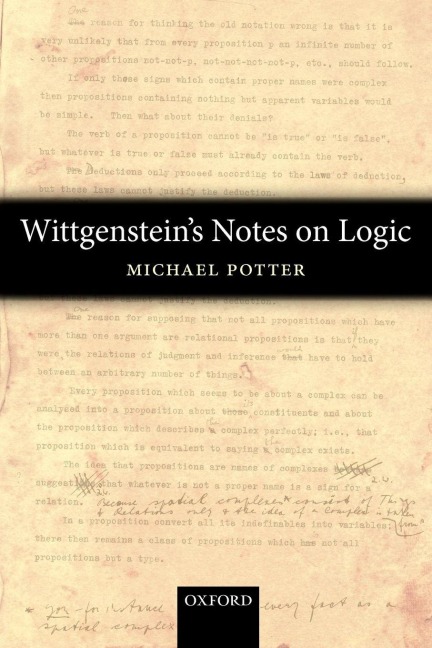
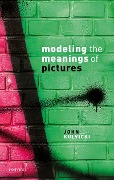
Michael Potter shows, for the first time, that Wittgenstein's early Notes on Logic are a work of philosophical and historical importance. Using a challenging blend of biography and philosophy, he draws new conclusions about the nature of the Notes, the genesis of the Tractatus, and Wittgenstein's working methods.
Michael Potter is Reader in the Philosophy of Mathematics at Cambridge University. He is the author of Sets (OUP, 1990), Reason's Nearest Kin (OUP, 2000), Set Theory and its Philosophy (OUP, 2004), and Mathematical Knowledge (edited with Mary Leng and Alexander Paseau, OUP, 2007).
Introduction
1: Finding a Problem
2: First Steps
3: Matter
4: Analysis
5: The Fundamental Thought
6: The Symbolic Turn
7: Simplicity
8: Unity
9: Fregean Propositions
10: Assertion
11: Complex and Fact
12: Forms
13: Russell's Theory of Judgment
14: Meaning
15: Metaphysics
16: Sense
17: Truth-Functions
18: Truth-Operations
19: Molecular Propositions
20: Generality
21: Resolving the Paradoxes
22: Typical Ambiguity
23: Identity
24: Sign and Symbol
25: Wittgenstein's Theory of Judgment
26: The Picture Theory
27: Tractarian Objects
28: Philosophy
29: Themes
History of the Text
The Notes on Logic
Bibliography