Und dann auf "Zum Home-Bildschirm [+]".

Stöbern
genialokal zum Startbildschirm hinzufügen
Installieren Sie die genialokal App auf Ihrem Startbildschirm für einen schnellen Zugriff und eine komfortable Nutzung.
Installieren Sie die genialokal App auf Ihrem Startbildschirm für einen schnellen Zugriff und eine komfortable Nutzung.
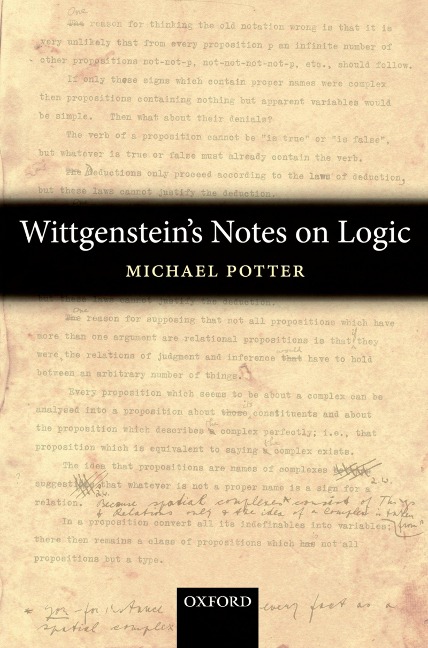
Wittgenstein's philosophical career began in 1911 when he went to Cambridge to work with Russell. He compiled the Notes on Logic two years later as a kind of summary of the work he had done so far. Russell thought that they were 'as good as anything that has ever been done in logic', but he had Wittgenstein himself to explain them to him. Without the benefit of Wittgenstein's explanations, most later scholars have preferred to treat the Notes solely as an interpretative aid in understanding the Tractatus (which draws on them for material), rather than as a philosophical work in their own right. Michael Potter unequivocally demonstrates the philosophical and historical importance of the Notes for the first time. By teasing out the meaning of key passages, he shows how many of the most important insights in the Tractatus they contain. He discusses in detail how Wittgenstein arrived at these insights by thinking through ideas he obtained from Russell and Frege. And he uses a challenging blend of biography and philosophy to illuminate the methods Wittgenstein used in his work. The book features the complete text of the Notes in a critical edition, with a detailed discussion of the circumstances in which they were compiled, leading to a new understanding of how they should be read.
Michael Potter is Reader in the Philosophy of Mathematics at Cambridge University. He is the author of Sets (OUP, 1990), Reason's Nearest Kin (OUP, 2000), Set Theory and its Philosophy (OUP, 2004), and Mathematical Knowledge (edited with Mary Leng and Alexander Paseau, OUP, 2007).
- Introduction - 1: Finding a Problem - 2: First Steps - 3: Matter - 4: Analysis - 5: The Fundamental Thought - 6: The Symbolic Turn - 7: Simplicity - 8: Unity - 9: Fregean Propositions - 10: Assertion - 11: Complex and Fact - 12: Forms - 13: Russell's Theory of Judgment - 14: Meaning - 15: Metaphysics - 16: Sense - 17: Truth-Functions - 18: Truth-Operations - 19: Molecular Propositions - 20: Generality - 21: Resolving the Paradoxes - 22: Typical Ambiguity - 23: Identity - 24: Sign and Symbol - 25: Wittgenstein's Theory of Judgment - 26: The Picture Theory - 27: Tractarian Objects - 28: Philosophy - 29: Themes - History of the Text - The Notes on Logic - Bibliography
Dieses eBook wird im PDF-Format geliefert und ist mit einem Adobe Kopierschutz (DRM) versehen. Sie können dieses eBook mit allen Geräten lesen, die das PDF-Format und den Adobe Kopierschutz (DRM) unterstützen.
Zum Beispiel mit den folgenden Geräten:
• tolino Reader
Laden Sie das eBook direkt über den Reader-Shop auf dem tolino herunter oder übertragen Sie das eBook auf Ihren tolino mit einer kostenlosen Software wie beispielsweise Adobe Digital Editions.
• Sony Reader & andere eBook Reader
Laden Sie das eBook direkt über den Reader-Shop herunter oder übertragen Sie das eBook mit der kostenlosen Software Sony READER FOR PC/Mac oder Adobe Digital Editions auf ein Standard-Lesegeräte mit epub- und Adobe DRM-Unterstützung.
• Tablets & Smartphones
Möchten Sie dieses eBook auf Ihrem Smartphone oder Tablet lesen, finden Sie hier unsere kostenlose Lese-App für iPhone/iPad und Android Smartphone/Tablets.
• PC & Mac
Lesen Sie das eBook direkt nach dem Herunterladen mit einer kostenlosen Lesesoftware, beispielsweise Adobe Digital Editions, Sony READER FOR PC/Mac oder direkt über Ihre eBook-Bibliothek in Ihrem Konto unter „Meine eBooks“ - „online lesen“.
Schalten Sie das eBook mit Ihrer persönlichen Adobe ID auf bis zu sechs Geräten gleichzeitig frei.
Bitte beachten Sie, dass die Kindle-Geräte das Format nicht unterstützen und dieses eBook somit nicht auf Kindle-Geräten lesbar ist.