Und dann auf "Zum Home-Bildschirm [+]".

Stöbern
genialokal zum Startbildschirm hinzufügen
Installieren Sie die genialokal App auf Ihrem Startbildschirm für einen schnellen Zugriff und eine komfortable Nutzung.
Installieren Sie die genialokal App auf Ihrem Startbildschirm für einen schnellen Zugriff und eine komfortable Nutzung.
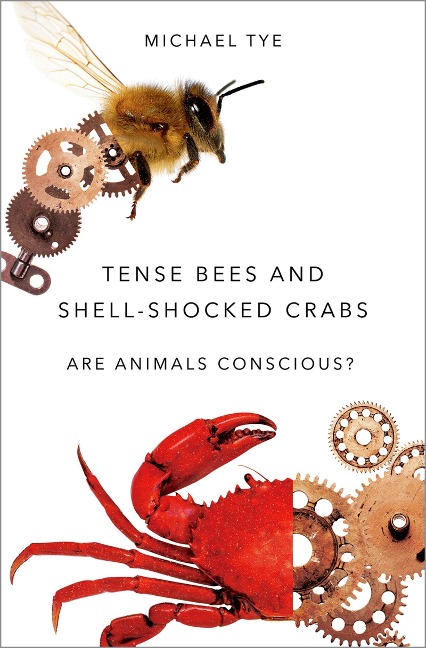
A consideration of some of the most common questions about animal minds. Do birds have feelings? Can fish feel pain? Could a honeybee be anxious? For centuries, the question of whether or not animals are conscious like humans has prompted debates among philosophers and scientists. While most people gladly accept that complex mammals - such as dogs - share emotions and experiences with us, the matter of simpler creatures is much less clear. Meanwhile, the advent of the digital age and artificial intelligence has created an added dimension to questions about non-human consciousness. In Tense Bees and Shell-Shocked Crabs, Michael Tye offers answers to some of today's most pressing questions about nonhuman consciousness. Blending the latest research about animal sensation with theories about the nature of consciousness, Tye develops a methodology for addressing the mysteries of the animal mind. Without endorsing any specific theory on the nature of consciousness, Tye tackles issues such as the animal experience of pain and fear, and the role of brain anatomy in determining consciousness. He then turns his attention to the artificial realm, considering whether complex robots could ever be considered conscious. Tye concludes with a discussion of how, if we consider animals conscious, this might impact our ethical obligations to them. From insects to crabs, fish to birds, Tense Bees and Shell-Shocked Crabs offers an insightful exploration of the ways in which animals relate to the world. Tense Bees and Shell-Shocked Crabs will appeal to students and scholars of philosophy and neuroscience, as well as general readers with an interest in animal and environmental ethics.
Michael Tye encountered philosophy at Oxford and taught at Temple University, St. Andrews, and the University of London before coming to the University of Texas at Austin in 2003, where he is the Dallas TACA Centennial Professor in Liberal Arts.
Chapter 1: Experience and Its Limits: The Problem. Chapter 2 -- Experience and Consciousness 2.1 Problem Cases? 2.2 The Higher Order Theory of Consciousness 2.3 Phenomenal consciousness versus access consciousness 2.4 Phenomenal consciousness versus access consciousness 2.5 The upshot for animal consciousness Chapter 3: It's Got to be Human! 3.1 Descartes and the animals 3.2 Descartes and Turing 3.3 Conceptualism about experience Chapter 4 - Our Friends and Neighbors 4.1 Beliefs and desires 4.2 Experiences and feelings Chapter 5: Reasoning about Other Species 5.1 Cupcake's pain 5.2 Sharpening the issue 5.3 Is the absence of a neocortex a defeater? 5.4 Should we be agnostic? 5.5 Alternative strategies Chapter 6: A Fish Called Wanda 6.1 Pain 6.2 Fish nociception and fish behavior 6.3 Is there a better explanation? 6.4 Fish fear 6.5 Perceptual consciousness in fish 6.6 Yes, but are there really fish qualia? Chapter 7: Of Birds and Reptiles (and Fish) 7.1 The origins of birds 7.2 Bird emotions 7.3 Birds and pain 7.4 Perceptual experiences in birds 7.5 Reptiles Chapter 8: Tense Bees and Shell-Shocked Crabs 8.1 Insect nociception and pain 8.2 Insects and emotions 8.3 Are bees zombies? 8.4 Crabs and pain 8.5 Crabs and bees Chapter 9: The Girl Who Cannot Feel Pain 9.1 A complaint from Block 9.2 Protozoa 9.3 Plants 9.4 Caterpillars Chapter 10: Commander Data and Robot Rabbit 10.1 The original China-Body problem 10.2 Reasoning about Commander Data 10.3 The silicon chip argument 10.4 Real rabbit and robot rabbit 10.5 A further reason for preferring the view that Commander Data and robot rabbit are conscious 10.6 A final consideration Chapter 11: The Ethical Treatment of Animals 11.1 Animal welfarism 11.2 Speciesism 11.3 Regan and Rawls 11.4 Centered speciesism and biological proximity 11.5 The treatment of animals
Dieses eBook wird im PDF-Format geliefert und ist mit einem Adobe Kopierschutz (DRM) versehen. Sie können dieses eBook mit allen Geräten lesen, die das PDF-Format und den Adobe Kopierschutz (DRM) unterstützen.
Zum Beispiel mit den folgenden Geräten:
• tolino Reader
Laden Sie das eBook direkt über den Reader-Shop auf dem tolino herunter oder übertragen Sie das eBook auf Ihren tolino mit einer kostenlosen Software wie beispielsweise Adobe Digital Editions.
• Sony Reader & andere eBook Reader
Laden Sie das eBook direkt über den Reader-Shop herunter oder übertragen Sie das eBook mit der kostenlosen Software Sony READER FOR PC/Mac oder Adobe Digital Editions auf ein Standard-Lesegeräte mit epub- und Adobe DRM-Unterstützung.
• Tablets & Smartphones
Möchten Sie dieses eBook auf Ihrem Smartphone oder Tablet lesen, finden Sie hier unsere kostenlose Lese-App für iPhone/iPad und Android Smartphone/Tablets.
• PC & Mac
Lesen Sie das eBook direkt nach dem Herunterladen mit einer kostenlosen Lesesoftware, beispielsweise Adobe Digital Editions, Sony READER FOR PC/Mac oder direkt über Ihre eBook-Bibliothek in Ihrem Konto unter „Meine eBooks“ - „online lesen“.
Schalten Sie das eBook mit Ihrer persönlichen Adobe ID auf bis zu sechs Geräten gleichzeitig frei.
Bitte beachten Sie, dass die Kindle-Geräte das Format nicht unterstützen und dieses eBook somit nicht auf Kindle-Geräten lesbar ist.