Und dann auf "Zum Home-Bildschirm [+]".

Stöbern
genialokal zum Startbildschirm hinzufügen
Installieren Sie die genialokal App auf Ihrem Startbildschirm für einen schnellen Zugriff und eine komfortable Nutzung.
Installieren Sie die genialokal App auf Ihrem Startbildschirm für einen schnellen Zugriff und eine komfortable Nutzung.


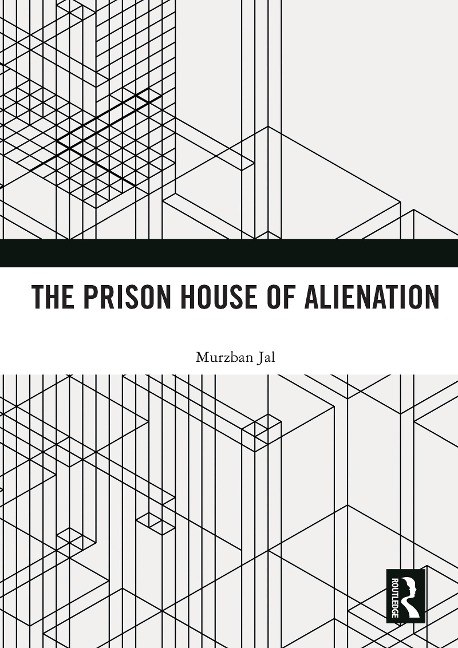
The Prison House of Alienation is an exploration of the humanist theme of alienation that Marx theorized in his Economic and Philosophic Manuscripts of 1844. It relates this theme of alienation with the themes of haunting in the Manifesto of the Communist Party and accumulation of capital that he outlined in his magnum opus Capital. The volume claims that humanity plagued by ghosts is dwelling in a prison house from which there seems no escape. Yet humanity seeks to escape from this prison house. The essays are a consequent journey in dramaturgy where science and art truly meet to create emancipatory politics that goes well beyond the entire discourse of twentieth-century socialism. The volume begins with Hamlet's lament in Shakespeare's tragedy, who, struck by alienation, is haunted by the ghost of his dead father. It then discusses how instead of creating a radical theory for creating a socialist alternative, 'haunting' gave way to interpretation as an estranged hermeneutical act that displaces revolutionary theory and praxis. This displacement of revolutionary praxis in turn gave way to violence. This volume therefore also analyzes violence from Clausewitz to Mao, revealing that a rigorous line must be drawn between Stalinism and Maoism on one side, and authentic Marxism on the other side. It concludes by questioning the very idea of ideology, suggesting that ideology is not merely a false consciousness, but a terrible psychotic act that would devour the entire emancipatory project of Marxism itself. Placing the human condition at the centre for alternative twenty-first-century politics, The Prison House of Alienation reveals that there can be no science without art and no politics without humanity. It will be of great interest to scholars of philosophy and politics. The essays were originally published in various issues of Critique: Journal of Socialist Theory.
Murzban Jal is Professor and Director at the Centre for Educational Studies, Indian Institute of Education, Pune, India. He was Fellow at the Indian Institute of Advanced Studies, Shimla, and an Indian Council of Social Science Research (ICSSR) Senior Fellow where he worked on the ethnography of the makings of a minority community in India. He is author of The Seductions of Karl Marx (2010), Zoroastrianism: from Antiquity to the Modern Period, ed. (2012), The New Militants (2014), Why We Are Not Hindus (2015), What Ails Muslims, ed. with Zaheer Ali (2016), Challenges for the Indian Left, ed. (2017), In the Name of Marx (2018), Zarathushtra and the Inmates of Paradise (2018) and Yusuf and Zuleika: The Return of the Despot (2019). He has also published more than hundred papers in national and international journals.
Acknowledgments Introduction: Ideology or 'Terror as Freedom'? 1. Umweg, or The Detour: On Marx's Theory On Radical Time 2. Interpretation As Phantasmagoria: Variations On a Theme On Marx's Theses On Feuerbach 3. In Defence of Marxism: A Reply to a Neo-Hindu's Reading of The Seductions of Karl Marx 4. Reflections on Violence 5. Strangers in the Dark: Neo-liberalism and Maoism in India 6. Can Ideology Ever Be Revolutionary?
Dieses eBook wird im PDF-Format geliefert und ist mit einem Adobe Kopierschutz (DRM) versehen. Sie können dieses eBook mit allen Geräten lesen, die das PDF-Format und den Adobe Kopierschutz (DRM) unterstützen.
Zum Beispiel mit den folgenden Geräten:
• tolino Reader
Laden Sie das eBook direkt über den Reader-Shop auf dem tolino herunter oder übertragen Sie das eBook auf Ihren tolino mit einer kostenlosen Software wie beispielsweise Adobe Digital Editions.
• Sony Reader & andere eBook Reader
Laden Sie das eBook direkt über den Reader-Shop herunter oder übertragen Sie das eBook mit der kostenlosen Software Sony READER FOR PC/Mac oder Adobe Digital Editions auf ein Standard-Lesegeräte mit epub- und Adobe DRM-Unterstützung.
• Tablets & Smartphones
Möchten Sie dieses eBook auf Ihrem Smartphone oder Tablet lesen, finden Sie hier unsere kostenlose Lese-App für iPhone/iPad und Android Smartphone/Tablets.
• PC & Mac
Lesen Sie das eBook direkt nach dem Herunterladen mit einer kostenlosen Lesesoftware, beispielsweise Adobe Digital Editions, Sony READER FOR PC/Mac oder direkt über Ihre eBook-Bibliothek in Ihrem Konto unter „Meine eBooks“ - „online lesen“.
Schalten Sie das eBook mit Ihrer persönlichen Adobe ID auf bis zu sechs Geräten gleichzeitig frei.
Bitte beachten Sie, dass die Kindle-Geräte das Format nicht unterstützen und dieses eBook somit nicht auf Kindle-Geräten lesbar ist.