Und dann auf "Zum Home-Bildschirm [+]".

Stöbern
genialokal zum Startbildschirm hinzufügen
Installieren Sie die genialokal App auf Ihrem Startbildschirm für einen schnellen Zugriff und eine komfortable Nutzung.
Installieren Sie die genialokal App auf Ihrem Startbildschirm für einen schnellen Zugriff und eine komfortable Nutzung.
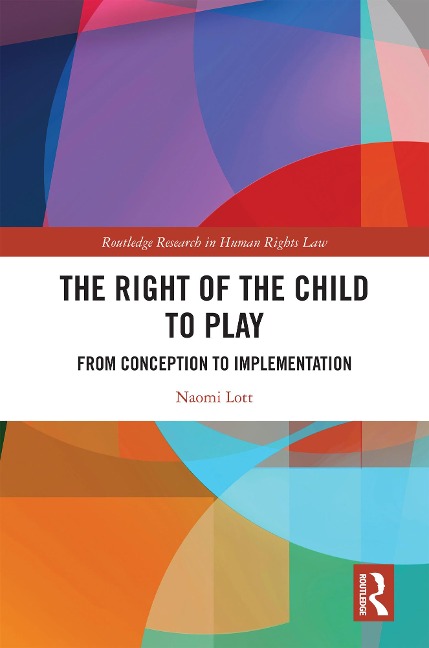
This book provides a vital and original investigation into, and critique of, the situation facing the realisation of the child's right to play. The right to play has been referred to as a forgotten right - forgotten by States implementing the Convention on the Rights of the Child, by the Committee on the Rights of the Child in monitoring and providing guidance on the Convention, and by human rights academics. Through multidisciplinary, original archival, novel doctrinal and primary empirical research, the work provides a thorough investigation of the right to play. It offers an innovative insight into its value, the challenges facing the realisation of the right, its raison d'être and its scope, content and obligations. It also critiques the Committee's engagement with the right to play and shares lived experiences of efforts to support its implementation in the United Kingdom and Tanzania. The book highlights elements of best practice, challenges, and weaknesses, and makes recommendations for the continued and improved realisation of the right to play. The book will be a valuable resource for researchers, academics, advocates and policy-makers working in the areas of Children's Rights, International Human Rights Law, Public International Law, Child Welfare, and Education.
Naomi Lott is an Economic and Social Research Council Postdoctoral Research Fellow of the Faculty of Law, and Early Career Fellow of the Bonavero Institute of Human Rights, University of Oxford, UK.
Foreword: The Right to Play - a Fundamental Children's Right of Intergenerational Concern Acknowledgements 1 Introduction 1.1 Introduction 1.2 Monograph Structure and Methodology 1.3 Definition of Play 1.3.1 Attempts at a Definition 1.3.2 The Difficulty of a Definition 1.3.3 The Committee on the Rights of the Child's Definition 1.4 Conclusion 2 The Importance of Play 2.1 Introduction 2.2 Cognitive Development 2.2.1 Literacy 2.2.2 Mathematics 2.2.3 Problem-Solving 2.2.4 Creativity 2.3 Social Development 2.4 Emotional Development 2.5 Physical Development 2.6 Enhancing Capabilities 2.7 Conclusion 3 Challenges to Be Overcome in Realising the Right to Play 3.1 Introduction 3.2 Safe Space for Play 3.2.1 Safe Environments 3.2.2 Access to Nature 3.2.3 Children's Use of Public Space 3.3 The Scholarisation of Childhood 3.4 Humanitarian and Development Programmes 3.4.1 Crises 3.4.2 Poverty 3.5 The Girl Child 3.6 Technology and Play 3.6.1 Physical and Mental Health - Time and Space for Play 3.6.2 Online Risks 3.6.3 Exposure to Violence 3.6.4 Cognitive Ability and Cultural Development 3.6.5 Commercialisation and Marketisation 3.7 Conclusion: The Lack of Recognition of the Importance of the Right to Play 4 The Legal History of the Right to Play 4.1 Introduction 4.2 Travaux Préparatoires 4.2.1 The Drafting History of the Declaration on the Rights of the Child 4.2.2 From Declaration to Convention: The Drafting History of Article 31 4.3 The Committee on the Rights of the Child 4.3.1 The Committee's Forms of Output 4.3.2 The Legal Status of the Committee's Outputs 4.3.3 The Committee's Outputs and the Right to Play 4.4 Conclusion 5 The Scope and Content of the Right to Play 5.1 Introduction 5.2 Scope 5.3 Content 5.3.1 Indivisible, Interrelated, and Interdependent 5.3.2 "To Engage In" 5.3.3 'Appropriate to the Age of the Child' 5.3.4 AAAQ 5.4 Obligations Relating to the Right to Play 5.4.1 "To Undertake" 5.4.2 'All Appropriate Measures' 5.4.3 Maximum Extent of Available Resources 5.4.4 Progressive Realisation 5.4.5 Minimum Core 5.4.6 Non-Retrogression 5.4.7 International Cooperation 5.5 Conclusion 6 A Multiple-Case Study of the United Kingdom and Tanzania 6.1 Introduction 6.1.1 Method Choice and Justification 6.1.2 Country Choice and Justification 6.1.3 Interview Sample and Data Collection 6.2 Discussion of Findings 6.2.1 Legislation: Incorporation of the Right to Play 6.2.2 Political and Community Support 6.2.3 Education and Planning 6.3 Conclusion 7 Conclusion 7.1 A Note on the Coronavirus Pandemic Bibliography Index
Dieses eBook wird im PDF-Format geliefert und ist mit einem Adobe Kopierschutz (DRM) versehen. Sie können dieses eBook mit allen Geräten lesen, die das PDF-Format und den Adobe Kopierschutz (DRM) unterstützen.
Zum Beispiel mit den folgenden Geräten:
• tolino Reader
Laden Sie das eBook direkt über den Reader-Shop auf dem tolino herunter oder übertragen Sie das eBook auf Ihren tolino mit einer kostenlosen Software wie beispielsweise Adobe Digital Editions.
• Sony Reader & andere eBook Reader
Laden Sie das eBook direkt über den Reader-Shop herunter oder übertragen Sie das eBook mit der kostenlosen Software Sony READER FOR PC/Mac oder Adobe Digital Editions auf ein Standard-Lesegeräte mit epub- und Adobe DRM-Unterstützung.
• Tablets & Smartphones
Möchten Sie dieses eBook auf Ihrem Smartphone oder Tablet lesen, finden Sie hier unsere kostenlose Lese-App für iPhone/iPad und Android Smartphone/Tablets.
• PC & Mac
Lesen Sie das eBook direkt nach dem Herunterladen mit einer kostenlosen Lesesoftware, beispielsweise Adobe Digital Editions, Sony READER FOR PC/Mac oder direkt über Ihre eBook-Bibliothek in Ihrem Konto unter „Meine eBooks“ - „online lesen“.
Schalten Sie das eBook mit Ihrer persönlichen Adobe ID auf bis zu sechs Geräten gleichzeitig frei.
Bitte beachten Sie, dass die Kindle-Geräte das Format nicht unterstützen und dieses eBook somit nicht auf Kindle-Geräten lesbar ist.