Und dann auf "Zum Home-Bildschirm [+]".

Stöbern
genialokal zum Startbildschirm hinzufügen
Installieren Sie die genialokal App auf Ihrem Startbildschirm für einen schnellen Zugriff und eine komfortable Nutzung.
Installieren Sie die genialokal App auf Ihrem Startbildschirm für einen schnellen Zugriff und eine komfortable Nutzung.
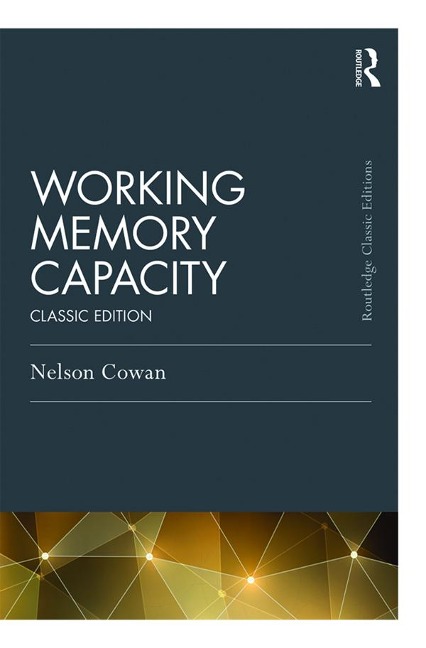
The idea of one's memory "filling up" is a humorous misconception of how memory in general is thought to work; it actually has no capacity limit. However, the idea of a "full brain" makes more sense with reference to working memory, which is the limited amount of information a person can hold temporarily in an especially accessible form for use in the completion of almost any challenging cognitive task. This groundbreaking book explains the evidence supporting Cowan's theoretical proposal about working memory capacity, and compares it to competing perspectives. Cognitive psychologists profoundly disagree on how working memory is limited: whether by the number of units that can be retained (and, if so, what kind of units and how many), the types of interfering material, the time that has elapsed, some combination of these mechanisms, or none of them. The book assesses these hypotheses and examines explanations of why capacity limits occur, including vivid biological, cognitive, and evolutionary accounts. The book concludes with a discussion of the practical importance of capacity limits in daily life. This 10th anniversary Classic Edition will continue to be accessible to a wide range of readers and serve as an invaluable reference for all memory researchers.
Nelson Cowan is Professor of Psychology at the University of Missouri. His research specializations include short-term or working memory, childhood development of short-term and working memory, and the relationship between working memory and selective attention. Nelson is the Director of the Working-Memory Laboratory and co-editor of The Development of Memory in Infancy and Childhood.
Preface. The Problem of Capacity Limits. The Processing System as a Context to Examine Capacity. Refinement of the Concept of Working Memory Capacity. Capacity Limits and the Measurement of Chunking. Further Evidence of a Constant Capacity. Other Views of Capacity Limits. Why the Capacity Limit?.
Dieses eBook wird im PDF-Format geliefert und ist mit einem Adobe Kopierschutz (DRM) versehen. Sie können dieses eBook mit allen Geräten lesen, die das PDF-Format und den Adobe Kopierschutz (DRM) unterstützen.
Zum Beispiel mit den folgenden Geräten:
• tolino Reader
Laden Sie das eBook direkt über den Reader-Shop auf dem tolino herunter oder übertragen Sie das eBook auf Ihren tolino mit einer kostenlosen Software wie beispielsweise Adobe Digital Editions.
• Sony Reader & andere eBook Reader
Laden Sie das eBook direkt über den Reader-Shop herunter oder übertragen Sie das eBook mit der kostenlosen Software Sony READER FOR PC/Mac oder Adobe Digital Editions auf ein Standard-Lesegeräte mit epub- und Adobe DRM-Unterstützung.
• Tablets & Smartphones
Möchten Sie dieses eBook auf Ihrem Smartphone oder Tablet lesen, finden Sie hier unsere kostenlose Lese-App für iPhone/iPad und Android Smartphone/Tablets.
• PC & Mac
Lesen Sie das eBook direkt nach dem Herunterladen mit einer kostenlosen Lesesoftware, beispielsweise Adobe Digital Editions, Sony READER FOR PC/Mac oder direkt über Ihre eBook-Bibliothek in Ihrem Konto unter „Meine eBooks“ - „online lesen“.
Schalten Sie das eBook mit Ihrer persönlichen Adobe ID auf bis zu sechs Geräten gleichzeitig frei.
Bitte beachten Sie, dass die Kindle-Geräte das Format nicht unterstützen und dieses eBook somit nicht auf Kindle-Geräten lesbar ist.