Und dann auf "Zum Home-Bildschirm [+]".

Stöbern
genialokal zum Startbildschirm hinzufügen
Installieren Sie die genialokal App auf Ihrem Startbildschirm für einen schnellen Zugriff und eine komfortable Nutzung.
Installieren Sie die genialokal App auf Ihrem Startbildschirm für einen schnellen Zugriff und eine komfortable Nutzung.
Ihr gewünschter Artikel ist in 0 Buchhandlungen vorrätig - wählen Sie hier eine Buchhandlung in Ihrer Nähe aus:

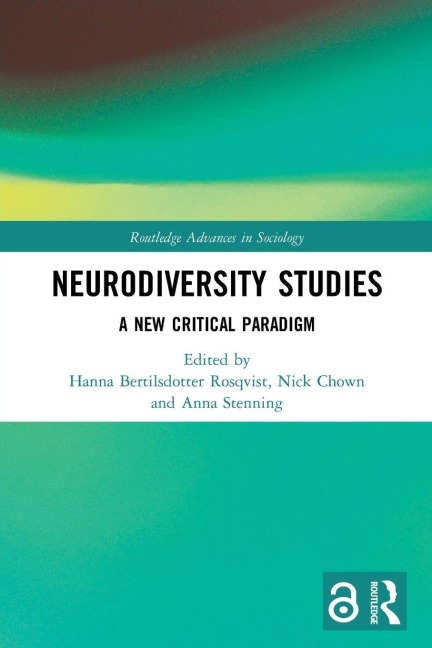

Building on work in feminist studies, queer studies and critical race theory, this volume challenges the universality of propositions about human nature, by questioning the boundaries between predominant neurotypes and 'others', including dyslexics, autistics and ADHDers.
Hanna Bertilsdotter Rosqvist is an Associate Professor in Sociology and currently a Senior Lecturer in Social work at Södertörn University. Her recent research is around autism, identity politics, and sexual, gendered and age normativity. She is the former Chief Editor of Scandinavian Journal of Disability Research. Nick Chown is a book indexer who undertakes autism research in his spare time. His recent publication is Understanding and Evaluating Autism Theory (2016). He has reviewed for the Journal of Autism and Developmental Disorders, written various academic articles, and led a team studying support for autistic students in the UK. Anna Stenning is a Wellcome Trust Research Fellow in the Humanities and Social Sciences at Bath Spa University. Her current research focuses on literary representations of autism, and intersections between disability studies and environmental justice. She is also a co-editor, with David Borthwick and Pippa Marland, of Walking, Landscape and Environment (2019).
Introduction Curing Neurodivergence/Eugenics 1. The Production of the 'Normal' Child: Neurodiversity and the Commodification of Parenting 2. Language Games Used to Construct Pathological Autism 3. Is There an Ethical Case for the Prevention and/or Cure of Autism? Neurodivergent Wellbeing 4. Neurodiversity, Disability, Wellbeing 5. Neurodiversity in a Neurotypical World: An Enactive Framework for Investigating Autism and Social Institutions Cross-Neurotype Communication 6. Neurodiversity and Cross-Cultural Communication 7. Understanding Empathy Through a Study of Autistic Life Writing: On the Importance of Neurodiverse Morality 8. Sensory Strangers: Travels in Normate Sensory Worlds Neurodiversity at Work 9. Practical Scholarship: Optimising Beneficial Research Collaborations Between Autistic Scholars, Professional Services Staff and 'Typical Academics' in UK Universities 10. Designing an Autistic Space for Research: Exploring the Impact of Context, Space, and Sociality in Autistic Writing Processes 11. How Individuals and Institutions Can Learn to Make Room for Human Cognitive Diversity: A Personal Perspective from My Life in Neuroscience Challenging Brain-Bound Cognition 12. Understanding Autistic Individuals: Cognitive Diversity not Theoretical Deficit Moving Forwards 13. Neuronormativity in Theorising Agency: An Argument for a Critical Neurodiversity Approach 14. Defining Neurodiversity for Research and Practice 15. A New Alliance? The Hearing Voices Movement and Neurodiversity Conclusion