Und dann auf "Zum Home-Bildschirm [+]".

Stöbern
genialokal zum Startbildschirm hinzufügen
Installieren Sie die genialokal App auf Ihrem Startbildschirm für einen schnellen Zugriff und eine komfortable Nutzung.
Installieren Sie die genialokal App auf Ihrem Startbildschirm für einen schnellen Zugriff und eine komfortable Nutzung.
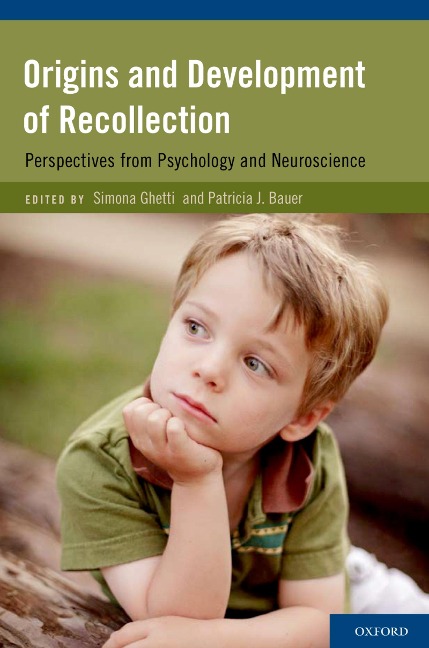
The ability to remember unique, personal events is at the core of what we consider to be "memory." How does the vivid experience of reinstatement of our past emerge? What is the contribution of this experience to our life histories? These questions have intrigued psychologists, neuroscientists, and philosophers for decades, and are the subject of this volume.
In recent years, the science of memory has made extraordinary progress in the conceptualization and assessment of different forms of memory. Instead of thinking of memory as a monolithic construct, memory is now thought of in terms of dissociable classes of constructs. Within declarative memory, the type of memory that one can consciously access, we make distinctions between the constructs of recollection and episodic memory and the constructs of familiarity and semantic memory (respectively). Contributors to this volume discuss new methods to assess these types of memory in studies that refine our understanding of the functions necessary for conscious and vivid recollection. The work has led to substantial increases in our understanding of the building blocks of recollection and its developmental course.
The volume also addresses the exciting new research on the neural basis of recollection. Never before has the connection between brain and function been so close. Contributors review neuroimaging studies of the healthy brain and neuropsychological investigations of patients with brain damage that reveal the specific brain structures involved in the ability to recollect. These brain structures undergo important developmental change during childhood and adolescence, leading to questions--and answers--of how the relationship between brain and function unfolds during the course of infancy, childhood, and adolescence.
Simona Ghetti received her PhD from the University of California, Davis in 2001. She then joined faculty at the National Research Council in Bologna Italy. In 2005, she returned to the University of California, Davis where she is now Associate Professor. Dr. Ghetti studies typical and atypical development of memory and metamemory in childhood, using behavioral and neuroimaging methods. She has received numerous awards for her contributions to the field, including the APA Award for Early Career Contribution to Developmental Psychology.
Patricia J. Bauer earned her PhD from Miami University. She was a postdoctoral fellow at the University of California, San Diego, and then joined the faculty of the Institute of Child Development, University of Minnesota. She left Minnesota in 2005 and after a brief sojourn at Duke University, joined the faculty of Emory University. Dr. Bauer studies the development of memory from infancy through childhood, using behavioral, narrative, and electrophysiological (event-related potentials, ERPs) measures. She has received numerous awards and honors for her contributions to the discipline, including the APA Award for Early Career Contribution to the Developmental Area.
Chapter 1: Remembering: Thoughts on its Definition, Measurement and Functional Nature Andrew P. Yonelinas Chapter 2: Development of Meaning-Conserving Memory Katherine Nelson Chapter 3: Building Blocks of Recollection Tracy Riggins Chapter 4: Contextualizing the development of recollection: Episodic memory and binding in young children Nora S. Newcombe, Marianne E. Lloyd, and Frances Balcomb Chapter 5: Development of Recollection: A Fuzzy-Trace Theory Perspective Charles J. Brainerd, Valerie F. Reyna, and Robyn E. Holliday Chapter 6: The Development of Episodic Memory: Binding Processes, Controlled Processes, and Introspection on Memory States Simona Ghetti, Kristen E. Lyons, Dana DeMaster Chapter 7: Neural basis of recollection: Evidence from neuroimaging and electrophysiological research Rachel A. Diana and Charan Ranganath Chapter 8: Neural Basis of Autobiographical Memory Peggy L. St. Jacques and Roberto Cabeza Chapter 9: Development of Remembering: Brain Development and Neuroimaging Evidence Kathleen M. Thomas and Lyric A. Jorgenson Chapter 10: The Development of Episodic Memory: An Event-Related Brain Potential (ERP) Vantage Point David Friedman Chapter 11: Memory Development Following Early Medial Temporal Lobe Injury Michelle de Haan Chapter 12: Memory Development and Frontal Lobe Insult Gerri Hanten and Harvey S. Levin
Dieses eBook wird im PDF-Format geliefert und ist mit einem Adobe Kopierschutz (DRM) versehen. Sie können dieses eBook mit allen Geräten lesen, die das PDF-Format und den Adobe Kopierschutz (DRM) unterstützen.
Zum Beispiel mit den folgenden Geräten:
• tolino Reader
Laden Sie das eBook direkt über den Reader-Shop auf dem tolino herunter oder übertragen Sie das eBook auf Ihren tolino mit einer kostenlosen Software wie beispielsweise Adobe Digital Editions.
• Sony Reader & andere eBook Reader
Laden Sie das eBook direkt über den Reader-Shop herunter oder übertragen Sie das eBook mit der kostenlosen Software Sony READER FOR PC/Mac oder Adobe Digital Editions auf ein Standard-Lesegeräte mit epub- und Adobe DRM-Unterstützung.
• Tablets & Smartphones
Möchten Sie dieses eBook auf Ihrem Smartphone oder Tablet lesen, finden Sie hier unsere kostenlose Lese-App für iPhone/iPad und Android Smartphone/Tablets.
• PC & Mac
Lesen Sie das eBook direkt nach dem Herunterladen mit einer kostenlosen Lesesoftware, beispielsweise Adobe Digital Editions, Sony READER FOR PC/Mac oder direkt über Ihre eBook-Bibliothek in Ihrem Konto unter „Meine eBooks“ - „online lesen“.
Schalten Sie das eBook mit Ihrer persönlichen Adobe ID auf bis zu sechs Geräten gleichzeitig frei.
Bitte beachten Sie, dass die Kindle-Geräte das Format nicht unterstützen und dieses eBook somit nicht auf Kindle-Geräten lesbar ist.